What does it mean when a 6-yr-old questions those in power?
The Aditya phenomenon may force the political establishment to treat children not merely as passive beneficiaries of policy, but as active stakeholders capable of demanding systemic accountability.
The Aditya phenomenon may force the political establishment to treat children not merely as passive beneficiaries of policy, but as active stakeholders capable of demanding systemic accountability.
On the day RSS chief Mohan Bhagwat was in the United States as part of his high-profile global outreach tour marking the organisation’s centenary year, with the stated mission of presenting the “humane face” of Narendra Modi to American Hindus, Bihar police detained six-year-old Aditya, a resident of a Patna slum, and allegedly assaulted his parents after he voiced the grievances of striking youth and students and demanded the resignation of Chief Minister Samrat Choudhary, whom he described as an incompetent ruler.
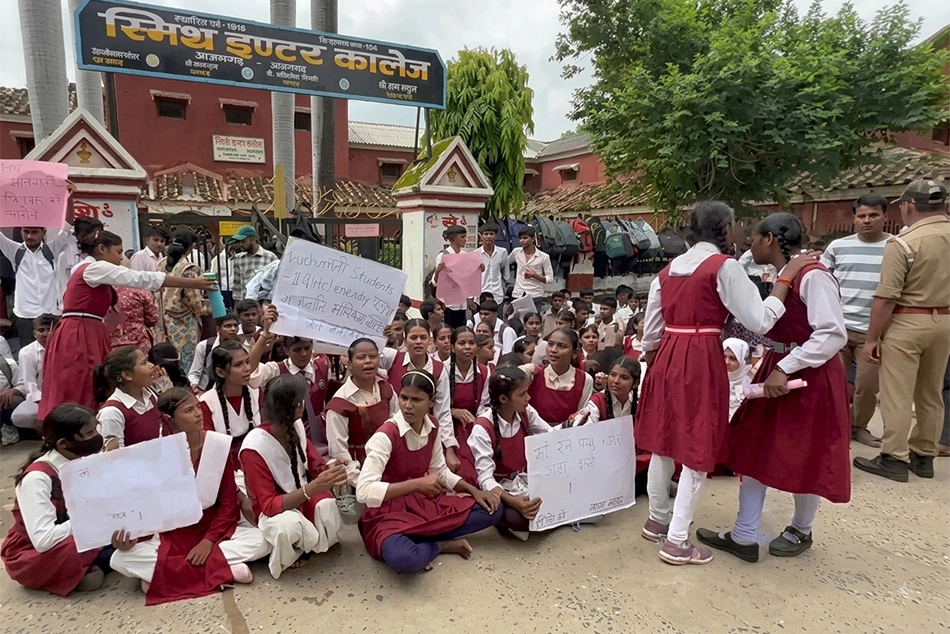
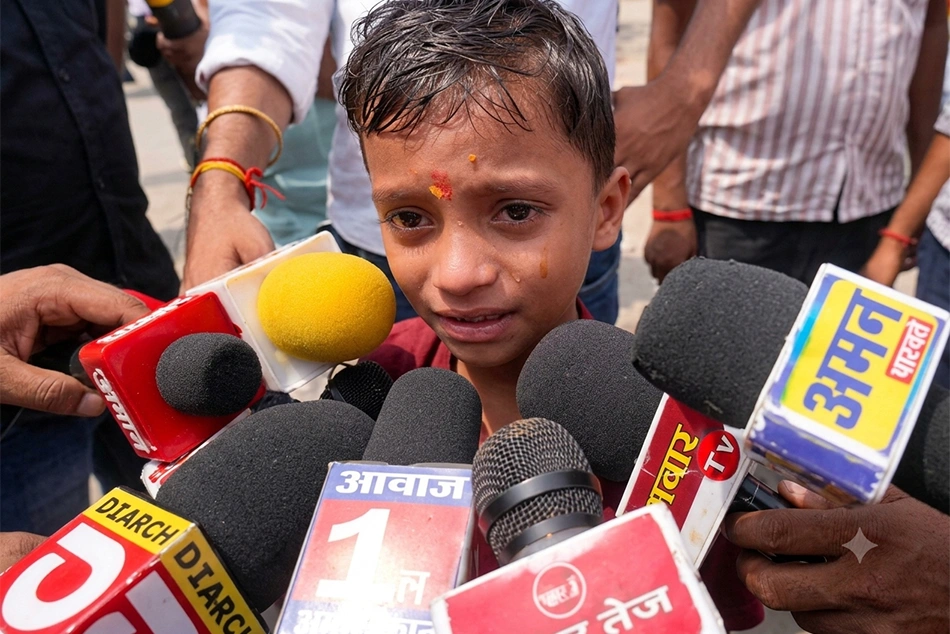
Aditya has become the “Gen Alpha” face of student protests in Bihar after blaming the BJP government for unemployment and demanding accountability. He has emerged as a symbol of dissent, making headlines with his bold comments during a student protest in Patna over Bihar Public Service Commission (BPSC) examinations. He has taken social media by storm. Dubbed the “Gen Alpha Protester” by protesting job aspirants, his surprisingly candid and fierce commentary on state politics has triggered a wider national conversation.
On August 25, amid escalating tensions as candidates demanded transparency and restructuring of the BPSC recruitment examinations, Aditya unexpectedly stole the spotlight.
The Class 1 student told reporters that Chief Minister Samrat Choudhary should resign and called for accountability over police lathi-charge and widespread unemployment. His defiant declaration that he was “ready to face jail or bullets” for the future instantly went viral. When Aditya was released, the surrounding crowd of student protesters began chanting “Gen Alpha”, turning him into an instant symbol of the movement. Commentators noted how remarkable it was that a child from a disadvantaged background could articulate systemic frustrations so vividly.
Some expressed deep concern over the “politicisation” of a six-year-old. They argued that his outburst against the government risked turning him into a rhetorical shield for the protesters. But that interpretation misses the larger point. Aditya was articulating the pain and grievances experienced by poor and marginalised people in Bihar.
Since Samrat Choudhary became chief minister on April 25, Bihar has witnessed what the author describes as an abrupt rise in repression and attacks on Dalits and marginalised communities. A significant number of Dalits and poor people have reportedly been killed by upper-caste assailants. Aditya’s spontaneous responses to media interviews suggest that he was not simply repeating a script, as some upper-caste commentators and BJP leaders have claimed. His assertive responses indicate that the social and class conflicts around him have made a deep impression on him.
Aditya’s words have also opened up a broader ethical debate about the safety and involvement of children in political spaces. His anger suggests that the younger generation, including Gen Alpha, is developing its own political dynamics.
He directly questioned a senior police officer about the lathi-charge on peaceful student demonstrators, saying:
“Aap SP ho toh kya… Police ka yahi kaam hai?” (“So what if you are the SP… is this the job of the police?”).
He further described the police violence as “half murder” and claimed that the SP had physically assaulted his parents.
The idea that six-year-old children can possess political consciousness—and that such consciousness can challenge entrenched social hierarchies—is increasingly relevant to discussions in sociology, anti-caste studies and education. There is a widespread assumption that children of this age cannot understand electoral systems, political parties or macroeconomics. But children can be highly sensitive to power dynamics, exclusion and social fairness. When children from marginalised backgrounds identify and resist discrimination at a young age, they can challenge the subtle processes through which social hierarchies are reproduced.
How Does Political Consciousness Develop at Six?
How “political consciousness” manifests itself at the age of six is a question that has attracted attention in social and political circles. At this developmental stage, political consciousness need not be ideological; it can be experiential and ethical.
Children have a deep sense of what is fair. When they see peers being treated differently during classroom activities, at lunchtime or in seating arrangements because of caste, they can recognise that treatment as unjust.
Marginalised children may also be introduced at home to ideas of self-respect, dignity and the lives and teachings of historical figures such as Dr B.R. Ambedkar. A six-year-old asserting:
“I am equal, and you cannot treat me differently”,
can therefore constitute an intrinsically political act.
Upper-caste hegemony is sustained in part through socialisation—the transmission of privilege, authority and entitlement to dominant groups, alongside the conditioning of marginalised children to accept unequal social arrangements. Early childhood political awareness can challenge this process at its roots.
Children begin asking critical questions such as:
“Why do they hate them?” or “Why do they have to sit separately?”
Such questions can force adults and institutions to confront implicit biases. When young children act as allies and form inclusive friendships, they refuse to reproduce the social compliance on which systems of hierarchy depend.
Aggression from dominant-caste peers or microaggressions from desensitised teachers can have serious psychological consequences for marginalised children. An early awakening of critical consciousness can help contest social hierarchies before inequality becomes normalised. By questioning inequality at an early age, a child can transform the classroom from a site of social reproduction into a space of democratic possibility.
The Question of Police Conduct
While Bhagwat’s preaching has been presented as being in the spirit of “open dialogue and inclusivity to all”, the author argues that this message has little relevance for powerful political rulers and the police in Bihar.
Had the Bihar police acted with greater sensitivity to legal norms and their obligations, it would not, in the author’s view, have taken a six-year-old child to a police station and kept him there for seven hours, from 1 pm to 8 pm. What is particularly troubling is the police denial that Aditya was detained, with the claim that he was merely handed over to his parents and taken home.
This denial is unsurprising, the author argues. According to sources cited in the article, the SP had decided to take Aditya into custody but retreated after a senior police officer advised against it on the grounds that such action would violate legal provisions and fundamental rights.
Under the Indian law, a child under seven years of age cannot be held criminally liable for an offence. Section 20 of the Bharatiya Nyaya Sanhita (BNS), which replaced Section 82 of the Indian Penal Code, provides that an act committed by a child under seven does not constitute an offence. The article argues that this leaves no legal basis for arresting or prosecuting a child of Aditya’s age.
Six-year-old Aditya Kumar has alleged in an interview that he was detained by an IPS officer and that his parents were beaten by a Superintendent of Police (SP). Some police officers also reportedly admonished his parents for allowing him to attend the protest rally. In media interviews, Aditya alleged that he was threatened at the police station.
On Thursday, his mother, sitting in the chamber of a lawyer at the Patna High Court, showed her hand and cheek, which she said bore marks of police assault. She also alleged that police warned that if Aditya were seen participating in such a protest rally again, his parents would be arrested and taken into custody.
Patna police, however, has offered its own explanation. It officially denied that the child had been “formally” arrested or detained, stating that he was escorted away from the volatile crowd for his own safety and subsequently returned to his family. The police did not explain why Aditya was made to remain inside the police station for seven hours.
Aditya was taken away after his comments went viral on social media criticising the government and questioning police action against job aspirants protesting over the BPSC examinations. Visuals of a woman police officer carrying the child away from the protest venue attracted considerable attention.
As students and job aspirants clashed with police during their march towards the residence of Bihar Chief Minister Samrat Choudhary, Aditya took a microphone, spoke out against the police lathi-charge and demanded the chief minister’s resignation.
A New Political Consciousness
Aditya’s assertions point, in the author’s view, to a political understanding and rising political consciousness among children from Dalit and other marginalised communities. The fearless manner in which he interacted with the media and police suggests a distinct political awareness and, potentially, an intergenerational rise in political consciousness among Dalit and OBC communities in India.
Unlike households where politics may be treated as an abstract or occasional topic, families from marginalised backgrounds may integrate discussions of identity, constitutional rights, representation and social justice into everyday life as questions of dignity and survival.
In many Dalit and OBC households, children grow up in environments where conversations about government policies, reservation, quotas and local community leadership are frequent. This exposure can enable children to absorb political vocabulary, party symbols and an understanding of “us versus them” dynamics earlier than some of their more privileged peers.
They can also become highly perceptive of social dynamics. For Dalit and marginalised children, politics can be a vital tool for structural change, emancipation and securing basic resources such as education and employment.
When a six-year-old displays an understanding of political symbols, voting or community assertion, it can be seen as an indication that political consciousness has permeated the family environment. This challenges the notion of marginalised communities as merely passive vote banks and points instead to politically aware generations developing from the ground up.
The Aditya phenomenon therefore raises questions that go beyond one child or one protest. It raises questions about how children understand power, how marginalised families transmit political consciousness, and how institutions respond when even their youngest citizens begin demanding dignity, accountability and justice.
[The writer, Arun Srivastava, is a Senior Journalist.]
Follow ummid.com WhatsApp Channel for all the latest updates.
Select Language to Translate in Urdu, Hindi, Marathi or Arabic