Gyanesh Kumar’s Wand of Voter Disenfranchisement
The Logical Discrepancy category is an algorithmic or 'rightist tool', a central and mischievous mechanism created by the ECI under its Special Intensive Revision (SIR) scheme to disenfranchise a huge population of voters who oppose the political hegemony of rightist forces, ensure their electoral victory, and push India along the trajectory of creating a Hindu Rashtra
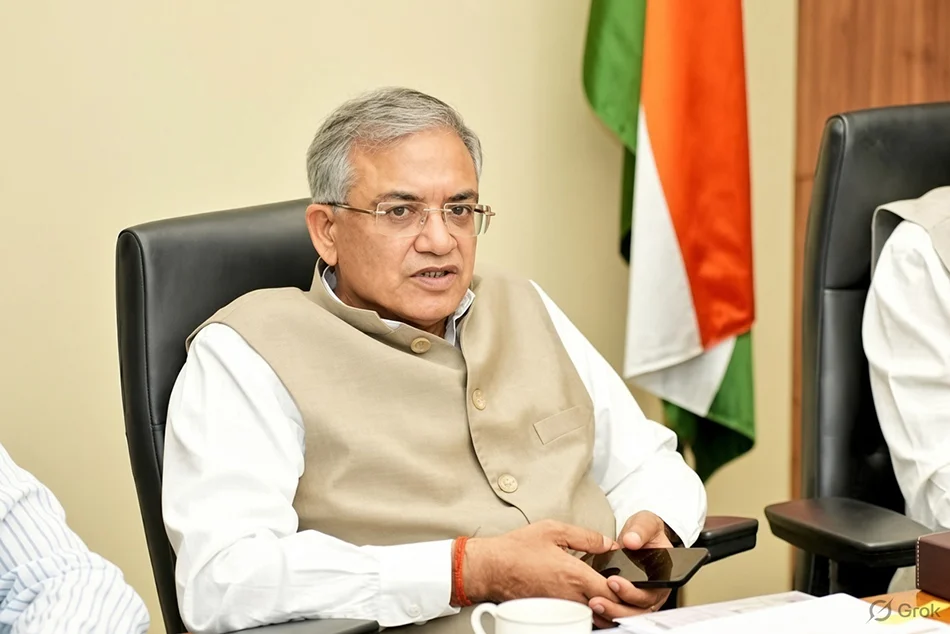
The Logical Discrepancy category is an algorithmic or “rightist tool”, a central and mischievous mechanism created by the ECI under its Special Intensive Revision (SIR) scheme to disenfranchise a huge population of voters who oppose the political hegemony of rightist forces, ensure their electoral victory, and push India along the trajectory of creating a Hindu Rashtra.
Through this allegedly borrowed idea, the ECI updates voter lists by centralising its software network (ERONet) and using automated data-matching algorithms to link family members together, a process called “progeny mapping”. If the algorithm finds inconsistencies that contradict biological, mathematical, or clerical rules, it flags the record as a Logical Discrepancy.
The software’s filters create a form of “mechanical disenfranchisement”. The computer has been turned into a “tyrant” by automatically flagging millions of legitimate citizens over minor clerical errors. For example, the software flags “logical discrepancies” for simple variations in names. Deploying unrefined automated software without preliminary human screening allows an opaque system to decide who remains on the voter rolls.
Once the AI flags a “logical discrepancy”, the affected individual is issued a notice and asked to attend a physical hearing to prove their citizenship and eligibility. This shifts the burden from the state to citizens, many of whom lack the resources, literacy, or documentation to navigate sudden legal challenges. Leveraging technology in this manner creates an artificial barrier to voting, effectively acting as a tool to shrink the active electorate in contested states such as West Bengal, Karnataka, Delhi, and Telangana.
The Supreme Court, while hearing the petitions concerning the Special Intensive Revision (SIR), has questioned the ECI’s reliance on these automated patterns and noted that the parameters lack an “application of mind by a human agency”. But it is too late. Strictly speaking, the Court should have questioned CEC Gyanesh Kumar the day he launched the system and sought clarification on the reasons for introducing it. Such an action must have some kind of rationale.
There is no ambiguity that Logical Discrepancy and the altered use of Form 6 were used by Gyanesh to disenfranchise the poor, Dalits, and minorities, who are vulnerable in the eyes of RSS and BJP leaders and are not likely to vote for them. His move reflects a criminal intention. Millions of pre-existing voters who were excluded from the draft electoral rolls are being forced by the ECI to reapply using Form 6, which is explicitly designed for first-time voters and requires a legal declaration stating that the applicant has never registered or voted before. He is forcing excluded voters to make a false declaration that could invite penal consequences.
The conspirators are not satisfied with debarring these voters. They also intend to criminalise them. The question arises: why is the saffron ecosystem, with the help of persons like Gyanesh, out to criminalise crores of Indians? The Supreme Court should have understood this design by Gyanesh and taken stringent action.
Form 6 has become the subject of intense debate and legal scrutiny. While this tool systematically impacts voter registration and database transparency to favour the BJP, it turns a basic statutory right into an inherited, multi-generational hurdle. There is no doubt that this structural hurdle was implemented “illegally and unilaterally” to shape electoral rolls in a way that would disadvantage opposition voter bases. The significance of this can be understood from the simple fact that the entire battery of the saffron ecosystem, including its top leaders, has openly come to Gyanesh’s defence, accusing the opposition of spreading confusion and pointing out that the Supreme Court did not strike down the concept of the declaration.
If the Supreme Court had intervened actively in the issue of mass deletion of voters, the situation might not have deteriorated to this extent. It trusted the ECI and CEC Gyanesh, who, in turn, misled and cheated it. The ECI’s misdemeanour can be understood from the simple fact that it did not hesitate to attribute the use of the system to the Supreme Court’s approval. Angry at this, the Supreme Court publicly rebuked the ECI: “Do Not Put Words in Our Mouth.” The bench clarified that it had never adjudicated on or endorsed the modifications and demanded administrative records to establish exactly who had authorised the digital alterations.
The bench questioned the logic of treating citizens who had merely shifted houses or missed a door-to-door enumeration as brand-new voters, directing the commission to use Form 8 (for address updates) or simpler verification channels instead.
A recent study by the Sabar Institute, a city-based research organisation, underlines that one in four names has been struck off Calcutta’s electoral rolls during the Special Intensive Revision (SIR). The SIR’s impact on electoral rolls in the Assembly constituencies within the Kolkata Municipal Corporation (KMC) area has been disastrous. Out of 42,03,411 voters before the SIR, a total of 10,50,905 names were deleted, amounting to 25 per cent, or one-fourth, of the original electorate.
Of these, 2,81,549 were recorded as dead. The remaining 7,69,356 were living voters removed under various categories. In Calcutta, around 2.66 lakh electors were placed under adjudication. Of these, 1,26,473 were deleted through subsequent supplementary lists. These are known as Logical Discrepancy (LD) deletions.
Logical Discrepancy is a rightist tool used to exploit the residual structure to promote the politics of Hindutva and its cause. Though the BJP has been winning elections, with its victories attributed to Narendra Modi’s image, the outcome of the 2024 Lok Sabha elections sent a strong message that the saffron ecosystem must not take the current electoral system for granted as a guarantor of its success. It is absolutely clear that Hindutva forces will not flourish under the current electoral system. SIR fulfils their search mission.
To accomplish its mission of Hindutva, the saffron ecosystem needs to win elections, which is why it is desperate to use the Special Intensive Revision (SIR) and its automated Logical Discrepancy algorithm to systematically delete unfavourable voters and win elections. The opaque implementation of these digital tools has led to massive, targeted voter exclusion. Nonetheless, the ECI and saffron supporters maintain that the exercise is a neutral, legal verification process necessary to clean up old, inaccurate voter rolls. This is an outright lie and a false narrative.
At the direction of Modi and Shah, the ECI has been using the automated tool. It was applied in opposition strongholds and minority-heavy districts. In states such as West Bengal, millions of names were flagged or placed under adjudication, which the opposition claims altered electoral margins and helped the BJP win. Strangely enough, the exact criteria and parameters governing the automated algorithm have never been fully disclosed to the public or competing political groups.
It was expected that once the issue reached the Supreme Court, the ECI would cease playing its dirty game. But nothing of the sort happened. While hearing the petition on October 28, the Supreme Court clarified that it had not yet delivered a final ruling on the legality of the Logical Discrepancy category, noting that its previous allowance of the practice in states such as West Bengal was merely a temporary “interim arrangement”. It is really intriguing that, despite becoming aware of the ECI’s machinations, the Supreme Court did not take the initiative to stop them.
The damage has already been done, and no mechanism would enable the one crore voters to exercise their constitutional right retrospectively, vote in the 2026 Assembly election, and elect a government of their choice. It is unlikely that they will be able to exercise their democratic and constitutional right in the 2029 Lok Sabha election either. An insight into the tricks played by Gyanesh makes it clear that Modi and Shah would go into the next election under Gyanesh’s stewardship. Justice Bagchi has indeed been prophetic in saying that voters can exercise their constitutional right next time. This obviously makes it apparent, contrary to the constitutional tenet, that the right to vote is not mandatory and has no role in governance.
[The writer, Arun Srivastava, is a Senior Journalist.]
Follow ummid.com WhatsApp Channel for all the latest updates.
Select Language to Translate in Urdu, Hindi, Marathi or Arabic