Where Jokes Land You in Jail and Killers Celebrated
When laughter is patrolled and policed, what follows is not respect but fear.
What is a joke?
A joke is not a fact. It is not evidence nor a confession. It is, at best, an exaggeration. An attempt, sometimes clumsy, sometimes clever. The purpose, though, remains very simple. To make people laugh, to let go of stress, to momentarily be able to say and laugh at things that otherwise cannot be said or laughed at. To, accept, laugh and brush off the discomfort rather than drown in it.
Yet, there remains something deeply unsettling about a country that trembles at jokes, treats it with utmost seriousness, like major evidence of a grave crime. A country that stands unmoved by violence, unemployment, safety or justice. The world’s largest democracy discusses legal clearance on laughter, criminalisation of comedy, being true and unfiltered, an offence. Humour, a suspicion.
The preceding year was marked by an extraordinary pattern. It began as many controversies do. ‘Comedians’ have been summoned, interrogated, threatened, and alleged. Performances, clipped, slowed down, stripped off context and tone and ultimately presented precisely as intent.
One sentence, that already existed in public discourse, said under the pressure of being funny and of performance was suddenly read as criminal. A woman, for asserting herself against what was said to her, found herself interrogated,not supported. Her sheer refusal to absorb discomfort silently became suspect.
The act of standing her ground was called provocation. In an atmosphere, where even standing up for oneself becomes suspicious, responding firmly to a man’s lecherous words, refusing to accept it, is not applause. For asserting her dignity, and protecting it she was interrogated, questioned for hours. Her refusal to laugh it off became a problem. Her seriousness, a threat.
What followed was brutal. FIRs, death threats, rape threats, excessive trolling and court dates. All, not because harm was proven but offence was claimed. The intent was irrelevant, the chilling effect was not. What might be concluded thus, is that laughter must now skim through filters of fear.
India’s Got Latent
A show that resonated and won million hearts, did so precisely because it refused to polish. It was unfiltered and recognisable, speaking a language that people actually use. It did not pretend to be perfect. It allowed people to stumble safely, contradict their own selves and laughter out loud at their own absurdities. Its awkwardness, error, and spontaneity attracted viewers. Honesty made it popular, also vulnerable and apparently, too crime.The same rawness that made it relatable was used later to drag it into public vilification. Not because damage was demonstrably done, but because offence was loudly claimed. Comedy is no longer treated as an expression. It is rather called intent.
This makes it an important juncture for us to pause and ask. Are we really aware of what humour actually is? What is it meant to do? What is its intent, or does it even hold an intent except a loud laughter and a crack of claps, that too out of laughter.
Humour exaggerates, it is mostly fiction. It provokes, sometimes fails. A poorly landed joke is not a crime. What has been lost in this frenzy is the very nature of humour. A joke is not a declaration of belief. It is not a manifesto. Often, it is not even “true.” It is but a mirror held at an awkward angle, reflecting discomfort so that we can laugh at it instead of letting it rot silently.
Democracies that understand this distinction allow space for resolution, correction, dialogue and even an apology, not legality of the joke and its criminalisation.
Samay Raina
Raina’s journey through it all makes the contradiction visible and how. Currently, with his live shows sold out worldwide, he was not long ago dragged ruthlessly into controversy for his transparency, honesty and simply being himself. All of which made him relatable, his presence held resonance. While the nation slid into rage to silence him, he rebuilt himself. Not through outrage, complaints, or outcry but through discipline, creativity and growth.
Recently, he won the Super PogChamps chess tournament, undefeated by globally recognised players, quietly representing India through himself with pride on an international platform.
Irony?
A man celebrated for his strategic brilliance globally, is most definitely domestically remembered more for jokes taken out of context. The public outrage, trolling, and threats though, were harsher than any chessboard, any checkmate.
Trial by Satire
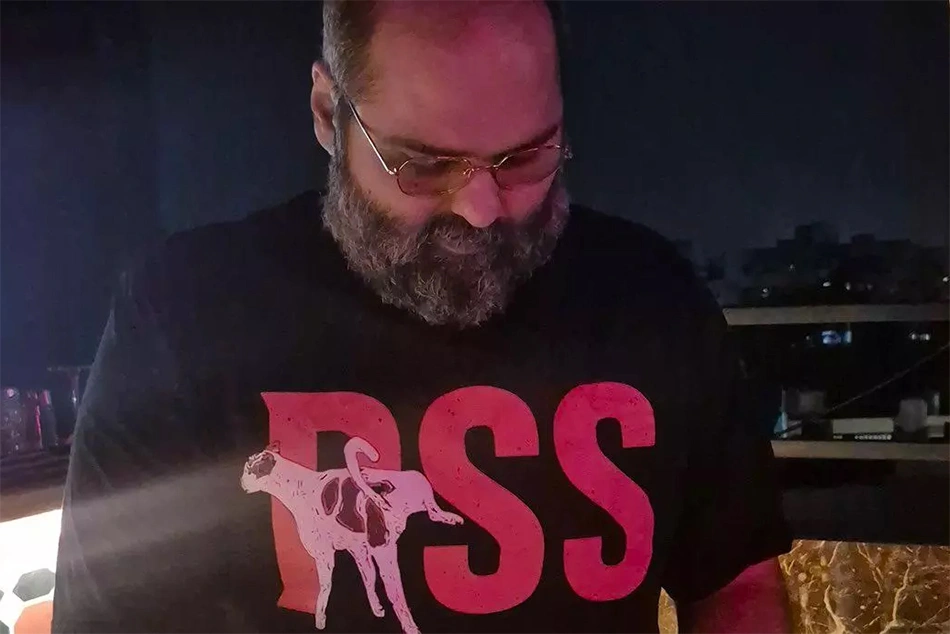
A democracy’s quiet stress test is often seen through satirical sets and remarks. Excellent in this area, only few figures illustrate this better than Kunal Kamra. Kamra’s sets will make you laugh and smile and grin, with your mind forced to think through each word later. Ponder upon its truth, its brutality, moreover its brilliant execution. His comedy does not solely rely on spectacle or shock, but on memory, contradiction and an uncomfortable recognition.
If satire ever had a personified definition, it would very closely be Kamra. He does what a fearless humour is meant to do, asks questions and smartly leaves them unanswered, repeating truths until they become impossible to ignore. He does not invent or innovate insults, just rearranges what already exists, public statements, loud promises, deliberate silences. He holds them, letting the audience breathe with it, until they notice the void between rhetoric and reality. His uncomfortable satire is not accidental or co-incidental but reflective.
Yet this reflective humour has repeatedly been met with not just trolling limited to the internet but actual threat to his life, vilification, a harassing chase. This is not because his aim is to incite violence, or spread falsehood, or division of any kind. But because it hits the actual target on the dart of politics, puncturing the authority’s most fragile shield. That, when power leaves no space for laughter, even jokes begin to look like rebellion.
Vir Das’s work sketches this tension too. An artist, a genius in his craft that is layered, intelligent, intellectually and globally celebrated, turning paradox into poetry, comedy, an art, a lesson. In his now famous, or as many called it out, ‘infamous’ monologue ‘Two Indias’, he brought out the duality of the country. He spoke of a nation where women are celebrated as Goddesses during the day and raped at night, a country that aspires yet struggles with fear, one that is capable of absolute brilliance yet burdened by contradiction.
The strength of that performance was not in accusation, but in affection, the quiet belief that loving a country also means having the courage to face its cracks, its vulnerabilities. It is love, the kind that refuses to look away from the country’s wounds.
And yet, again, even this precise articulation of ambiguities was termed and labelled as ‘anti- national’. It raises quite a question. Is patriotism just focusing on a nation’s strengths and blind siding its loose ends, its capacity to improve and strive to be better? This is a stark irony. An artist, whose attempt to reconcile pride with responsibility and accountability was publicly accused of betrayal. His refusal to pretend that this is a country where only one version exists was treated as a crime.
In democracies firm of their foundations, satire is welcomed as resilience, as a constructive criticism. In insecure ones, sabotage. The repeated targeting of comedians says little about their intent and more about a deteriorating tolerance for dissent disguised as humour.
The threat is not that artists and comedians make us uncomfortable. The real danger is that discomfort itself is no longer permitted. When laughter is patrolled and policed, what follows is not respect but fear. And fear and democracy seldom go hand in hand.
Subtle Revelation
What does all of this reveal? Patriotism, awareness?
That a democracy has become exceptionally sensitive towards a joke, laughter comes at a price, a comedian, with summons. Interesting is the fact that jokes and satires are sanitised while violence has become alarmingly tolerant.
Those who joke are dragged ruthlessly into courtrooms and jails, right from their performing stage. The venue brought down, broken, threatening to set it on fire while those who rape, murder, abduct, are defended, not just protected but garlanded, even granted bail. The men convicted in the Bilkis Bano case, walk free under the language of ‘good conduct’, needless to say the Unnao case still remains a horror, a reminder of how monstrosity negotiates its way through an inclined power structure.
Can this be accidental or a mere reflection of priorities?
An incorrectly worded fictional joke provokes outrage, a violent crime seeks defence and explanation. A comedian is criminalised, a rapist?
Rationalised. The moral order and structure is now inverted. Society is morally scarred.
The sole purpose of a joke, even a bad one, is just laughter. A loud, echoing laughter, however uncomfortable. While the purpose of justice is accountability. The moment these two are confused, corrosion of democracy starts. It collapses slowly and gradually, through fear, through silence, through self-censorship. Artists lose authenticity, they filter themselves, women begin to hesitate to stand up for what is right, to respond, the audience reacts reluctantly, laughs nervously. An entire system dies.
India in all its pride calls itself the world’s largest democracy. But democracy is not a number, or a definition, a textbook syllabus. It is a practice. It is measured by how much dissent it can tolerate, how much imperfection it can endure, how courageously it holds space for correction, for accountability and how freely its people can speak without fearing handcuffs.
‘To err is human.’ Allowing people to make mistakes, to be themselves, especially in speech, is not a weakness. It is democratic strength. Criminalising those mistakes while shrouding real violence is absurdity.
Perhaps the real joke is not what was said on stage, within a set, or a bit or on a show or screen.
Perhaps the real one is that making people laugh can land you in court, while destroying lives can still find public sympathy.
And that is not a joke worthy of a laughter, comfortable or uncomfortable. A punchline any democracy should be proud of.
“If liberty means anything at all, it means the right to tell people what they do not want to hear.”( From The Freedom of the Press by George Orwell)
[The writer, Mythri Tewary, is a Philosophy Postgraduate from the University of Delhi whose work engages with questions of Free Speech, Democratic Fragility and the Ethics of Public Discourse. She writes on the Politics of Power, Satire and Silence.]
Follow ummid.com WhatsApp Channel for all the latest updates.
Select Language to Translate in Urdu, Hindi, Marathi or Arabic