Inside Mina Slaughter House
Established to streamline the ritual of sacrifice animals during Hajj 2026 and Eid al Adha, the state-of-the-art ‘Adahi Slaughter House’ in Mina, near Makkah is fully operational and serve the pilgrims, the Saudi government announced last week
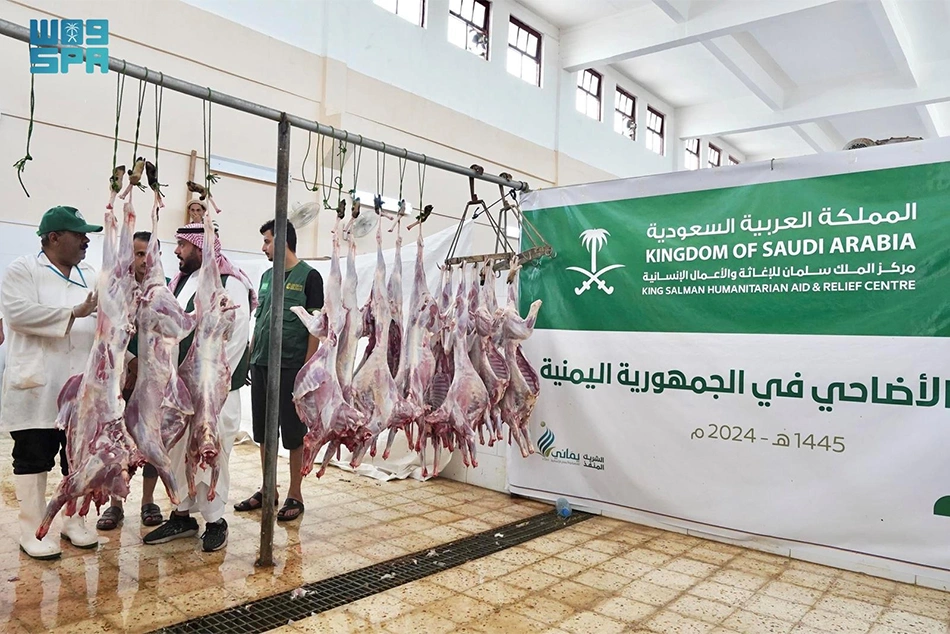
Established to streamline the ritual of sacrifice animals during Hajj 2026 and Eid al Adha, the state-of-the-art ‘Adahi Slaughter House’ in Mina, near Makkah is fully operational and serve the pilgrims, the Saudi government announced last week.
Designed to ensure transparency and adherence to Sharia principles, the Mina Slaughter House has sufficient capacity to handle the massive demand from millions of pilgrims.
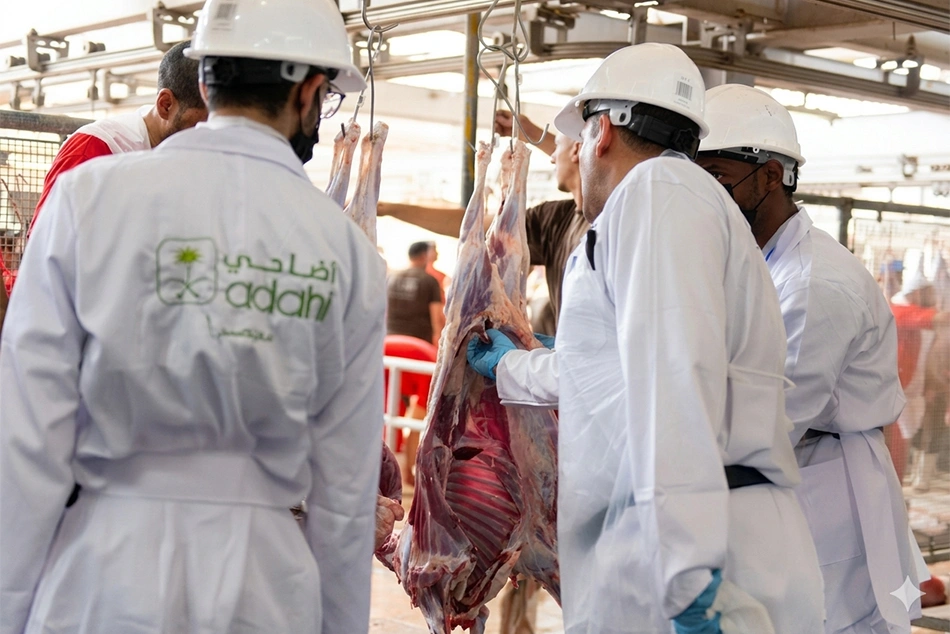
The project stands as the world’s largest automated system in terms of both technology and human resources, employing 25,000 personnel including 17,000 experienced butchers to manage an advanced system for daily sacrifice, high-tech packaging, and massive cold storage.
Pilgrims can avail of this service for 720 SAR by purchasing coupons through the Nusuk app, authorized banks, or platforms associated with Hajj mission of different countries, including the Haj Committee of India.
A special Adahi team follows up the performance of the Qurbani rituals for every purchased coupon within the expected Shari’a compatible time, and the coupon owner is informed about the issue via SMS or email. Once the ritual is completed, pilgrims receive instant notification via email or through their Hajj group coordinators.
Giving more details, Siraj Mohammad, Deputy Supervisor of the Adahi Project, said a rigorous standards are maintained across the 10 operational sites.
“Every animal undergoes inspection to ensure it meets Sharia age requirements (minimum 6 months) and health standards, and post-slaughter, any carcass weighing less than 9 kg is excluded from the process to ensure quality. The meat is then cleaned using automated plants and packed into 2.5 kg cartons”, he said.
“The facility boasts a central cold storage unit on the ground floor and 20 large freezers maintained at -25°C, capable of storing meat from 700,000 animals. This meat is shipped via sea to 27 deserving countries that meet an 8-point eligibility criteria”, he added.
The project has the capacity to slaughter 1.5 million sheep and 10,000 camels/cows. For Hajj 2026, the authorities have already received demands for over 800,000 sacrifices.
Currently, the project is only facilitating the sacrifice of sheep, while the sacrifice of camels and cows remains suspended.
Last year, approximately 60% of pilgrims, including 20,000 individual travelers, fulfilled their religious obligation through this official government project.
The project is officially co-coordinated by General Coordinator of Saudi Arabia’s Project for Utilization of Hady and Adahi and Islamic Development Bank (IDB) and is overseen by the Royal Commission for Makkah City and Holy Sites.
Mina Slaughter House: A Brief History
The Mina Slaughter House is a project established in 1983 to help the less privileged, the needy and the famished around the world. The project is also aimed at achieving a healthy environment in Saudi Arabia.
As Muslims all over the world throng Saudi Arabia every year for Hajj, the 5th pillar of Islam, the Kingdom was faced with the challenge of managing the ever increasing crowd of around two million pilgrims flocking to the holy land.
The experience in the past has been that due to the large number of pilgrims performing Haj, with most of them slaughtering the sacrificial animals, a large percentage of the slaughtered animals got wasted, and eventually became pollutants to the environment. The authorities, hence, visualised the idea of the slaughter house which is like a one-stop arena for the slaughtering and butchering of the sacrificial animals.
“For years, hundreds of thousands of sheep were slaughtered, and after families took what they could use, the rest was simply buried because of the lack of processing facilities for sheep sacrificed one day of the year”, David E Long, an ex-US State Department official, said stressing the Saudi project’s significance.
How the left-over meat is handled?
One of the main objective of the Adahi Project is also to send the processed meat to the needy, unlike the normal practice in the past when the part of the meat was consumed by the pilgrims themselves, and rest were left over. But after the Adahi Project launch, the slaughtered meat in Mina is sent to more than 30 million poor people in 27 countries in Asia, Africa and other parts of the Islamic world free of cost, as per a rough estimates.
As per a comprehensive report on the Saudi Project for the Utilization of Hajj released by IDB, the problem of utilizing the Hajj meat gave birth to the slaughter house and the objectives, the challenges of slaughtering large herds of sheep and its environmental impact in the Kingdom.
“A quick look at the increasing number of pilgrims in recent years as a result of modern and fast means of transportation shows that they reached around two million pilgrims from various parts of the world. Most of them spend a very limited period of time before and after the Hajj season. Then they go back to their countries by their means of transport. That is after they’ve completed their pilgrimage, gave charity, and offered their Adahi (sacrifice)”, the report said.
“This led to an increase in the number of Hadi and Adahi and the accumulation of large heaps upon heaps of unutilized meat, a matter which necessitated getting rid of such heaps by the authorities, either by burying or cremation of unconsumed carcasses to protect the health of pilgrims, citizens and expatriates, as well as to protect the environment. Millions of Saudi Riyals were spent to get rid of carcasses left by pilgrims. This gave birth to the establishment of the Kingdom of Saudi Arabia Project for Utilization of Hajj Meat in 1983”, the IDB said in its report.
The slaughter house has two sections where the animals are slaughtered, butchered and processed. Each of the sections has about 10 slaughtering points. Inside the house were also the Meat Distribution Areas, where pilgrims who bought coupons could go to claim part of the meat.
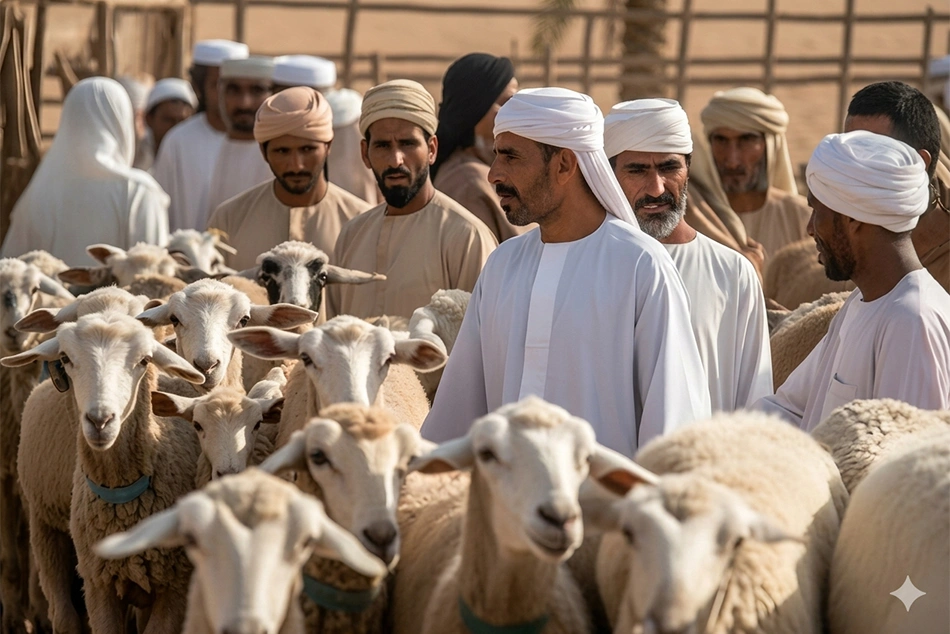
There is a separate room where live animals to be slaughtered are kept, as they are being brought out one after the other for slaughtering. Unlike an average dirty and unkempt environment used as abattoirs in some other climes, the Mina slaughter house is not only well maintained and sustained with good hygienic practices, the slaughterers are well dressed. Prior to entering the facilities, animals are screened by expert veterinarians and Sharia scholars to ensure full compliance of the processes with the required standards.
“This project is first of its kind in the world. This represents a good example of transforming a big problem into a successful venture,” an IDB official who did not want to be named said.
(With inputs from Saudi Press Agency and lodcal media outlets.)
Follow ummid.com WhatsApp Channel for all the latest updates.
Select Language to Translate in Urdu, Hindi, Marathi or Arabic