Why MMRDA Needs Surbana Jurong to Develop Third Mumbai?
The Mumbai Metropolitan Region Development Authority (MMRDA) should feel embarrassed that it has engaged a Singapore firm for crores of rupees to plan the Third Mumbai.
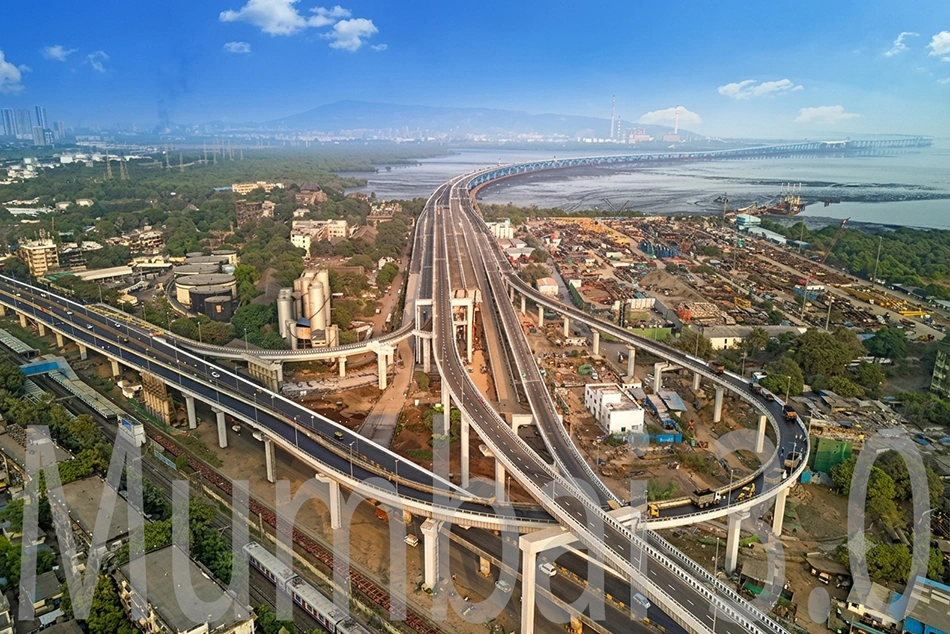
The Mumbai Metropolitan Region Development Authority (MMRDA) was created as a planning body for the Mumbai Metropolitan Region, but it seems, it is completely ignoring this essential function. It should feel embarrassed that it has engaged a Singapore firm for crores of rupees to plan the Third Mumbai.
What on the Earth is its own planning apparatus doing?
Instead, the MMRDA is flaunting this contract.
What a downfall!
These people also seem to suffer from amnesia. Our own bureaucrats and architects did the planning for Navi Mumbai. The region is much more livable than Mumbai, with more greenery and open spaces. J.B. D’Souza, Former Chief Secretary, and Architect Charles Correa were involved.
The The Mumbai Metropolitan Region Development Authority (MMRDA) and its allies are undoing all that good work and are involved in reducing green spaces, selling them and destroying them.
Why on the Earth does the MMRDA need consultants from Singapore?
First implement here the good things Singapore is doing: Create more greenery and impose restrictions on car ownership and car parking, which are such essential elements of life in Singapore. Even an ordinary visitor can give lessons to the MMRDA on this score. A Singapore resident told me there are covered walkways in Singapore. We never heard of this from our planners.
MMRDA, Surbana Jurong Deal
The Mumbai Metropolitan Region Development Authority (MMRDA) has appointed Singapore-based Surbana Jurong Infrastructure Pte. Ltd. to prepare its vision document, master plan and wider development framework.
The agreement was signed by MMRDA Metropolitan Commissioner Dr Sanjay Mukherjee and Surbana Jurong South Asia Chief Executive Avinash Mishra in the presence of Maharashtra Chief Minister Devendra Fadnavis last week.
The new urban centre will cover 323.44 sq km across 124 villages in Panvel, Uran and Pen talukas of Raigad district. The state government notified the project under the Maharashtra Regional and Town Planning Act in October 2024, and designated the MMRDA as its New Town Development Authority.
Surbana Jurong will examine existing land use, transport links, population patterns, utilities, environmental conditions and socio-economic factors before developing the long-term planning framework.
The exercise will also draw on international approaches to transit-oriented development, renewable energy, smart infrastructure, digital connectivity and mixed-use urban districts.
As for the island city, mercifully the BMC’s new footpath policy brings some relief. It has proposed removing illegal ramps that tamper with footpaths. This is easily doable without any public expenditure. But the Brihanmumbai Municipal Corporation (BMC) itself is dumping material on footpaths. This needs to stop. I see branches of pruned trees on most footpaths in my area.
In some Western cities, footpaths are broader than roads, even in the most fancy areas, and vehicular traffic is heavily reduced. Our corrupt politicians need to learn or be made to learn.
And this is from the Mayor of London, Sadiq Khan, today:
“The climate crisis is getting worse, but in London we’ve shown that – with courage and creativity – we can prepare ourselves for its impacts. We’ve planted more than 640,000 trees across the capital, shading our streets from the summer sun. We’ve embraced rewilding while creating and improving more than 2,000 football pitches’ worth of green space, providing natural drainage to prevent flooding. And just last month, we set out a plan to clean up our rivers and create safe swimming sites where Londoners can cool down in the heat. We have more zero-emission buses than any city in Europe and about a third of our country’s electric charging points.”
It is okay if our mayors and bureaucrats are not as conscious, but they could at least try.
Surbana's Past Record
Sudhir Badami, transport analyst, says the Surbana consultant from Singapore had already been engaged in 2011 and nothing has come of that proposal; it was not workable. He questioned those proposals then, asking:
“So, what are the implications of the FSI given in the Surbana proposal? Mumbai is already the densest city in the world; it has the least open public spaces for its inhabitants, with about 100 lakh living in slums. Public transport is totally inadequate.
“By developing Greater Mumbai in accordance with the proposed Concept Plan, it will negate every effort to make this a livable city. The city has to be livable for all of its inhabitants.”
The experts from Singapore had added another dimension to the Concept Plan: To carry out reclamation on the harbour side and build exclusive townships. Their logic is to make high-priced land available at low construction costs. Mumbai, after all, came into being through reclamation of the sea.
What is forgotten is that it was the mudflats which were reclaimed in the late 18th and 19th centuries, joining the seven islands in the island city. Those were the times when concepts of environment, ecology and project-affected persons were unheard of. Reclaiming land in dock areas is nothing short of realty driving the Concept Plan.
We need to learn from London and its relevant approach. Says the Mayor of London, Sadiq Khan:
“The climate crisis is getting worse, but in London we’ve shown that – with courage and creativity – we can prepare ourselves for its impacts. We’ve planted more than 640,000 trees across the capital, shading our streets from the summer sun. We’ve embraced rewilding while creating and improving more than 2,000 football pitches’ worth of green space, providing natural drainage to prevent flooding. And just last month, we set out a plan to clean up our rivers and create safe swimming sites where Londoners can cool down in the heat. We have more zero-emission buses than any city in Europe and about a third of our country’s electric charging points.”
It is okay if our mayors and bureaucrats are not as conscious, but they could at least try.
[The writer, Vidyadhar Date, is a senior journalist and author of a book seeking better public transport.]
Follow ummid.com WhatsApp Channel for all the latest updates.
Select Language to Translate in Urdu, Hindi, Marathi or Arabic