PM CARES: Trust is Earned Through Disclosure, Not Authority
The strongest criticism of PM CARES is not that it is illegal or fraudulent, it is that it is insufficiently transparent for the scale of public trust it commands.
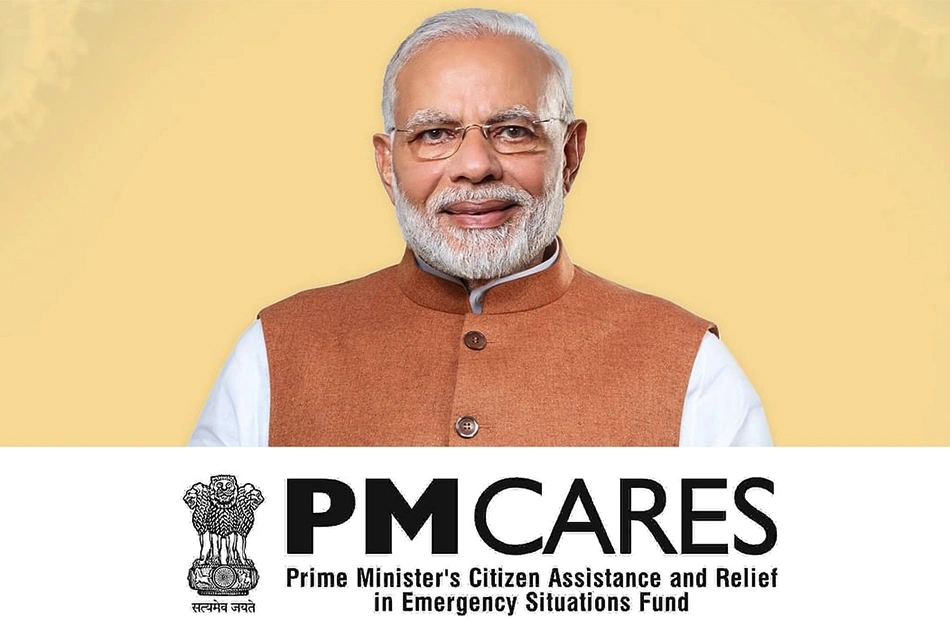
When a government asks citizens to donate in the middle of an emergency, it makes an implicit promise:
The money will be there when people need it most.
The latest PM CARES accounts raise an uncomfortable question:
What happens when billions are collected in the name of emergency, but the money largely remains untouched?
The numbers are difficult to ignore. The PM CARES Fund had ₹8,452 crore at the end of March 2025. During 2024–25, it received more than ₹1,200 crore through donations and interest income, while expenditure was only about ₹87.85 lakh. Roughly 93% of the corpus — around ₹6,641 crore — was parked in fixed deposits and the trust is earning more than ₹400 cr every year as interest.
This is not merely a story about accounting. It is a story about public trust. The Fund was created in March 2020, when India was entering one of the gravest public-health emergencies in its history. Its stated purpose was explicit:
To respond to emergencies, calamities and distress, including public-health emergencies.
The official PM CARES description says the Fund can provide financial assistance, upgrade healthcare infrastructure, support research and assist affected populations.
So the central question is not whether the money technically belongs to a private charitable trust. The question is much simpler: If citizens were asked to contribute billions for emergencies, why is such a huge corpus still sitting largely in bank deposits years after the country experienced devastating pandemic and repeated natural disasters?
A Fund Born From an Emergency
On 27 March 2020, PM CARES was established as a public charitable trust. Prime Minister Narendra Modi became its ex-officio chairman, with the defence, home and finance ministers as ex-officio trustees. The Prime Minister’s Office provides administrative and secretarial support to the Fund. The government’s own explanation describes PM CARES as a mechanism to respond to emergencies and distress.
The fundraising campaign was extensive. The Fund received tax benefits for donors. Corporate contributions could qualify as CSR expenditure. Foreign donations were permitted after the Fund received exemption from the Foreign Contribution Regulation Act (FCRA).
In 2020–21 alone, the government says PM CARES collected ₹7,013.99 crore in contributions. The Fund’s publicly reported receipts reached almost ₹11,000 crore that year when interest and other receipts are included. This was money collected during a national catastrophe.
Millions of Indians were frightened, unemployed, sick or struggling to feed their families. The government itself announced a ₹3,100-crore allocation from PM CARES for COVID-related measures, including ventilators, migrant assistance and vaccine development. That makes the latest balance sheet even more consequential. Because six years after the Fund’s creation, the corpus has not disappeared, it has only grown.
₹8,452 Crore Sitting There
After lots of hue and cry, the govt disclosed the amount. The latest accounts show that PM CARES ended 2024–25 with approximately ₹8,452 crore. But expenditure during the year was only about ₹87.85 lakh , which is an extraordinarily small fraction of the corpus. News reports based on the newly disclosed accounts calculate this at around 0.001% of the Fund’s balance.
Think about what that means. A fund established to deal with emergencies spent less than ₹1 crore in an entire year while holding more than ₹8,000 crore. That does not automatically prove wrongdoing. But it raises a legitimate democratic question:
What is the point of an emergency fund if its defining characteristic is that it does not spend the money during emergencies?
The government’s possible answer is straightforward: PM CARES is a reserve, not a conventional annual expenditure programme. The Fund’s purpose is to remain available when required.
That argument deserves consideration. But it does not end the debate. A reserve must still be accountable.
Citizens deserve to know what emergency scenarios qualify for deployment, what thresholds trigger spending, who decides, how quickly money can be released, what projects qualify and why billions remain invested while vulnerable citizens face crises.
The ₹324-Crore Question
One of the most striking issues in the latest accounts is the reported ₹324 crores returned by implementing agencies. The existence of refunds itself is not evidence of wrongdoing. Government programmes routinely return unspent or excess funds. But the public deserves clarity.
- Who were these implementing agencies?
- Which projects had received the money?
- Why was the money returned?
- How long had it remained unused?
- Why was it not redirected to other urgent needs?
And most importantly:
- Where are the detailed explanatory notes?
Reports examining the accounts have flagged the absence of detailed disclosures as a transparency gap. A balance sheet can tell citizens how much money exists. But a democracy requires more than numbers. It requires explanation.
Audit is Not the Same as Transparency
This is where the PM CARES debate becomes larger than accounting. The government can say:
“The accounts are audited.”
Critics can respond:
“Audit is not the same as transparency.”
Both statements can be true at the same time.
PM CARES is audited by independent auditors rather than the Comptroller and Auditor General of India (CAG), a distinction that has been central to public debate. The question of whether PM CARES is a “public authority” under the RTI Act has also been contested in courts and before the Central Information Commission, with the government maintaining it is a private charitable trust.
This creates a unique structure. The Prime Minister chairs the Fund. Senior Union ministers are trustees. The PMO provides administrative support. Yet the government insists it is not a government fund. Legally, that distinction may hold. But in public perception, it creates a contradiction. The more a fund looks like the state, the more citizens expect state-level transparency.
The Problem of Perception
PM CARES is not an ordinary trust in the public imagination. It was announced during Covid - a national crisis. It was promoted by the Prime Minister. It received donations from individuals, corporations and foreign contributors. It offered tax benefits and CSR eligibility. Its website and administrative structure are closely linked to government institutions.
So when citizens donated, they were not engaging in abstract philanthropy. They were responding to a national appeal. The moral expectation was simple: This is the money for India’s emergency response. That expectation is now at the heart of the controversy.
What Global Governance Standards Say?
International governance research consistently shows that transparency is central to public trust.
The OECD’s surveys on trust in public institutions highlight that citizens are more likely to trust governments that demonstrate openness, fairness and evidence-based decision-making.
Across countries, trust declines when people feel decisions are opaque or insufficiently explained. The lesson is not complicated: Trust is earned through disclosure, not authority. And financial transparency is one of the clearest ways governments earn it.
The Comparison with PMNRF
India already has another emergency fund: the Prime Minister’s National Relief Fund (PMNRF). Unlike PM CARES, PMNRF has historically published detailed annual data on contributions and expenditure. It has been used for decades to provide relief for floods, cyclones, medical emergencies and disasters. This raises a simple institutional question:
Why was a parallel emergency fund needed?
The government’s answer is that PM CARES was designed for broader emergencies and faster response mechanisms. The Supreme Court has also recognised PM CARES as a separate fund and declined to merge it with PMNRF.
So legality is not the issue. The issue is whether duplication improves efficiency or reduces transparency.
The Real Issue: Information, Not Allegation
The strongest criticism of PM CARES is not that it is illegal or fraudulent. It is that it is insufficiently transparent for the scale of public trust it commands. The key unanswered questions remain:
- Why is expenditure so low relative to the corpus?
- Why is so much money parked in fixed deposits?
- What explains the return of ₹324 crore?
- Which projects received funding, and what outcomes were achieved?
- Why are detailed financial notes not publicly accessible in a clear, consolidated form?
These are not rhetorical attacks. They are governance questions.
What about COVID Spending?
Defenders of PM CARES point to real expenditure: ventilators, migrant support, vaccine development and emergency healthcare funding. CAG reports and government statements confirm that PM CARES supported procurement and distribution of medical equipment during the pandemic.
But this raises another issue. Spending money is not the same as demonstrating impact. A ventilator purchased is not automatically a ventilator effectively used. A sanction is not automatically a service delivered.
That is why transparency must go beyond expenditure totals. It must include outcomes.
Why Transparency Matters More in Emergencies
PM CARES was created during a moment of national fear. People donated not as investors or donors in a normal charity cycle, but as citizens responding to crisis. That creates a higher moral obligation. When governments mobilise public emotion, they also inherit public responsibility. If citizens are asked to trust, they must also be shown evidence. Otherwise, trust becomes fragile.
The Core Democratic Question
At its heart, the PM CARES debate is not about one fund. It is about a principle: Can large public-facing funds operate with limited public scrutiny simply because they are legally structured as private trusts?
Or should the scale of public participation determine the level of transparency?
The Final Question
A democracy is not defined by how much money it collects, but by how openly it explains what it does with that money.
The PM CARES controversy therefore comes down to a simple demand:
Open the books. Fully, clearly and continuously.
₹8,452 crore sitting in a bank account is not, by itself, a scandal. But billions collected in the name of a national emergency, combined with limited public explanation of how that money is held, deployed or returned, creates a legitimate crisis of accountability.
Interestingly, if PM CARES is indeed a private trust, as some voices in the BJP camp claim, then the questions become even more serious. The Fund has received contributions from salaried employees, public-sector workers, corporate CSR funds, NRIs, celebrities and prominent businesspeople — many of whom contributed with the understanding that their money would be used to meet the emergency needs of the nation in response to government appeals.
Yet today, the Fund appears increasingly opaque. Its annual expenditure is minuscule compared with its enormous corpus, while a substantial portion of the money remains parked in fixed deposits and continues to generate interest.
At the same time, government schools, hospitals, educational institutions and other public services across the country continue to struggle with inadequate funding.
This raises an uncomfortable question:
If the money was collected in the name of national emergencies, why is such a massive corpus being allowed to accumulate while urgent public needs remain unmet?
The issue is not merely whether PM CARES is technically a private trust or whether its accounts are audited. The real issue is whether an institution that was created during a national crisis, promoted by the Prime Minister and funded by citizens and corporations in response to appeals from the government should be subjected to the highest possible standards of transparency and public accountability.
And in a democracy, the absence of transparency is not a minor flaw. It is a test of trust itself.
[The writer, Mohd Ziyauallah Khan, is a freelance content writer & editor based in Nagpur. He is also an activist and social entrepreneur, cofounder of the group TruthScape, a team of digital activists fighting disinformation on social media.]
Follow ummid.com WhatsApp Channel for all the latest updates.
Select Language to Translate in Urdu, Hindi, Marathi or Arabic