Read: Affan Ansari on Studying Abroad, Scholarships and Global Ambitions
In an exclusive interview, Political Science and International Relations Graduate Affan Ansari discusses his journey from studying Science in India to pursuing Higher Education in Turkey and Europe, the realities of studying abroad, scholarships and financial planning, community engagement, and his ambition to build a career in peacebuilding, conflict resolution and international security.
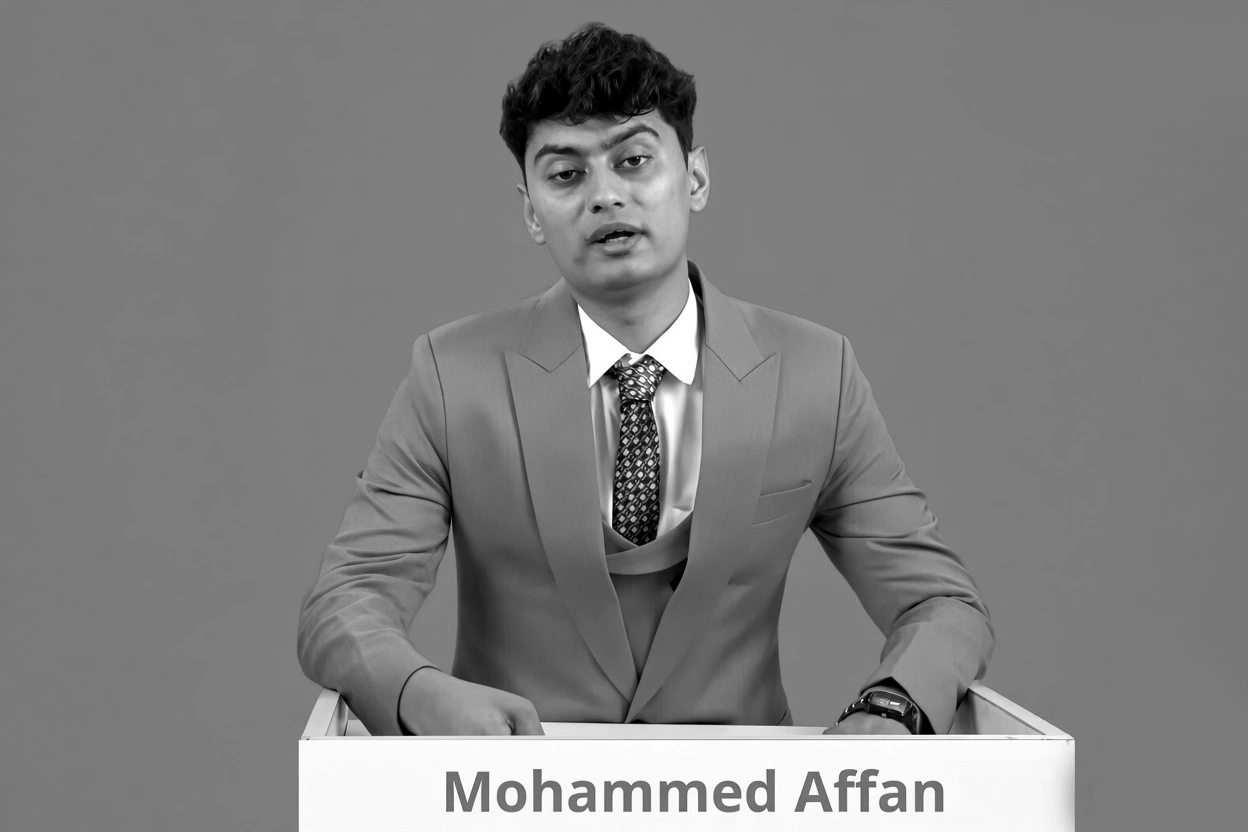
In an exclusive interview, Political Science and International Relations Graduate Affan Ansari discusses his journey from studying Science in India to pursuing Higher Education in Turkey and Europe, the realities of studying abroad, scholarships and financial planning, community engagement, and his ambition to build a career in peacebuilding, conflict resolution and international security.
Q.1. Affan, please introduce yourself. Tell us about your educational background and your journey so far.
Affan Ansari: My name is Affan Ansari. I come from a middle-class family in Mumbai and living my dream to study abroad. I am a graduate in Political Science & International Relations from Turkey, and Research fellow at the Social Sciences Lab MENA, which is situated in Estonia, Europe (SSL-MENA).
I completed my schooling at Anza High School, Byculla and then my Junior College education at Maharashtra College of Arts, Science and Commerce.
After Junior College, I took a different path. I moved to Turkey and completed my Bachelor’s degree in Political Science and International Relations from Istanbul Sabahattin Zaim University. During my undergraduate studies, I also got the opportunity to spend a semester at the University of Wrocław in Poland through the Erasmus exchange programme.
My journey was not simply about obtaining a foreign degree. For me, it was about stepping outside my city and comfort zone, meeting people from different cultures and understanding the world more closely.
Today, I have received Master’s offers from two highly ranked universities in the UK, a leading university in Poland, public universities in Germany, as well as two universities in Turkey.
Q.2. Students who take Science in India generally move towards Engineering or Medicine. Why did you choose Political Science and International Relations?
Affan: The irony is that I studied Science, but it was a virus that made me realise my real interest was in the world beyond Science.
For me, the journey from Science to Social Science was a struggle between social expectations and my own interests and ambitions. In India, when a student performs well in Science, there is naturally a push towards Engineering or Medicine. I too chose Science largely because of family and social expectations.
But the two years of the COVID lockdown became a turning point. I began to understand what globalisation really meant. A virus that emerged in China could affect almost every country in the world. I became fascinated by the role of the WHO, how different governments responded to the crisis, and how decisions taken in one part of the world could have consequences far beyond its borders. It changed the way I looked at the world, from a local perspective to a global one.
That was when I realised that my real interests lay in Political Science, International Relations, geopolitics, and understanding different societies and political systems around the world. So, moving from Science to Social Science was not really a change of direction. It was a realisation of the direction I actually wanted to take.
Q.3. Students generally target the USA, UK, Canada or Australia. Why did you choose Turkey?
Affan: Turkey was primarily a combination of affordability and opportunity for me.
My parents had wanted me to study in Turkey after Class 9 because of the scholarship opportunities available there. At that time, I was not ready to move abroad, so I completed my Junior College education in India.
Later, we came to know about the Turkish Government’s Türkiye Scholarships programme. I applied, but because of the intense competition, I was not selected for the government scholarship.
However, I did not give up. I independently applied to Turkish universities and received a 50 per cent scholarship from Istanbul Sabahattin Zaim University. For my family, this made the cost of my education financially manageable.
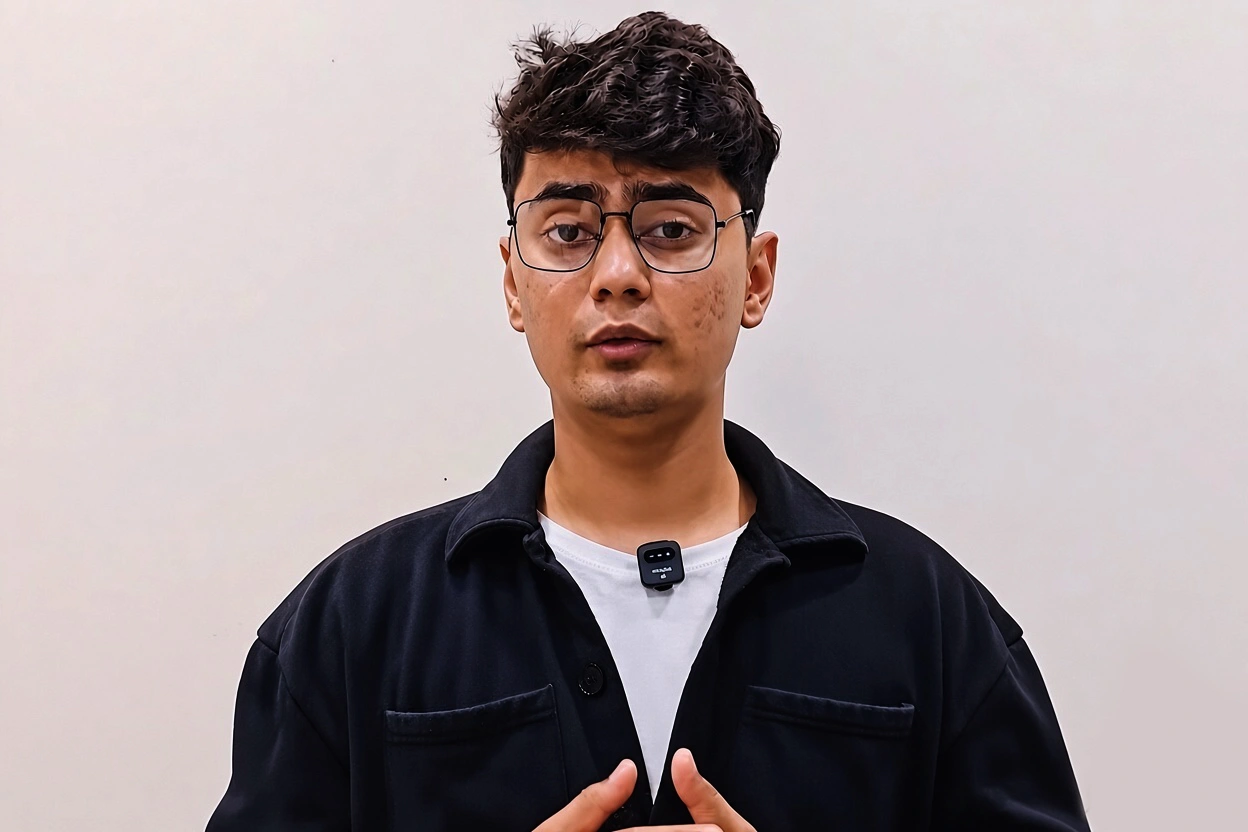
The university’s Erasmus students exchange and scholarship programme was another important factor. Through Erasmus, I got the opportunity to spend a semester in Europe and study in Poland.
My message to students is simple: do not choose a country simply because it is popular. Look at the university, tuition fees, living costs, scholarships, visa rules, course quality, post-study opportunities and, most importantly, your own career goals and family budget.
Q.4. Many parents believe that studying abroad is very expensive and only highly intelligent or wealthy students can afford it. What would you say?
Affan: Studying abroad is not only for the rich or exceptionally brilliant; with the right information, early planning and the right choice of country and university, it can be achievable for many students.
I think one of the biggest barriers is not always money, but a lack of information. Many families assume that studying abroad means going to the UK, USA, Canada or Australia, where costs can be very high. But there are also comparatively affordable options across Europe, including public universities in Germany and opportunities in countries such as Italy, France, Poland and Czech Republic.
Of course, costs, admission rules and scholarships vary by university and programme, so students should always verify information through official sources.
My most important advice is: do not wait until Class 11 or 12 to start thinking about studying abroad. Planning can begin much earlier, even at school level. If a student starts planning three or four years in advance, there is enough time to prepare for language requirements, entrance tests, scholarships and finances.
Q.5. If a middle-class family wants to send its child abroad, how should it plan?
Affan: If you want to study abroad tomorrow, start building your profile today, because your CV begins in school, not after graduation.
I look at it in three stages.
- First, school: Build strong English skills and, if possible, learn a foreign language. Participate in Olympiads, sports, cultural activities and competitions, and keep a record of your achievements and certificates.
- Second, Junior College: Maintain a strong academic record and start understanding requirements such as IELTS, TOEFL, SAT or programme-specific entrance tests. Also get involved in volunteering and community work. Universities look beyond marks.
- Third, graduation: If you are planning a Master’s abroad, identify your target programmes early and prepare for requirements such as IELTS, TOEFL, GRE, GMAT or other relevant assessments. If Germany is your target, check the exact requirements of each programme, including whether an additional assessment is required.
Most importantly, do not think of your profile as marks alone. Internships, volunteering, research, competitions, leadership and meaningful extracurricular activities can all make a difference.
So my advice is simple: start early, explore your interests and build a profile that tells universities who you are, not just what your marks are.
Q.6. Are very high marks necessary for studying abroad?
Affan: Your marks may decide which doors open first, but they do not decide how far you can go.
High marks certainly provide an advantage, especially for competitive scholarships, but marks are not everything. Every university has a different admission system. Some focus heavily on academic grades, while others also consider entrance tests, motivation letters, work experience, extracurricular activities and the overall profile of the student.
So, if a student has average marks, they should not assume that studying abroad is out of reach.
Average marks do not mean average ambition.
The key is to understand your strengths, research universities carefully and apply to programmes where your overall profile gives you a realistic chance of admission.
Q.7. Which fields currently offer better scholarship and career opportunities abroad?
Affan: Don’t choose a career because the world says it has jobs; choose where your interest, ability and future opportunity meet.
The fields offering scholarships and career opportunities change with countries and economies, so I would not advise students to blindly follow one particular trend.
Technology-related fields such as AI, cybersecurity, data science and software, along with engineering and renewable energy, continue to offer opportunities. Healthcare is another major sector, not only for doctors but also for nurses, physiotherapists, laboratory professionals and other specialists.
However, students also need to consider licensing, qualification recognition and language requirements in their chosen country.
So instead of asking only, “Which field has the most jobs?”, students should ask three questions: What am I interested in? What am I good at? And what opportunities will this field offer in the future?
When interest, ability and opportunity come together, you are much more likely to build a career that lasts.
Q.8. What would you say about scholarships and education loans?
Affan: The biggest scholarship advantage is not just good marks, it is starting early and knowing where to look.
There are merit-based, need-based and government-funded scholarships. Some of the most generous opportunities I know include TürkiyeBurslari Scholarships, DAAD in Germany and Erasmus Mundus in Europe, along with Eiffel Scholarships in France, Stipendium Hungaricum in Hungary and Swedish Institute scholarships.
In Telangana, the Chief Minister’s Overseas Scholarship Scheme for Minorities also provides substantial financial assistance to eligible students.

My advice is to start researching scholarships early and look beyond marks. Academic performance, extracurricular activities, volunteering, leadership and your overall profile can all matter.
A full scholarship is ideal, but even a partial scholarship can make a big difference. In my case, a 50% university scholarship helped make my education in Turkey financially possible.
And if you consider an education loan, calculate the total cost and repayment burden carefully. Studying abroad should not put a family under unsustainable financial pressure.
Q.9. Can students work part-time abroad and manage their expenses?
Affan: Yes, you can work part-time abroad, but you should never go abroad depending on a part-time job to fund your education.
Many countries allow international students to work part-time, but the rules vary by country, visa and programme and can change over time. So students should always check the official rules applicable to their visa.
From my own experience, I would strongly recommend having a realistic financial plan for tuition and initial living expenses before going abroad. Part-time work should be additional support, not the primary source of funding.
At the same time, working part-time can provide financial independence, discipline and valuable international work experience.
So, work part-time to support your education, not to make your education possible.
Q.10. What has been the biggest challenge for you as a student abroad?
Affan: The hardest part of studying abroad was not being away from home, it was learning how to stand on my own when home was thousands of kilometres away.
Living abroad meant managing academics, finances, a new culture and everyday decisions on my own. There were moments of loneliness and stress, but the most difficult moment was the earthquake in Istanbul. I was afraid, I felt very alone, and suddenly lectures and exams moved online. Everything felt completely upside down.
But that experience also changed me. I gathered the courage to step outside myself and started volunteering with NGOs. It taught me that when life becomes difficult, you can either withdraw or find a way to contribute.
Later, studying in Turkey and spending a semester in Poland exposed me to students from different countries and completely different perspectives. I travelled across 10 EU countries, met young people from many cultures and learned to navigate the world independently.
Looking back, the biggest lesson was that studying abroad did not just educate me academically. It taught me how to be independent, resilient and comfortable even when I was far away from home.
Q.11. Affan, what is your dream? What do you want to do in the future?
Affan: I don’t just want a job at the United Nations. I want to be part of the global conversations that can prevent wars and build peace.
My dream is to become an International Civil Servant, specialising in Peacebuilding, Conflict Resolution and International Security, and eventually work with the United Nations.
We live in a world of wars, geopolitical tensions and changing alliances. At the same time, the Global South is demanding a stronger voice in global decision-making. As an Indian, I want to be part of that change.
There is a saying in politics and diplomacy: “If you are not at the table, you are on the menu.” I want to be at the table.
I want to use my education and career not simply for a prestigious position, but to contribute to peace, diplomacy and solutions for people affected by conflict and instability.
For me, an international career is not about having a title. It is about having a voice where decisions that shape our world are made.
Q.12. What is your final message to middle-class students and parents in Mumbai and India?
Affan: Foreign education does not begin at the airport. It begins with a dream, a plan and a decision your family can afford.
To parents, I would say: don’t push your children into a field simply because society considers it successful. Look at their ability, interests and future opportunities together.
And to students: don’t choose foreign education because of the glamorous life you see on Instagram. Going abroad is not a holiday. It is a responsibility.
If you genuinely want to study abroad, start early. Explore scholarships and affordable universities, prepare for language and entrance requirements, understand visa rules and, most importantly, make sure the decision is financially sustainable for your family.
An ordinary student from a middle-class family in Mumbai or anywhere in India can begin an extraordinary journey.
Dream big, but calculate carefully. Plan early, verify everything and never let your financial circumstances stop you from exploring your possibilities.
Because the first step towards foreign education is not the airport. It is planning.
Q.13. You are studying abroad yourself. What are you doing for your community in Mumbai?
Affan: For me, education is meaningful only when you can use what you learn to make someone else’s journey easier.
Since 2021, I have been associated with Kawish’s Community Education & Student Mentorship Programme and Madni High School. Whenever I return to Mumbai, I spend time mentoring students, helping them with English and academics, and guiding those who aspire to study abroad.
After completing my graduation, I also spent time in Mumbai working with my father and uncle during the Special Intensive Revision (SIR) of electoral rolls, helping with voter mapping and assisting people with their SIR forms. That experience gave me a very different kind of understanding of how democracy works at the grassroots level.
I have also volunteered with the IHH Humanitarian Foundation, including relief work following the 2023 earthquake in Turkey, and was involved in COVID-19 and leprosy relief activities in 2020.
I know how difficult it can be to find the right information and guidance. If I have gained knowledge through my own journey, I believe I have a responsibility to share it.
These experiences have taught me one simple lesson:
Education should not only change your own life. It should give you the ability and responsibility to contribute to your community and society.
[Falak Ather Faizee is an Intern at ummid.com.]
Follow ummid.com WhatsApp Channel for all the latest updates.
Select Language to Translate in Urdu, Hindi, Marathi or Arabic