The Families Left Behind: Their Right to Be Remembered, Our Responsibility to Act
When a humanitarian worker is killed, the violation does not end with the death; it continues through the lives of the family left behind, and their suffering deserves recognition, documentation, support, accountability, and a place in collective memory
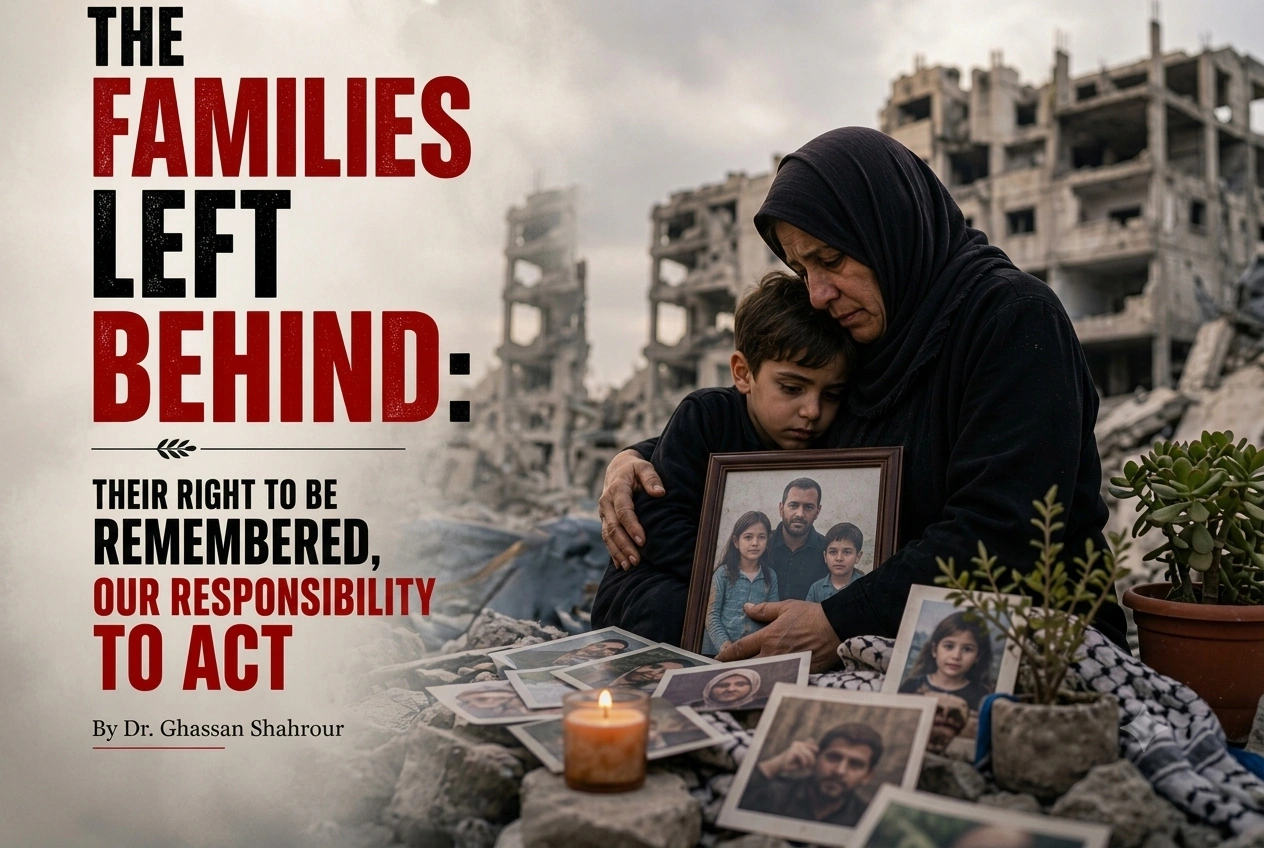
World Humanitarian Day 2026 brings a needed shift in attention. The world usually focuses on humanitarian workers who are killed or injured while serving others. Their courage, work, and deaths rightly receive attention. But behind every fallen humanitarian are families whose lives are permanently changed.
My engagement with World Humanitarian Day has developed over time. In 2025, I wrote about humanitarian action, and in 2023 I spoke at and helped organize a regional civil society meeting in Kuwait around the Day. Returning to the Day in 2026, I find myself drawn to a group whose suffering is too rarely seen: the families left behind.
This year’s focus on families of fallen humanitarians is important precisely because their experiences are rarely given the same attention as the deaths of those who served. Choosing to focus on them is not simply an act of compassion. It is a recognition of their rights and of our responsibility. They have a right to be heard, remembered, and supported, and we have a responsibility to ensure that their loss does not disappear from public attention.
Humanitarian workers do not serve alone. Behind every doctor, nurse, driver, aid worker, or volunteer is a family that waits, worries, and hopes for a safe return. When a humanitarian worker is killed, the consequences extend far beyond the immediate event. Children may lose a parent. Parents may lose a son or daughter. Spouses may suddenly face emotional, social, and financial burdens that can last for years.
There is also a distinctive shock for these families. Families of soldiers may understand that military service carries a risk of death and may have established systems of recognition, compensation, and support. Families of humanitarian and health workers generally do not expect their loved ones to become victims of armed violence. When a doctor, nurse, driver, or aid worker is killed, the shock can be profound, particularly when humanitarian systems are not designed to provide families with comparable long-term institutional support.
The consequences can be psychological as well as economic and social. Grief, trauma, anxiety, depression, disrupted family relationships, and the effects on children may require sustained psychosocial support. Such support should not end after the immediate crisis. Families may need assistance for years as they rebuild their lives and adapt to an absence that cannot be repaired.
Local humanitarian workers deserve particular attention. They often serve their own communities, remain close to their families, and continue working when their own homes and neighborhoods are threatened. When they are killed, their families may lose not only a loved one but also an essential source of income, support, and community connection.
This is why ending impunity must be understood as more than a legal requirement. It is also a responsibility to those left behind.
Ten years after the unanimous adoption of United Nations Security Council Resolution 2286 on the protection of health care in armed conflict, the ICRC, WHO, and MSF warned in May 2026 that the situation had not improved and had intensified in many contexts. They called for stronger protection, swift and impartial investigations, and accountability for attacks on health care.
For families, accountability has a deeply human meaning. It means knowing what happened. It means that the death of a loved one is officially recognized and not reduced to a statistic. It means that those responsible for violations of international humanitarian law are investigated and, where appropriate, prosecuted. Justice cannot bring a loved one back, but impunity can deepen the wound.
Documentation is therefore essential. The suffering of families should become part of humanitarian protection, accountability, and collective memory. Their testimonies do more than preserve memories. They document the human consequences of violations of international humanitarian law and can help connect individual loss with accountability. They show what the loss means for children, spouses, parents, and communities, sometimes across generations.
The world and the media have a responsibility to widen the lens. The story should not end with the humanitarian who was killed. Families are part of the story, and their suffering is part of the consequence of the violation. Their stories should not appear only when a death occurs. They deserve sustained attention that recognizes the years of grief, adjustment, and resilience that follow. Preserving their experiences helps ensure that these crimes are not forgotten, minimized, or erased from the world’s memory.
World Humanitarian Day 2026 gives us an opportunity to make this choice deliberately: to listen to families, document their experiences, provide sustained psychosocial and practical support, and demand accountability for those responsible.
Their right is to be heard, remembered, and supported.
Our responsibility is to make sure they are not forgotten.
To protect the living, we must remember the fallen.
To honor the fallen, we must stand with the families they left behind.
And to honor those families, we must end.
Follow ummid.com WhatsApp Channel for all the latest updates.
Select Language to Translate in Urdu, Hindi, Marathi or Arabic