How Indian Women Are Reclaiming Public Spaces
As Indian women increasingly travel together, organise girls’ nights and build communities of care, sisterhood is emerging as a powerful way of reclaiming public spaces long shaped by fear and exclusion
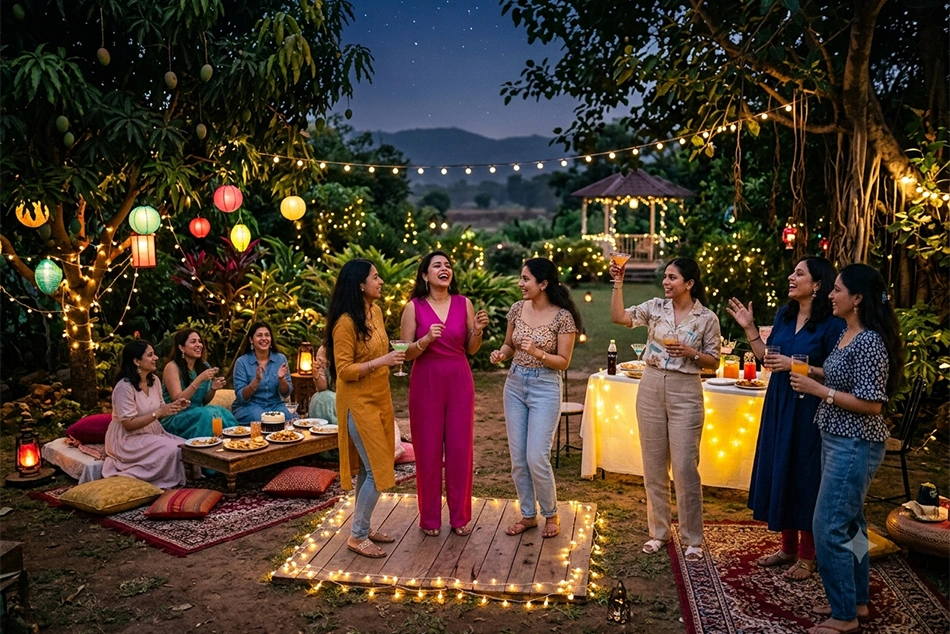
As women increasingly travel together, organise girls’ nights and build communities of care, sisterhood is emerging as a powerful way of reclaiming public spaces long shaped by fear and exclusion. These acts may look ordinary, but in a society where women’s mobility has long been constrained by fear, they are deeply political. How does friendship enable women to reclaim their right to occupy, enjoy and belong in the city?
Cities Built Around Women’s Fear
It has become second nature for women to send a text that reads “reached home,” share their live location before getting into a cab, or think twice before a late-night walk. In India, women’s relationship with public spaces is mediated by caution- not just where to go, but when to leave, what to wear and whom to be with. Safety is not an afterthought, it is the condition upon which freedom is negotiated.
This vigilance shows up in the data too. The National Annual Report and Index (NARI) 2025 found that four in ten women still feel unsafe in their cities, and surveys suggest only a minority feel comfortable using public transport alone at night. Urban spaces may be physically open to everyone, but they are not experienced equally. Too often, the city asks women to adapt to fear rather than demanding that fear be dismantled.
Sisterhood as a Safety Net
In response, women have built their own infrastructures of safety. Female friendships today extend well beyond emotional companionship, they function as networks of care and protection. Women are joining travel collectives, running clubs, book circles and informal communities that encourage them to step into spaces they might otherwise avoid alone. A late-night dinner feels different when shared with friends and a solo trip feels less intimidating with a women’s travel group. Yashika Girdhar, manager in corporate communications, Tata Steel Colors has attended networking sessions for women and describes it this way:
“One of the most meaningful spaces I have occupied recently was a networking session on building your personal brand, held in a setting that has traditionally symbolised exclusivity, a high-end members-only club. What stood out was a room filled with women learning, connecting and taking up space with confidence. It reminded me that reclaiming public spaces is not only about streets and parks, it is also about ensuring women feel they belong in boardrooms, clubs and every room where opportunities are created.”
Taking Up Space, One Outing at a Time
When women travel together, go on midnight runs or simply walk in parks, they do something more than socialise, they make themselves visible. Leisure has historically been gendered, with men enjoying easier access to spontaneity while women negotiate permission, safety and judgement. A group of women on a late-night walk may look ordinary, yet such acts quietly challenge assumptions about who belongs in public space and when.
Anoushka Jain founder of Enroute Indian History who organises heritage walks for women, has seen this firsthand:
“We got calls asking how far the parking was, how many guards, whether it was well-lit. Historical monuments are often considered unsafe for women, so we wanted to create a space for them to explore together. We’ve had 100 to 200 women join, all age groups, from their twenties to their seventies, sometimes nieces and aunts together. It’s queer-friendly too, and afterwards many decide to travel together. They feel safer wearing what they want on these walks, knowing they won’t be judged.”
The City Belongs to Women Too
The “right to the city” is not merely about access to infrastructure, it is about the right to participate, enjoy and shape public life. For women, this means more than protection from violence. It means the freedom to wander without purpose, sit alone in a park or stay out late without their choices being read through the lens of risk. Saumya Garg, a psychotherapist working with a somatic and relational lens, recalls organising a Valentine’s Day gathering:
“I organised an event called Come As You Are, where we brought women together to talk about the love or lack of it for their bodies. Those ninety minutes left me with a feeling of sisterhood and camaraderie, and made me realise how important community is in addressing concerns that are born socially.”
The conversation on women’s safety often centres on surveillance, policing, and protection. These matter, but they are not enough. Women don’t simply want safer cities- they want cities where they can linger in parks, take midnight walks, sit in cafés for hours and move through public space without their presence appearing unusual.
Every girls’ trip, every late-night snack run, every group of women laughing on a street corner is in its own way an assertion of belonging. Sisterhood has become more than emotional support, it has become an infrastructure of freedom. Perhaps that is the quiet revolution unfolding before us: women, together, transforming public spaces from places they merely pass through into places they can finally call their own.
[The writer, Purwai Pravah, is Assistant Professor in the Department of Psychology, CHRIST (Deemed to be University), Delhi NCR.]
Follow ummid.com WhatsApp Channel for all the latest updates.
Select Language to Translate in Urdu, Hindi, Marathi or Arabic