When Water Doesn't Wait: Nepal, Assam and People Who Answered
Nepal flood was a tragedy no one could have foreseen, but in Assam floods return on schedule, year after year, built on administrative negligence and broken promises, met each time with the same divisive language instead of the unity the moment demands
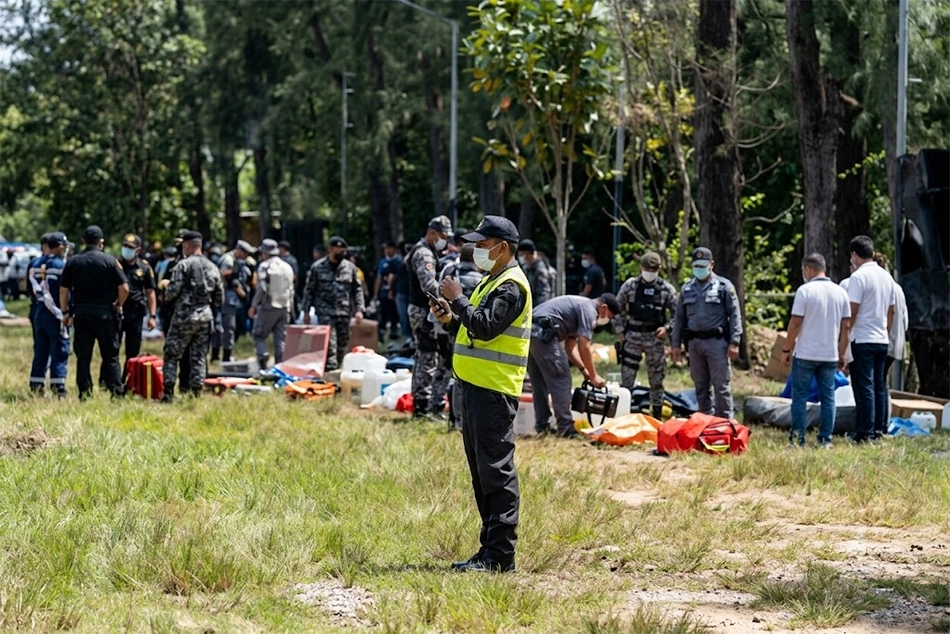
A catastrophic tragedy has struck our neighbouring country Nepal following a flash flood with local inhabitants along with tourists fighting tooth and nail to save their souls. A wall of water tore through Nepal's Rasuwa, Nuwakot, Dhading and Gorkha districts on 26th August 2026, when a glacier broke off in the mountains near the Nepal-Tibet border and crashed into the Bhotekoshi and Trishuli rivers. Villages vanished within minutes.
At the time of writing this piece, the death toll has climbed past 730, with nearly 3,000 people still missing, among them hundreds of foreign trekkers and pilgrims, and close to 300 Indian nationals still unaccounted for. Given the sheer scale of the destruction, officials expect the toll to rise further as rescue teams reach areas that are still cut off. Bridges, roads and power stations were swept away in the same breath. It happened too fast for warning sirens, too fast for evacuation plans, too fast for anyone to see it coming.
A Neighbour's Grief, Answered Quietly
India responded within hours. Prime Minister Narendra Modi spoke to his Nepali counterpart Balendra Shah to convey his condolences and offered help. Relief material and medical assistance were flown to Kathmandu soon after, for which Shah publicly thanked India. That same spirit of solidarity showed up far from any government office too, in ordinary condolence and Dua for the victims that people quietly shared and spoke through the week, a reminder that grief for a neighbour does not wait to be asked for.
Assam's flood is a different kind of tragedy, and that difference matters. Where Nepal was blindsided by a glacier no one could have predicted while back home Assam knows exactly when its flood is coming. It arrives with the monsoon, along the same Brahmaputra and its tributaries, in roughly the same districts, almost every single year. This year it began on 19th July, when a cloudburst in Nagaland's Mon district sent the Dikhow, Disang, Janji and Dhansiri rivers surging past their danger marks into Sivasagar, Charaideo, Jorhat and Golaghat. Over 700,000 people were displaced at the peak of the crisis, officials called it the worst flood in fifty years, and the death toll has now crossed 100, with nearly 1.37 lakh people affected across seven districts. Water is receding in some pockets, but several rivers are still flowing above the danger mark.
The point of setting these two tragedies side by side is not to weigh one against the other. It is to ask a harder question: if Assam's flood follows a known pattern, why does it still devastate the state every year as if arriving for the first time? A disaster you can see coming on the calendar is, in theory, one you can prepare for. Whether that preparation happens depends entirely on whether the government treats flood season as a recurring emergency worth investing in, or as bad luck to be managed with relief camps after the water has already entered people's homes.
When Rhetoric Turned Divisive
Just months ago, Assam Chief Minister Himanta Biswa Sarma made headlines reportedly saying that if a Muslim rickshaw puller asked for five rupees as fare, people should give him only four, so that hardship would force him to leave Assam. Said from a public platform, it drew sharp criticism nationwide and led a joint opposition forum to submit a memorandum to the President. It was not isolated either; the Chief Minister has repeatedly targeted Bengali-speaking Muslims, over livelihoods and through communally charged talk of population. At the very moment Assam most needs unity and government sensitivity but the same divisive politics keeps playing out against one section of society.
Then there is the promise that has become a bitter joke. Ahead of the 2021 Assembly elections, Union Home Minister Amit Shah told Assam's voters to give the BJP five more years and we will make Assam, flood-free. It was the first point in the BJP's manifesto. Five years have passed, the BJP returned to power, and Assam still drowns every monsoon. People are now asking on social media where that flood-free Assam went.
Hands That Rose Amid the Devastation
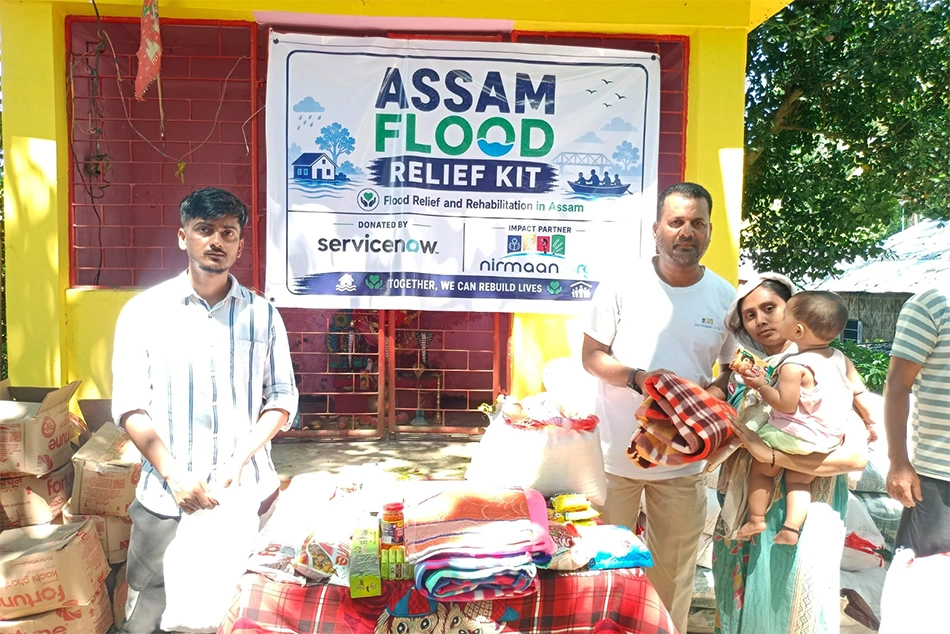
Against this backdrop, a very different picture was emerging on the ground. AIUDF chief Maulana Badruddin Ajmal threw himself into relief work, personally visiting Sivasagar, Charaideo and Jorhat, releasing funds through the Ajmal Foundation, and later announcing a rehabilitation package that included homes for displaced families and mekhela-sador distribution for women, reaching people without regard to political or religious identity. He was not alone. From the Barak Valley to Upper Assam, Muslim volunteers rode boats lane to lane carrying food, water and medicines into areas where government machinery had not yet reached. This is proof that humanity does not wait for permission from hateful rhetoric; when water enters a home, the hand that reaches out does not ask what religion the drowning person belongs to.
A Disaster Made Worse by Human Hands
Every year Assam drowns but it gets written off as nature's doing. That is not the whole story. Close to 40 percent of the state is already flood-prone, and the Brahmaputra, one of the siltiest rivers in the world, keeps weakening its own embankments regardless of rainfall. This year, a Nagaland cloudburst sent rivers surging into the valley before the Brahmaputra had even peaked, reaching places that had never flooded before. Years of deforestation, unchecked mining and vanishing wetlands have quietly stripped away the natural buffers that once slowed floodwater down. The rain is nature's doing; how far it travels and how much it destroys is a question of what has been allowed upstream, year after year, without correction.
A Drowning Assam, a Silent Media
More than a hundred deaths, nearly 1.37 lakh people affected, hundreds of villages submerged, and yet national media has given Assam's flood almost none of the attention any disaster of this scale deserves. No prime-time debates, no sustained ground reporting, none of the pressure that holds a government accountable. This happens every year, as if disasters in the Northeast simply do not meet the bar of newsworthiness applied to the rest of the country. That silence is as much in question as the government's own indifference.
Relief on Paper, Relief on the Ground
The administration has not been entirely idle. There are currently 125 relief camps sheltering close to 49,000 people, with rice, daal and salt reaching those who lost everything. Assam's Chief Secretary has asked banks for loan moratoriums and told insurers to speed up claims for people who lost their documents. None of this sounds wrong on paper. The trouble is the gap between an order being issued and it reaching someone standing in waist-deep water, a gap that paperwork and flood-cut-off districts are often too slow to close. It is in that gap that ordinary people and community groups keep showing up, doing quickly what official channels are still catching up to.
The Questions That Remain
Nepal's flood was a tragedy no one could have foreseen. However, in Assam floods return on schedule, year after year, built on administrative negligence and broken promises, met each time with the same divisive language instead of the unity the moment demands. And yet, in both, the same thread runs quietly through the wreckage: while a chief minister spoke of starving a rickshaw puller into leaving his own state, Assam's Muslim community was out on boats delivering food and drinking water to strangers; while Nepal counted its dead, mosques in India were offering Dua for a neighbouring country's grief. Ordinary people, regardless of religion, keep choosing brotherhood over the polarizing noises around them. Today, Assam and its neighbours are battling not just water, but questions that still await honest answers, and one of them is simple: if a flood can be predicted, why does it still get treated like a surprise?
(The author of the above article is Bhopal-based Razia Masood who is a Social Activist. Her Qualifications include: B. Sc., M.A. (English), PGDCA along with Certification in AI)
Follow ummid.com WhatsApp Channel for all the latest updates.
Select Language to Translate in Urdu, Hindi, Marathi or Arabic