Why Should Censorship on Sonia Gandhi's Book Worry Every Indian?
As we see Penguin Random House India has sought changes and deletions to Congress Parliamentary Party (CPP) Chairperson Mrs. Sonia Gandhi memoir — changes that she reportedly rejected, certainly raise serious and troubling questions
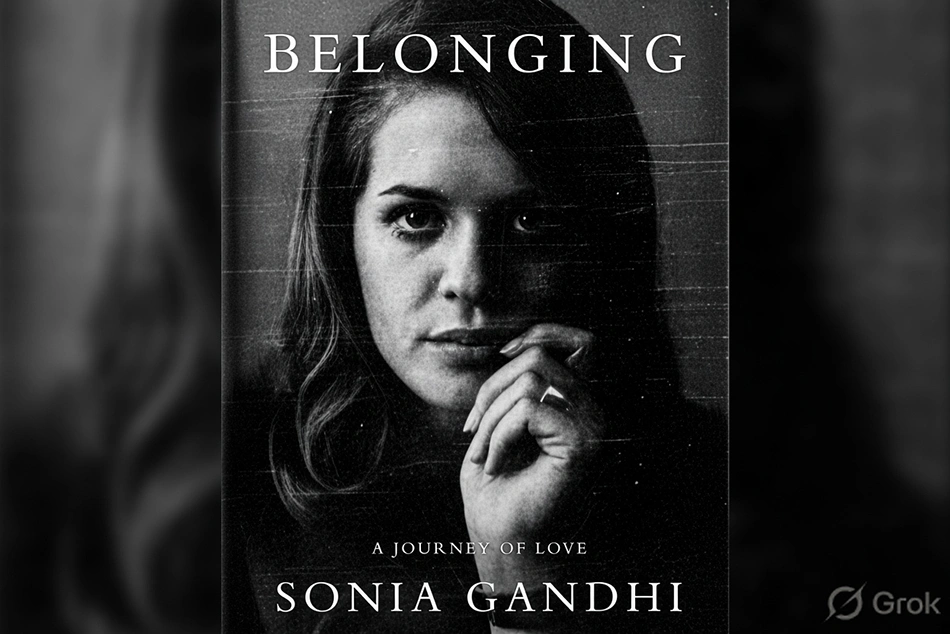
As we see Penguin Random House India has sought changes and deletions to Congress Parliamentary Party (CPP) Chairperson Mrs. Sonia Gandhi memoir — changes that she reportedly rejected, certainly raise serious and troubling questions.
The controversy becomes even more significant because the international edition of the memoir is being published by Penguin Random House globally. If the same publisher is willing to publish the book for a global audience, why did its Indian arm allegedly seek changes and deletions? What was the rationale behind those demands? And most importantly, was the publisher under pressure?
These questions cannot be dismissed in the present political environment. Sonia Gandhi’s memoir titled Belonging: A Journey of Love is not merely a book. It is the personal and political account of one of the most consequential figures in contemporary Indian politics. Her journey, from entering a foreign country as a young woman to becoming President of one of India’s oldest political parties, and then dedicating decades of her life to public service is part of India’s political history.
She has the freedom to tell her own story. A memoir, by its very nature, reflects the experiences, beliefs, memories and perspectives of its author. Readers may agree or disagree with those views. Critics may challenge them. Historians may analyse them. But no one should have the power to sanitise a political memoir simply because certain parts are inconvenient to those in power. If reports that Penguin India demanded changes are correct, the question is not just about one author and one publisher. It is about the larger condition of freedom of expression in India.
When “Editorial Decisions” Become a Convenient Excuse
Publishers naturally have editorial processes. Editors suggest improvements in language, structure, clarity and factual accuracy. But there is a fundamental difference between genuine editorial guidance and asking an author to delete or alter politically sensitive reflections.
Any attempt to remove difficult passages from Sonia Gandhi’s memoir under the guise of “editorial decisions” raises serious concerns about an author’s freedom to tell their own story.
What exactly were the proposed deletions?
As per sources, the publishers wanted Sonia to get rid of the references to the RSS and China, as well as Narendra Modi’s ‘Jersey cow’ remarks, from her memoir. She refused. Now, let us try to understand where this debates fall.
Were they related to factual accuracy, legal concerns or literary quality? Or did they involve politically inconvenient reflections that could create discomfort for the current regime? Until these questions are answered, the controversy will continue to raise doubts about the freedom with which publishers are able to operate in India.
The contrast between the international publication of the book and the apparent reluctance of Penguin India makes these questions even sharper. If the memoir is considered publishable abroad, why should it require special deletions in India?
Is the Indian political environment becoming so restrictive that publishers now feel compelled to exercise political caution before publishing the views of opposition leaders?
A Climate of Pressure and Self-Censorship
Over the past several years, concerns have repeatedly been raised about shrinking space for dissent in India. Opposition leaders, journalists, activists, independent media organisations, academics and civil society groups have all spoken about increasing pressure and intimidation.
The problem is not always direct censorship. Often, the more dangerous form is self-censorship. When institutions begin to anticipate what those in power may dislike, they start making compromises without even waiting for an official order. Publishers may avoid controversial books. Media organisations may soften criticism. Universities may discourage uncomfortable discussions. Artists may decide that some subjects are simply too risky.
This is how democratic freedoms gradually weaken not always through an openly announced ban, but through an atmosphere in which everyone begins asking: Will this create problems for us? If Penguin India was indeed under pressure directly or indirectly to seek changes in Sonia Gandhi’s memoir, it would be a disturbing example of how political pressure can influence cultural and intellectual institutions.
The current regime has often been accused by its critics of creating an environment in which opposition voices are increasingly marginalised. Whether through the use of state agencies, pressure on media organisations, attacks on dissent or the targeting of political opponents, the broader concern remains the same: Is India still providing equal democratic space to voices that challenge those in power? A democracy cannot survive on the voice of the government alone.
The Right to Tell One’s Own Story
Sonia Gandhi has dedicated a major part of her life to the service of the nation. Her political journey has witnessed some of the most dramatic moments in modern Indian history. She has experienced personal tragedies, political battles, electoral victories, defeats and some of the most significant developments in the country’s recent past.
Her memoir is a reflection of that journey.
She has every right to describe events as she experienced them. She has the right to share her memories, opinions and political reflections. Readers also have the right to know her perspective. That is the essence of a free society.
Her story does not have to be approved by the ruling establishment before it can be told. Nor should a publisher feel compelled to make politically convenient alterations simply because the author belongs to the opposition. A democracy is not protected by ensuring that everyone agrees. It is protected by ensuring that people who disagree still have the freedom to speak.
Difficult Voices Must Be Heard
India has always been a country of competing ideas, political movements and ideological debates. The Congress has its version of history. The BJP has another. The Left has its own perspective. Social movements, minorities, regional parties and civil society organisations also have voices that often challenge the dominant narrative.
No single political party has the right to monopolise India’s history. And no government, however powerful, should determine which memories are acceptable and which are inconvenient.
Sonia Gandhi’s memoir may contain views that some people strongly disagree with. That is perfectly legitimate. Critics should challenge her through debate, counterarguments and criticism. But asking for the removal of politically inconvenient reflections is a different matter altogether.
The answer to a book one disagrees with is another book not censorship, intimidation or editorial pressure.
Penguin India Must Answer
The reported episode places Penguin India in an uncomfortable position. It owes the public and the literary community greater clarity. If changes and deletions were requested, the publisher should explain why.
- Were these normal editorial suggestions?
- Were there specific legal concerns?
- Or was the publisher responding to an atmosphere of political pressure?
The distinction matters.
A publisher’s responsibility is not merely to produce books. Publishers also serve as custodians of ideas, debate and intellectual freedom. Their role becomes especially important when political power appears uncomfortable with certain voices.
Penguin Random House’s international decision to publish the memoir makes the situation in India particularly striking. It creates the impression that the book can be published for the world, but that its contents may be considered too uncomfortable for the Indian reader. If that is the case, it would be an indictment of the present political atmosphere.
The Larger Question is About India’s Democracy
This controversy goes beyond Sonia Gandhi and her memoir. The real question is: Are we becoming a democracy where the opposition is allowed to exist, but not allowed to speak freely? The strength of a democracy is not measured by how loudly the ruling party can speak. It is measured by how safely its critics can speak.
India needs difficult voices. It needs inconvenient questions. It needs political memoirs that challenge official narratives. It needs journalists who investigate the powerful, writers who provoke debate and publishers who refuse to surrender intellectual freedom.
If every institution begins to bend under political pressure, the result will not be national unity. It will be silence. And silence is never a sign of a healthy democracy.
Smt. Sonia Gandhi has the right to tell her story in her own words. Readers have the right to read it. Those who disagree have the right to criticise it.
That is how a democracy functions. Any attempt to alter, dilute or suppress a political voice because it is inconvenient to the current regime must therefore be resisted. Difficult perspectives do not weaken democracy.
Suppressing them does.
In a democracy, opposition voices cannot be treated as a threat. They are an essential part of the democratic conversation. The question surrounding Penguin India is therefore much larger than a publishing dispute. It is a question about freedom. And in today’s India, that is a question that deserves to be asked loudly and without fear.
The Final Thought
The controversy surrounding Sonia Gandhi’s memoir is ultimately about much more than a disagreement between an author and a publisher. It raises fundamental questions about freedom of expression, institutional independence and the shrinking space for opposition voices in India. If publishers begin altering political narratives because they fear the consequences of displeasing those in power, democracy itself suffers. Sonia Gandhi has earned the right to narrate her life, experiences and political journey in her own words.
Her memoir should be judged by readers, debated by critics and challenged by historians not diluted through political pressure. A confident democracy does not fear uncomfortable memories or inconvenient perspectives. India’s strength has always been its diversity of ideas and voices. Protecting the freedom to express those voices is essential if the country is to remain a vibrant, fearless and truly democratic republic.
[The writer, Mohd Ziyauallah Khan, is a freelance content writer & editor based in Nagpur. He is also an activist and social entrepreneur, cofounder of the group TruthScape, a team of digital activists fighting disinformation on social media.]
Follow ummid.com WhatsApp Channel for all the latest updates.
Select Language to Translate in Urdu, Hindi, Marathi or Arabic