These events at Berlinale 2026 revealed truth is impossible to ignore
The debate at Berlinale 2026 ultimately reanimates a familiar philosophical polarity: aesthetic autonomy versus ethical engagement
The controversy surrounding the Berlin International Film Festival 2026 has revived one of the oldest aesthetic debates in modern cultural history: is art autonomous, existing for its own sake, or does it bear social and political responsibility?
The so-called “media storm” at the Berlinale has transformed a philosophical question into a debate.
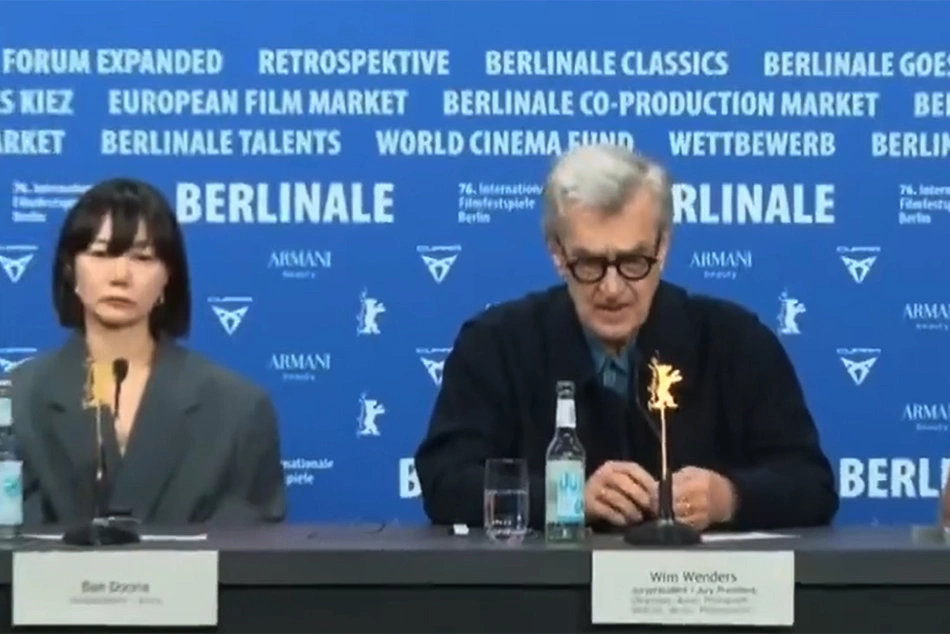
The dispute lies the festival’s response to the ongoing war and genocide in Gaza. On opening day, what began as a press interaction, evolved into a broader discussion over artistic neutrality and moral accountability.
The Spark: “We Have to Stay Out of Politics”
On 12 February, during a press interaction, a journalist asked about Germany’s support for Israel and the selective solidarity shown towards Palestinians in Gaza. Ewa Puszczyńska responded that the question was “a bit unfair.” Jury president Wim Wenders went further, stating:
“We have to stay out of politics because if we make movies that are dedicatedly political, we enter the field of politics. But we are the counterweight of politics, we are the opposite of politics. We have to do the work of people, not the work of politicians.”
The statement was, though, brief but it echoed the doctrine of aesthetic autonomy, associated with nineteenth-century European thought “art for art’s sake,” which insists that art must remain detached from political instrumentalisation.
Historically, this position has served an important function, protected artists from state propaganda, preserved creative freedom, and resisted coercive political agendas. The movement defended most famously by Oscar Wilde, sought to free artistic creation from moral didacticism and political utility.
Yet Wenders’ remark did not calm the debate. It ignited it.
Arundhati Roy’s Refusal
The most forceful response came from the Indian novelist and activist Arundhati Roy, who had been invited for the screening of her film “In Which Annie Gives It Those Ones.” Roy withdrew from the festival, describing the jury’s remarks as “unconscionable.” She was “shocked, and disgusted.”
“To hear them say that art should not be political is jaw-dropping. It is a way of shutting down a conversation about a crime against humanity even as it unfolds before us in real time – when artists, writers and filmmakers should be doing everything in their power to stop it.”
Roy’s withdrawal was not a gesture of personal offence but an ethical declaration. She rejected that artistic silence is neutral. For her, silence during “crime against humanity” becomes complicity. Her intervention aligns with a long tradition of engaged literature; one that regards the writer as witness and moral agent rather than detached observer.
Toni Morrison said it perfectly: “All good art is political! There is none that isn’t.” Roy’s position stands squarely within that lineage. Art, she suggests, exists within history, within power structures, and within moral reality.
Collective Dissent: The Open Letter
Roy’s act of withdrawal was soon followed by collective protest. Eighty-one film workers, including internationally recognised figures such as Tilda Swinton and Javier Bardem, signed an open letter expressing “dismay” at what they described as the festival’s silence on Israel’s war in Gaza.
The signatories urged the Berlinale to state clearly its opposition to what they termed “Israel’s genocide” and criticised what they characterised as “anti-Palestinian racism.” They also denounced Wenders’ assertion that filmmaking is the “opposite of politics,” insisting instead that cinema and politics are inseparable.
The letter further alleged that, during the previous year’s festival, filmmakers who spoke out for Palestinian life and liberty had been aggressively reprimanded by senior programmers. One filmmaker was reportedly investigated by police, and festival leadership “falsely implied that the filmmaker’s moving speech – rooted in international law and solidarity – was “discriminatory”.
The Berlinale has historically taken explicit political stances, expressing solidarity with Ukraine and supporting Iranian artists resisting state repression. The claim of neutrality, critics argue, therefore appears selective.
Film festivals are not abstract aesthetic spaces; they are embedded within political economies. They receive public funding, operate within national contexts, and function as symbolic platforms of cultural diplomacy.
To declare such institutions politically neutral is to overlook their structural entanglement with power.
Cinema itself is not politically inert. It shapes perception, constructs empathy, and frames collective memory. For critics of the festival’s stance, the claim that art is “the opposite of politics” collapses under scrutiny. Art may resist partisan alignment, but it cannot exist outside ideology, history, or moral consequence.
Autonomy Versus Engagement
The debate at Berlinale 2026 ultimately reanimates a familiar philosophical polarity: aesthetic autonomy versus ethical engagement.
The autonomy thesis defends artistic freedom from political coercion. It protects imagination from instrumentalisation. Yet its limitation becomes apparent in moments of acute historical crisis. When violence unfolds in real time, calls for neutrality may appear more like institutional avoidance.
Engaged art, by contrast, assumes that artistic production carries moral weight. It asserts that witnessing imposes responsibility. It treats the artist not merely as creator but as participant in history.
Roy’s withdrawal and the collective letter expand this second doctrine. They redefine artistic identity as inseparable from ethical consciousness. They insist that institutions claiming neutrality must apply it consistently or confront the charge of selective silence.
Roy’s refusal and the open letter do not conclude the debate. They renewed it. They insist that art cannot escape history, detach itself from human suffering, and declare moral innocence through silence.
Whether one defends autonomy or engagement, one fact remains inescapable: art operates within the world, not outside it.
The events at Berlinale 2026 have made that truth is impossible to ignore.
[The writer, Azmat Ali, is a New Delhi–based writer in English and Urdu who focuses on literature, religion, and politics.]
Follow ummid.com WhatsApp Channel for all the latest updates.
Select Language to Translate in Urdu, Hindi, Marathi or Arabic