Municipal Elections, Union Budget and Future of Pune Real Estate
The city you live in five years from now will depend on what happens when you vote, and what the budget gives us next month. Both count.
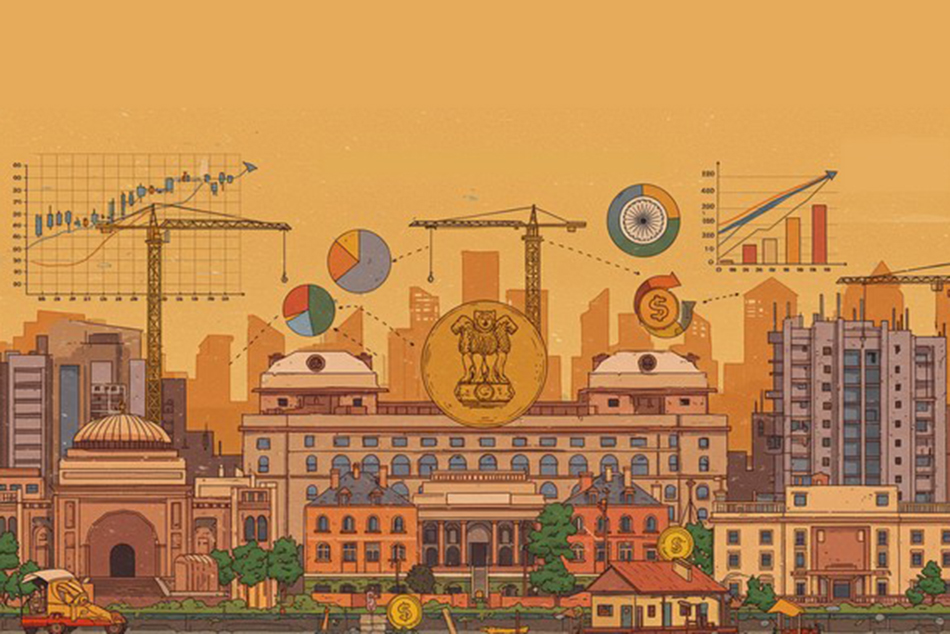
The elections for the Pune and Pimpri-Chinchwad Municipal (PCMC) governments that are happening right now are not just about politics in those cities. They're about the infrastructure, the cost of housing, and the future liveability of two cities that have become magnets for millions of Indians looking for jobs, homes, and a better quality of life. At the same time, with the Union Budget just weeks away, real estate industry stakeholders are waiting to see if the government finally puts affordable housing and urban infrastructure at the top of its list of priorities.
These are two issues that could make or break the industry in the next few years. The choices made at the local level and the decisions made at the national level will have long-term effects on how people live, work, and plan for the future in Pune and PCMC.
Worsening Infrastructure Deadlock
Pune and PCMC are both growing cities, but not everyone is benefiting equally from that growth. There are whole areas of India that are having trouble with basic public services that other cities take for granted, even though there are new office towers and luxury developments going up.
Take Hinjawadi in PCMC. Hinjawadi was previously outside PCMC and was administered by multiple authorities. This resulted in bad infrastructure despite it being a major IT hub. In 2025, the Maharashtra government merged Hinjawadi and nearby villages into PCMC in order to streamline its governance. The expectation was that it would help improve civic services, improve overall administration, and boost infrastructure for residents and businesses.
Hinjawadi has problems with such severe waterlogging issues. The Pune Metropolitan Region Development Authority (PMRDA) has identified multiple instances where unauthorised construction has blocked natural water channels. This has caused rainwater to build up along the metro route and in nearby residential areas. It is not just a hassle - it is dangerous. These floods lower property values and make it hard for people to get to work, and to live and work in the area.
Then there's the bigger story about infrastructure in less populated areas. Kalas-Dhanori-Lohegaon, Yerawada-Gandhinagar, and the newly merged areas like Keshavnagar-Manjari and Undri all have terrible traffic jams, narrow roads that haven't been widened in decades, inadequate drainage systems, and severe water shortages. Many places rely on water tankers so much that people have to pay extra to get water every day.
Flood line restrictions have stopped the redevelopment of old housing societies. Every year, large plots of land set aside for schools, hospitals, and sports fields sit empty. This isn't because there is no need for them, but because of bureaucratic inertia and a lack of coordinated planning.
In the areas of Wakad, Punawale, and Tathawade that became part of PCMC in 1997, the road network is still incapable of catering to the large number of people living there. These areas have grown rapidly because they are close to job centres. The same thing happens again and again along the old Mumbai-Pune Highway and in areas near the metro construction sites.
What the Data Shows About Supply and Demand
There is a big difference between what the real estate industry is building and what regular Indians really need. According to ANAROCK's most recent study, affordable housing (units priced below Rs 40 lakh) made up only 18% of housing sales in India's top seven cities in the first half of 2025. This is down from 37% in 2021. That's a big fall.
In Pune, sales volumes are strong overall (housing sales have grown by 56% in the past five years), but the mix of homes sold has changed a lot. The number of premium homes that cost more than Rs 1 crore has gone up by a mind-boggling 5 times. In the meantime, it is getting harder and harder to find homes that cost less than Rs 45 lakh, which used to be the main part of Pune's real estate story. There is no arguing that developers have moved their launches to higher-end segments to make more money, but weak demand in the affordable segment has also made the sales mix even more uneven.
This is not what the Pune and PCMC markets need and frankly, it is a failure of policy. The problem of not being able to find affordable housing has gotten worse. Knight Frank India's data shows that the ratio of supply to demand for affordable housing has dropped from 1.05 in 2019 to only 0.36 in June 2025. This means that there are almost three people looking for an affordable home for every one that is available. That's a very serious lack of supply.
The Role of Civic Leadership - More Important Than You Think
Theauthorities elected or appointed to PMC and PCMC have a lot of power to speed up or slow down infrastructure projects. They are in charge of getting approvals, making budgets, buying land, and coordinating between departments. The difference between fixing a waterlogging problem in one monsoon and letting it go on for ten years often comes down to whether there is real political will and administrative ability.
Take the Katraj-Kondhwa road widening project, which was approved all the way back in 2018. It was stuck for years because it took too long to buy land. PMC only recently stepped in and gave some funds to move the project forward. Without committed leadership at the local level, that kind of decisive action does not happen.
The Old Mumbai-Pune Highway project is also complicated and requires a lot of planning. It includes not only road work but also the installation of huge 1,000 mm diameter pipelines to solve the water shortage in PCMC, as well as the construction of the metro. Success depends on corporators who know how water, traffic, and real estate development are all connected, and are willing to push for things to be done on time.
When you vote for corporators in these elections, you're really voting for who will support or ignore projects like these. In a city where millions of people are buying homes and putting their life savings into them, the quality of the infrastructure has a direct effect on property values, quality of life, and, in the end, your ability to make money.
What the Union Budget Can Change
As the country gets ready for the February 1 Union Budget presentation, the real estate industry is making a strong case - affordable housing needs immediate policy action.
The limit for what counts as 'affordable housing' is currently set at Rs 45 lakh. This limit has not changed in years, even though land and construction costs have gone up astronomically, especially in Tier 1 and Tier 2 cities like Pune. Badal Yagnik, CEO of Colliers India, correctly points out that "standardising and updating the criteria for affordable housing to reflect the real prices in Tier I cities can boost demand for residential real estate."
The industry wants the government to take a number of specific actions in Budget 2026:
- Better tax breaks for homebuyers: It's a good idea to raise the interest deduction limit under Section 24(b) from Rs 2 lakh to Rs 5 lakh a year. There is a major need for enhanced tax relief for mid-income homebuyers, as well as higher interest deduction limits.
- Interest subsidies for first-time buyers: Direct interest subsidies can help hopeful property buyers who don't qualify for current PMAY programs to be able to afford their loan EMIs. This would be a major boost, especially for young, working-class people in Pune.
- Broadened definition of affordability: Most people agree that the limit on affordable housing should be raised to Rs 75 lakh or even Rs 80 lakh in big cities, based on current land and construction costs. Without this amendment, the definition mean nothing. Developers just stop building affordable homes because they can't figure out how to make the numbers work.
- Urban infrastructure investment: This is where local and national policies meet. We need to urgently improve our water systems, roads, drainage, and public transport in order to handle more people so that Pune and PCMC remain liveable. The budget should carve out major allotments for this - and at least here, going by the incumbent government's past focus on infra development, there is no doubt that there will be.
- Streamlined approvals: The industry also needs the GST on under-construction homes to be brought to a more reasonable level, and speedier project approvals to avoid delays. A Single Window Clearance System is the need of the hour.
How Everything Fits Together
Projects to improve city infrastructure and the national housing policy are not separate - they can and must coexist. Our cities become more liveable if PMC and PCMC corporators push for timely completion of infrastructure such as better roads, proper drainage, reliable water supply, and coordinated metro connections. These are the factors that make people want to buy homes and companies to open offices, and they raise property values.
But at the same time, if the Union Budget does not make affordable housing more available or give tax breaks to middle-class buyers, those property values will be out of reach for most Indians. You end up with a city with good infrastructure but overpriced housing. This makes people want to move to other cities where the cost of living is lower.
The again, if the Union Budget does makes it easier for people to find and buy affordable housing through policy changes - but our corporators keep letting projects go ahead without proper drainage systems, waterlogging continues, infrastructure degrades further, then new housing will be anything but liveable. When people buy homes but then find out that their investment is in a poorly planned area, the market stops moving.
You are Very Much Involved
For millions of people who live in Pune, these are 'right now' issues. A young engineer who makes Rs 60,000 a month is trying to figure out if they can buy a house in a PMC or PCMC area. They're doing the maths - will the neighbourhood have a steady supply of water? Will the roads be widened to cut down on travel time? Will the property's value go up or stay the same because of bad infrastructure? If the limits on interest deductions don't go up, can they still afford the EMI?
Investors who are thinking about Pune as a long-term play to build wealth are looking at which ward or pocket is getting infrastructure attention from the newly elected corporators. Where will the metro make it easier to get around? Will new projects, like widening roads in Katraj-Kondhwa or building water pipelines in PCMC, raise property values?
For developers, the questions are - will approvals come more quickly? Will the official definition of 'affordable housing' change so that we can build projects that make sense from a business point of view? If the government works with us, can we shorten the time it takes to build? These elections and this budget cycle can change all of these things.
The Next Step
When you vote, don't just listen to what people say. Find out what candidates plan to do with the infrastructure. Do they know that there isn't enough water in some areas? Do they have detailed schedules for projects to widen roads? How do they plan to make sure that metro construction works well with drainage and water systems? Do they know what problems affordable housing can cause?
Also, pay attention to the national budget announcements on February 1. If the definition of affordable housing grows, if tax breaks get bigger, and if the government puts a lot of money into urban infrastructure, it will make it possible for real estate to grow in a way that helps everyone, not just luxury developers.
Right now, the next chapter in the story of Pune's real estate is being written. In the PMC and PCMC wards' election campaigns and in meetings to plan the Union Budget, the plot points are being decided. These people are not movie heroes - they're just regular people making choices that will affect us for years to come.
The city you live in five years from now will depend on what happens when you vote, and what the budget gives us next month. Both count.
[The writer, Anil Pharande, is Chairman of Pharande Spaces, a leading real estate construction and development firm famous for its township projects in Greater Pune and beyond. Pharande Promoters & Builders, the flagship company of Pharande Spaces and an ISO 9001-2000 certified company, is a pioneer of townships in the region. With the recent inclusion of Puneville Commercial into one of its most iconic townships, Pharande Spaces taken a major step towards addressing Pune's current and future requirements for fully integrated residential-commercial convenience.]
Follow ummid.com WhatsApp Channel for all the latest updates.
Select Language to Translate in Urdu, Hindi, Marathi or Arabic