Six Reasons Why Netanyahu is Prolonging Gaza, ME Conflicts
The war on Gaza is not merely a military campaign, it is the linchpin holding together Benjamin Netanyahu’s political survival, ideological project, and regional ambitions — one he appears determined to keep firmly in place
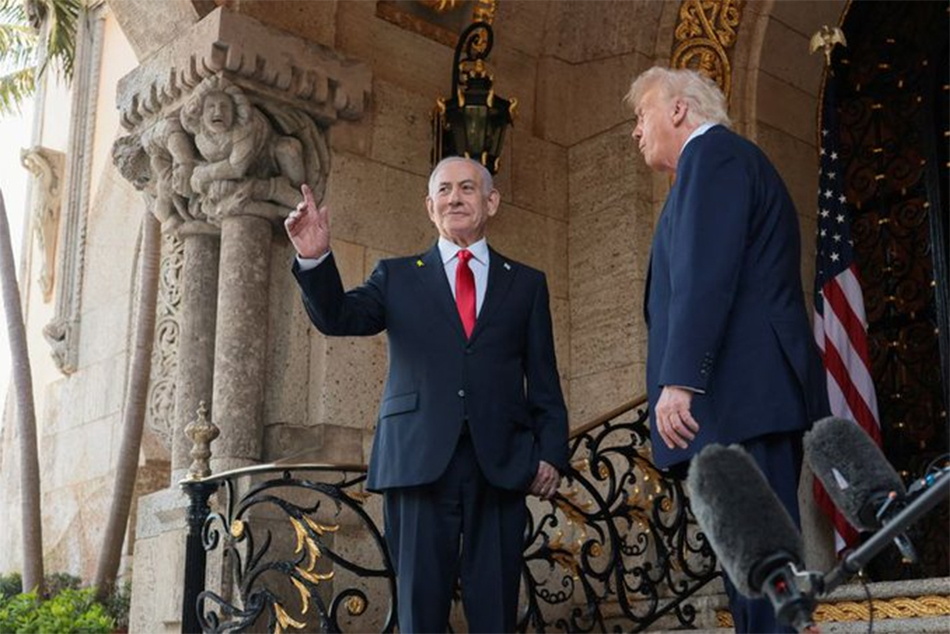
Israeli Prime Minister Benjamin Netanyahu has concluded his visit to the United States, returning home after reportedly securing yet another round of political backing from Donald Trump. As with previous encounters, the meeting provided Netanyahu with diplomatic cover and strategic reassurance, reinforcing Israel’s ability to sustain its military posture in Gaza and across the region with limited external constraint.
The talks, held between December 29 and January 1, did not signal a shift toward de-escalation. Instead, they underscored Netanyahu’s central objective: Preserving a prolonged state of war in the Middle East.
This is not necessarily about maintaining full-scale genocide in Gaza at all times, but about keeping the Strip trapped in a condition of permanent instability — one that allows Israel to violate the October 10 ceasefire agreement at will, recalibrating violence while avoiding the political fallout associated with openly sustained mass killing.
This approach exposes a central contradiction in Israel’s official narrative. Netanyahu and leading figures within his extremist coalition repeatedly claimed that Israel has already “won” the war. If that is the case, why insist on keeping the Gaza file open?
The answer lies in a convergence of political, ideological, and strategic calculations.
1.
First, Netanyahu continues to gamble on the possibility that international and regional opinion may eventually become receptive to the ethnic cleansing of Palestinians from the Gaza Strip — and subsequently, from the occupied West Bank. Sustained warfare, humanitarian collapse, and forced displacement are not unfortunate byproducts of the conflict; they are essential mechanisms for keeping that option alive and politically imaginable.
This logic explains Israel’s systematic manipulation of aid, including its haggling over food, medicine, fuel, and cement. These items bear little meaningful relationship to the strength of the Gaza resistance. Their restriction is designed to keep Gazans suspended between survival and death.
It also explains why Israel, after sustained pressure, agreed to open the Rafah border crossing from only one side—out of Gaza. This, too, is part of a broader scheme aimed at driving Palestinians out of the Strip incrementally, supported by a well-funded political and logistical machinery that has been operating for months.
2.
Second, the genocidal war on Gaza is being actively exploited to escalate conditions in the occupied West Bank. Under the cover of regional war, Netanyahu and his coalition partners have accelerated settlement expansion, intensified repression, and advanced a long-term colonial project of de facto annexation with minimal international scrutiny.
Throughout the genocide, many observers rightly warned of the deteriorating situation in the West Bank—increased Israeli violence, mass arrests, and the ethnic cleansing of entire communities. While Gaza was experiencing annihilation, the West Bank appeared to fade from global attention. In reality, the two were linked from the very beginning.
The escalation in the West Bank was designed to achieve similar outcomes to those in Gaza—fragmentation, dispossession, and control—albeit through different tactics. Unlike Gaza, resistance in the West Bank has been largely subdued through joint Israeli–Palestinian Authority ‘security coordination’.
3.
Third, the persistence of war serves a critical domestic function. By maintaining a permanent state of emergency, Netanyahu—and the Israeli far right more broadly—can preserve political relevance while postponing any serious reckoning over the failures of October 7 and the catastrophic war that followed. War suspends accountability, fractures opposition, and recasts political survival as a matter of national security.
This pattern has repeated itself since October 7, 2023. Each time Netanyahu faced mounting domestic pressure to investigate the events leading to the war, he destabilized the internal political front by escalating on one of several fronts he had deliberately kept active.
4.
Fourth, closing the Gaza file would inevitably intensify pressure on Israel to pursue a political solution to the occupation of Palestine—precisely what Netanyahu seeks to avoid. Any meaningful political process would constrain his ability to govern through force, crisis management, and perpetual escalation.
This explains Netanyahu’s refusal to seriously engage in the Trump administration’s push for a broader regional settlement, despite the fact that the initiative was deliberately designed by Washington to overwhelmingly benefit Israel.
For Netanyahu, even discussing resolutions implies a commitment to a longer, more sustainable ‘peace process’—the very antithesis of his governing strategy since first becoming prime minister in 1996.
5.
Fifth, the narrative of “unfinished business” in Gaza is being deliberately leveraged to justify a broader regional agenda. Gaza functions as both a pretext and a testing ground for extending Israeli military and political ambitions into Lebanon, Syria, and beyond.
This assessment is reinforced by Netanyahu’s own language, including repeated references to reshaping the region into a “new Middle East” and rhetoric that aligns with the ideological concept of a “Greater Israel”—a long-standing aspiration within Israel’s far-right political imagination.
In fact, Netanyahu was very clear that the latter was his exact objective, declaring last August that he is on a “historic and spiritual mission” to pursue the “vision” of Greater Israel.
6.
Finally, any return to normalcy would place Netanyahu back at the center of Israel’s unresolved legal and political crises. Ending the war would strip away the shield of emergency rule and reopen scrutiny of corruption cases and institutional failures.
Here, Netanyahu’s legal team has played a decisive role, repeatedly invoking “national security” concerns to delay court appearances and stall proceedings.
In this sense, the war on Gaza is not merely a military campaign. It is the linchpin holding together Netanyahu’s political survival, ideological project, and regional ambitions — one he appears determined to keep firmly in place.
[Dr. Ramzy Baroud is a journalist, author and the Editor of The Palestine Chronicle. He is the author of six books. His forthcoming book, ‘Before the Flood,’ will be published by Seven Stories Press. His other books include ‘Our Vision for Liberation’, ‘My Father was a Freedom Fighter’ and ‘The Last Earth’. Baroud is a Non-resident Senior Research Fellow at the Center for Islam and Global Affairs (CIGA). His website is www.ramzybaroud.net.]
Follow ummid.com WhatsApp Channel for all the latest updates.
Select Language to Translate in Urdu, Hindi, Marathi or Arabic