The Engineer's Widow: The Story of An Orphan Who Buried His Certificate
The Engineer's Widow is not the story of an Engineer who could not find a job. It is the story of a boy who once stood at dawn before a circle of stones he was told was his father's grave.
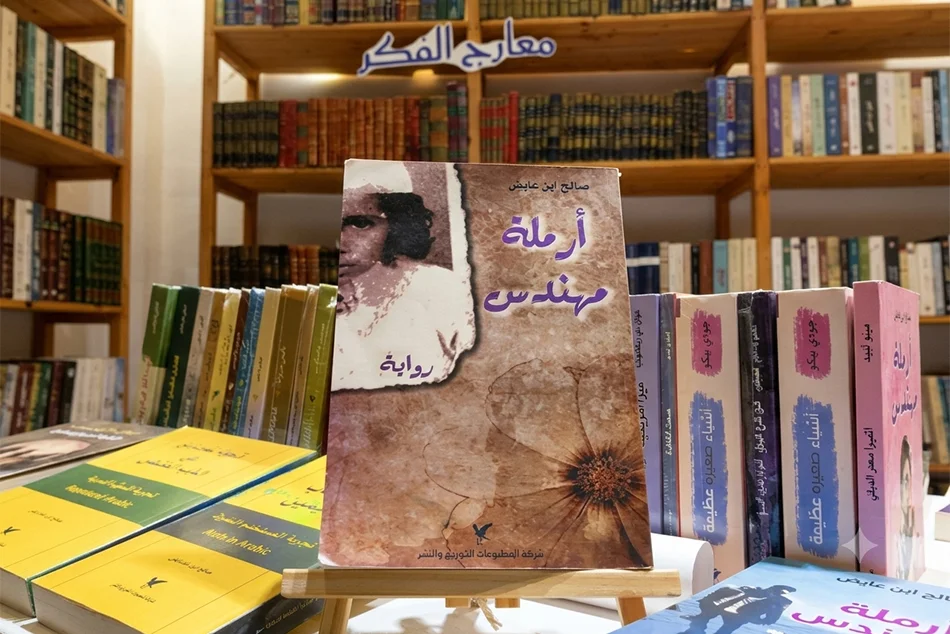
The Engineer's Widow is not the story of an Engineer who could not find a job. It is the story of a boy who once stood at dawn before a circle of stones he was told was his father's grave, and who spent the rest of his life asking how a person carries a loss, and how those who gave him his name are gone.
The Engineer's Widow is a novel of an orphanhood that renews itself, of a certificate rose like a flag and turned to ash, and of a mother, who weeps every night and every morning, stands up so that her children may stay standing.
The Night the Father Went
The story begins on a night in the desert of Qatan, north of Najran, Saudi Arabia. Shots follow one another from the mountain of Bani Sha'fa, then headlights, then the shouting of men over the wailing of women. The mother starts up in terror and asks:
“Is it Ayed? Is he dead?”
She does not believe the answer. She throws down her lantern and runs five kilometers toward the light, as the heart runs toward the news it fears.
At dawn, the children stand there, not yet knowing what death is. One asks who will go and buy their necessities, their food and their drink. Together they ask: Where is our father? Where have you put him? The son of one of the mourners points, as though helping them find what they have lost:
“There. Do you see that circle of stones? That is your father's grave.”
The child does not remember weeping. He remembers his father's shoes, and the bier made of the wood of the hamd tree. And years later, he finds the sentence that holds his whole childhood:
“We knew that my father took whatever he wanted. So why should death not take him? And there is no father but my father, yet I could not say a word.”
The moment the pure body was laid in the earth, the brother became a father, the uncle a father, the grandfather a father. And from a stone taken from an old grave that splits the boy's cheek, there remain on his face wounds that do not close and a nickname that will follow him long:
“Abu al-Jirhan” … Father of the Wounds.
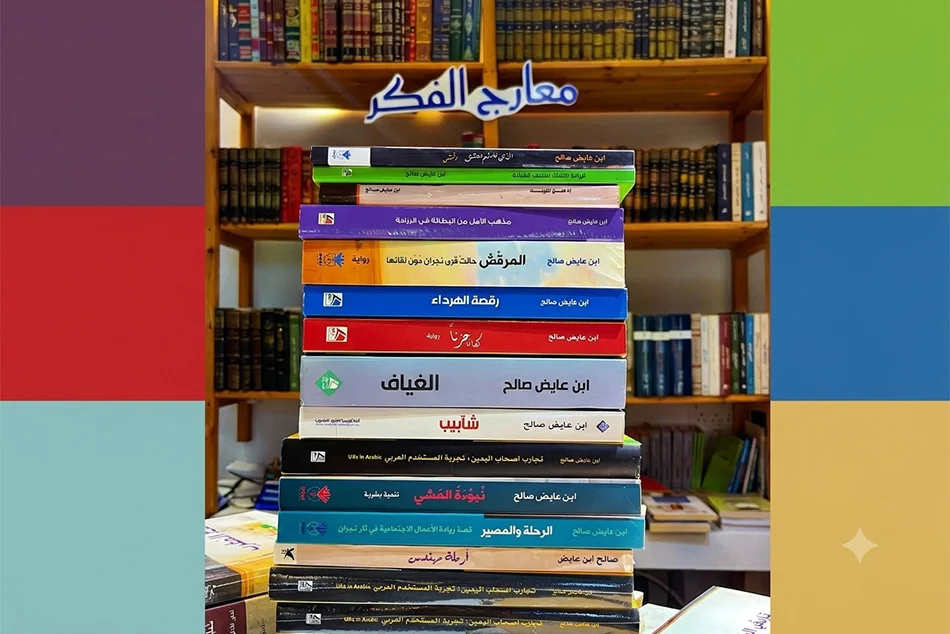
A Ladder of Three Rungs
The boy climbs the ladder of life rung by rung: A school whose iron windows “open outward”, then King Fahd University of Petroleum and Minerals, then foreign cities. He never gives up first place. His brother Hussain is hired by the Border Guard, and poverty climbs a step: A wall of block and cement, a bathroom, the hair tent turned into a guest majlis, “a small palace of dreams”.
Then the telephone rings in the students' quarters, and a neighbour shouts from the end of the corridor. Saleh asks, what he has learned to ask, since the first orphanhood:
“Alive or dead?”
The answer comes cold and hurried:
“The man is in intensive care.”
He drops the receiver and tosses his university card to a friend so that the summer semester may be dropped for him, then makes three rides in unlicensed cars and a lorry to reach Najran. A month in the hospital, then depression, then a semester gone from the university.
He graduates and enters the Ministry and travels to Kazakhstan, then Mumbai. And in one moment, at the stroke of a pen, the whole ladder falls. He finds in his chest only this sentence:
“Your Excellency the Engineer, what you have done to me is not just.”
A year of “return to zero” follows: A CV at every door, rented rooms in Dubai and Sharjah, a laptop open on job listings.
And he says, in the quiet of one who knows the slide has become a fate: When I realise that I am sliding to the bottom, I do not much care how fast the slide.
Death after Death
Grief does not make do with one door. The telephone rings again: The husband of the eldest sister, Musfir, has not answered since 08 in the morning. Aliyah calls from Kuwait, worried. Behind the call there is a strange, thin voice saying that the man is alive but cannot speak.
Minutes later a friend tells him: A white car, an accident at the Abu Ma'an bridge, and the man is dead.
His sister asks him: Alive or dead? and he answers as though the man were still alive, and puts off the truth for hours, like one who puts off the blow from his sister for one more moment.
Aliyah had only three years with her husband. She is now the age her mother was the day the father died, and she carries in her womb a child who will be born an orphan.
“None weeps for an orphan but an orphan like himself.”
Then comes the greater loss: Salim.
Thursday afternoon in the house in Najran, Salim hurries to leave for his work in Jazan. He grips his brother's neck in his huge hand and kisses his forehead, and tries to kiss their mother's feet while she tries to stop him. The familiar words of farewell echo in the room:
“We have said farewell to you... we entrust you to God.”
At 07 in the evening the telephone rings twice, and his brother Ali asks:
“Where is Salim?”
On a mountain road with no signal two cars stop, and Muhammad raises his hands high:
“He died... he died... We belong to God and to Him we return.”
His knees fail him. His brothers forbid him to drive and take the key, for they know that he is “nothing without Salim”. And that night he writes the truest thing in the book:
“For he was my father and my elder brother. He is my good image. I am a part of him. Who am I, and who shall I be after you, my beloved? For I have died, and you have not. I knew myself only through you, and people knew me only through you.”
His mother calls him on the road, in the voice of one who lost a son only moments ago. And he says to the reader and to her together: My God, even now, with your son dead, you try to kill your tears so that we may stay standing. On the road to Abha hospital he puts his finger between his teeth and presses hard whenever he feels himself collapsing.
The Blue Plastic Chair
In Ramadan, in an office of the Electricity Company, the Manager comes from Abha and finds no chair to sit on, so he borrows one from the next department. He opens by saying he has come to hear the problems and solve them, and on his desk lies a file that documents everything said. Saleh speaks at last, in the tone of one who calls himself to account before he calls anyone else:
“Is it reasonable that I borrow a blue plastic chair from the building's buffet near the toilets for two months? I think you noticed this when you came, for there was no chair, which is what made you book this room. And is it reasonable that I cover three hundred kilometers daily with no account or concern taken of it?”
“My leaves were refused… My complaints were sidelined… Not even a pen or a sheet of paper was issued to me.”
The Manager moves his hands in a way that does not match his words, and answers every objection with the same sentence: the system does not allow it. When asked about the system, he refers it to a deputy on leave in Europe.
Days later, the answer comes in a report: This person should go back to the street. Eastern Electricity sends its apology for not hiring him. One door remains open: Resignation. His brother Mufrih, seventeen years in the company, asks him: Did you take the experience certificate? And he answers on his way out:
“I am the one who gave them an honorary certificate by working with them.”
The Fire
His mother gives him 800 riyals from the sale of the offspring of a ewe, and says: This is from the line of “the Ostrich”.
And he keeps it as a man keeps the last thing left of his father. When he wins his degree she tells him what she had never told anyone:
“My son, how proud I am of you. I trusted that you would always lift my head and make me forget many of my pains. Your success and your certificate are another son, born today.”
Then she gives him her ewe and the ewe's daughter. Saleh falls at her feet and kisses them, and kisses the ground she stands on.
On Friday, 19 December 2008, at 02 in the afternoon, he returns to Qatan, twenty-four years after his father's death, to the mountain on whose slope Ayed's bones lie. He sits on a tanned hide with four cameras recording every moment, his university books heaped on the ground, and the Ostrich's daughter tied to a tree with her little lamb playing nearby.
At a moment when the whole stage stops, he raises his pistol, then asks the questions that every person on a ledge asks:
Why? And for whom? For a job, a certificate and a title?
“No, this will not be my decision.”
He puts the pistol under his foot and speaks to the cameras like a man at a funeral:
“For nothing had died in me but that name, ‘the Engineer’. Yes... none but he had failed, and none but he had suffered. I had been thinking with an engineer's mind and writing with an engineer's pen and behaving with an engineer's conduct, and had forgotten the human. He had died, but the human within me had not died.”
“And if the Engineer was a person I made, then here I end him, and the certificate of King Fahd University of Petroleum and Minerals becomes a widow from today.”
He opens the file of certificates and throws them into the fire one after another. He shaves his head to the roots, and the scars of his childhood appear before everyone.
“To hell with you, Engineering.”
“For five minutes I threw my certificates one after another into the fire... and stood up from my place as Saleh, and Saleh only.”
Then he goes back to the ewe to appease her, for he is the one who took her young from her. He returns to his mother without telling her what has happened, and offers to be her private driver or the shepherd of her flock. She waves her hands at him as if to send him away, for the sun is near to setting and she has much work. And she ends the chapter with her sentence:
“Do not despair of the mercy of God.”
What Remained After the Ashes
The author breaks a person to build from the rubble another person. In the last scene, he writes two names on two signboards: The Ayed Foundation, to help orphans, which begins from his mother's house; and the Salim Foundation, to help those harmed by accidents and to reduce them, confined between Najran and Jazan, where Salim was born, worked and died. Each name carries a share of its owner's: “May God compensate you” at a death, “may he be safe” at an accident.
And at the end of the book, under all that sorrow, a sentence that resembles a prayer:
“Perhaps this pain of mine makes others happy; had I not been in pain they would have been... for pain must be in one of us.”
It is followed by two lines of verse like a last whisper: “Study... study / for there is no glory for you / without study”, and then:
“I believed you, O company of politicians.”
A last word
In this novel no one dies at the end. There is only a widow: a certificate, buried as one buries what has died so that another may live.
And perhaps this is why the book stays in the heart after its last page is closed: It does not teach us how to succeed, but how to stop being afraid of being Saleh, and Saleh only.
[Riyadh based author, Ebn Ayedh Saleh, is ranked among the 50 global thought leaders, a researcher and writer in the field of brain and artificial intelligence. He is also a Publisher and Library founder. He can be reached via sasalyami@gmail.com and www.ebnayedh.com.]
Follow ummid.com WhatsApp Channel for all the latest updates.
Select Language to Translate in Urdu, Hindi, Marathi or Arabic