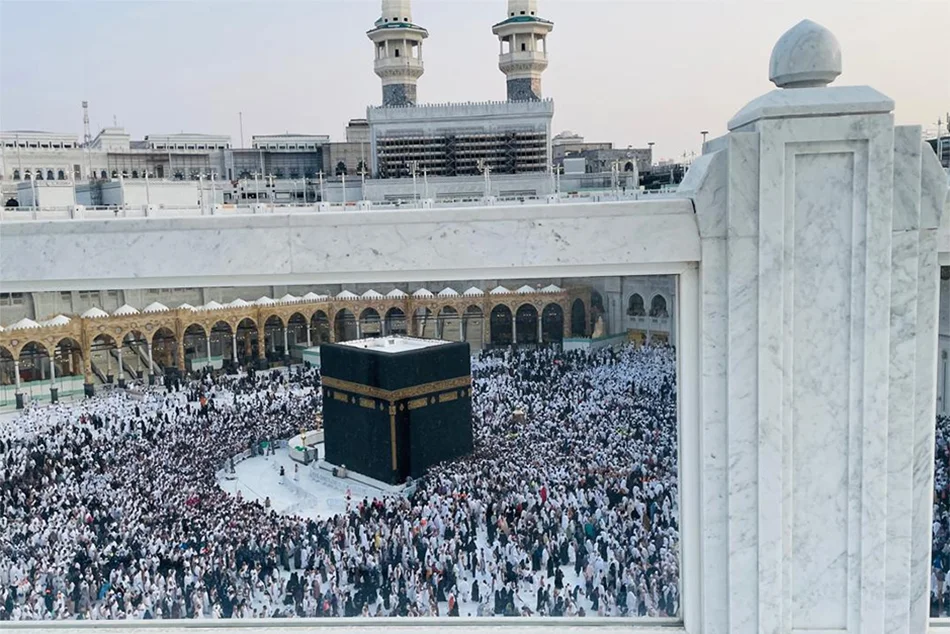
A Complete Parenting Guide to Raising Muslim Children in Non-Muslim Countries
Read on as Adeel Ahmad Mustafai, a certified Qur'an teacher and founder of QuranlyHub, gives important parenting tips to raising Muslim children in non-Muslim countries
I've been teaching the Holy Qur'an for years, and I also run online Qur'an classes. Every time I go deep into this work, the same question comes back to me from parents, over and over:
"Will my child stay Muslim on the inside, or just in name?"
That question isn't new. Prophet Yusuf, Prophet Musa, Prophet Ibrahim (peace be upon them all)-- all of them lived surrounded by people, who didn't share their belief, in societies where they were the minority. Their lives aren't just stories we tell children at bedtime. They're the actual blueprint a Muslim family can still build on today.
When a Child Starts Feeling Ashamed of Being Different
This is the most common fear. A child notices that everyone else at school eats differently, dresses differently, lives differently -- and slowly starts feeling embarrassed about their own identity.
Prophet Yusuf's (peace be upon him) environment was far more extreme than a Western classroom. He grew up in a fully polytheistic kingdom, moved from slavery to a position of real power, surrounded on every side by people who didn't believe in Allah at all. Yet when the moment came, he said plainly:
"I have abandoned the way of a people who do not believe in Allah" (Surah Yusuf, 12:37).
That wasn't a slogan. It was the voice of someone completely at peace with who he was.
That peace is exactly what we're trying to build in a child -- and it doesn't come from lectures. It comes when a child reads the Qur'an with understanding, when they know why they pray, not just how.
Identity isn't something you can impose from outside. It has to grow from within.
When a Child's Questions Scare the Parents
Western schools train kids to question everything, and that's natural. The problem starts when a child brings a hard question home:
"Why can't I see God?"
And, the parent panics or shuts the conversation down.
Prophet Ibrahim (peace be upon him) grew up in a society where everyone worshipped idols, where his own father made them for a living. He never stopped questioning. He thought, searched for evidence, and stood in front of Nimrod with pure logic:
"My Lord is the one who gives life and causes death" -- and when Nimrod made a false claim, Ibrahim immediately shifted the argument: then bring the sun up from the west (Surah Al-Baqarah, 2:258).
Questioning wasn't a weakness in his faith. It was the road that led him to it.
When your child asks a hard question, that's exactly the moment to sit with them, not push them away. If you don't know the answer, say so, and go find it together. Otherwise they'll find their answer on YouTube or TikTok, where nobody is accountable for what they say.
When a Parent's Own Fear Pushes the Child Further Away
This one is the hardest to see, because most parents don't recognize it in themselves. Headlines about Islamophobia, the school environment, the internet -- all of it creates real anxiety, and that anxiety often turns into stricter rules, more control, more restriction. And that very tightening is what pushes the child further away.
Look at what Prophet Musa's (peace be upon him) mother faced -- a ruler who was actively killing the children of her own people. No fear could be greater than that. And yet she was instructed to place her son in the river -- by every human calculation, the single most dangerous decision imaginable. And that decision became exactly what protected him (Surah Al-Qasas, 28:7). The lesson:
Let fear teach you to take real precautions, but don't let those precautions replace trust in Allah.
Otherwise the fear itself becomes something you pass on to your child.
When a Child Notices the Gap Between What You Say and What You Do
Children don't learn from what they're told. They learn from what they watch. The Qur'an itself asks, sharply:
"Do you order people to righteousness and forget yourselves?" (Surah Al-Baqarah, 2:44).
Luqman's (peace be upon him) advice to his son (Surah Luqman, 31:13-19) carries weight precisely because it was given with gentleness, wisdom, and closeness -- not a single harsh speech delivered once and forgotten.
When a home preaches prayer but doesn't practice it, preaches honesty while behaving otherwise, a child notices the gap immediately -- and starts treating faith as "just talk."
When a Child Feels Like "the Only Muslim"
Many Muslim children feel completely alone at school or on their sports team -- and that isolation is one of the biggest reasons faith weakens.
The young men in the story of the Cave didn't try to protect their faith alone. They were living under a tyrant where openly declaring belief in one God could cost them their lives -- so they found each other, took refuge together, and prayed together:
"Our Lord, cover us with mercy from Yourself" (Surah Al-Kahf, 18:10).
They came together first, and strength followed.
Connecting your child to a mosque youth group or a circle of like-minded Muslim friends follows the exact same principle.
Deciding on Holiday Parties and School Events
Christmas parties, prom, school functions -- every family runs into this question eventually. Prophet Ibrahim (peace be upon him) declined to join his people's festival, but he did it calmly, without hostility or making a scene (Surah As-Saffat, 37:88-89). The principle holds:
Decline with dignity, not with conflict.
What I've seen over the years, again and again, is this:
A child who understands why they're Muslim -- not just how to be Muslim -- finds their footing in any society, without breaking under the pressure. Yusuf, Ibrahim, Musa, Luqman, the companions of the Cave -- each one, in a completely different situation, built that same foundation.
And that foundation is never built in a single lecture. It grows out of the difference between simply reading the Qur'an and actually understanding it.
[The writer, Adeel Ahmad Mustafai, is a certified Qur'an teacher and founder of QuranlyHub, helping children and young Muslims build Qur'anic understanding and faith identity while living in non-Muslim societies. The above article is originally published in the Barakah Culture Community.]
Follow ummid.com WhatsApp Channel for all the latest updates.
Select Language to Translate in Urdu, Hindi, Marathi or Arabic