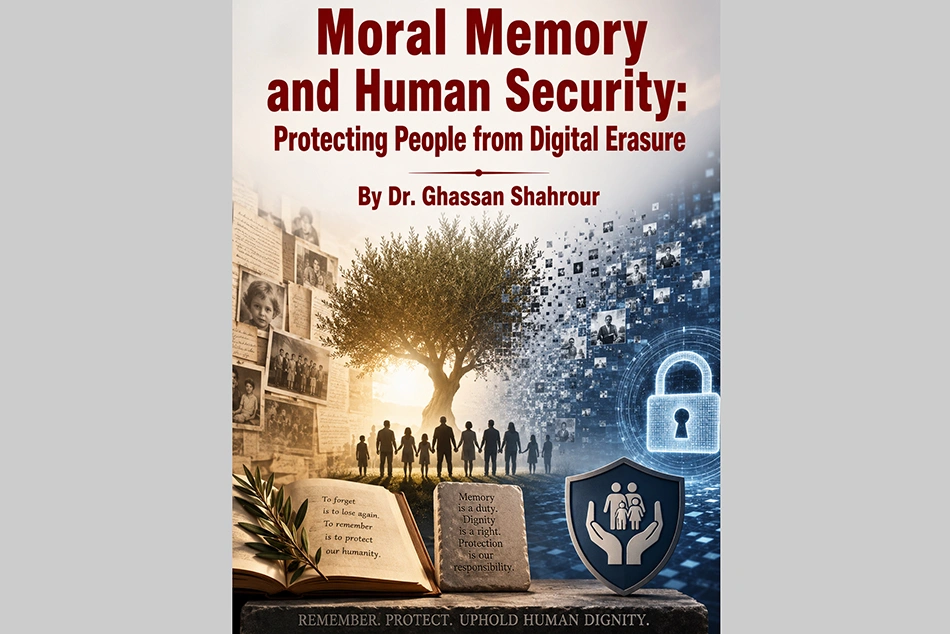
Moral Memory and Human Security: Protecting People from Digital Erasure
Moral memory is the kind of remembering that respects human beings, it gives space to stories that were ignored, silenced, or erased, and resists the logic of power and restores truth through justice, as noted by scholars such as Assmann
Introduction
In a world where information moves faster than reflection and where countless voices compete for limited attention, forgetting has become an active force rather than a passive lapse. It threatens identity, dignity, and the right of people and communities to be seen as they truly are.
Memory today is not a cultural luxury. It is a human need, a moral responsibility, and a pillar of human security. It shapes how societies understand themselves and how they honor those whose stories risk being lost.
What is Moral Memory
Moral memory is the kind of remembering that respects human beings. It gives space to stories that were ignored, silenced, or erased. It resists the logic of power and restores truth through justice, as noted by scholars such as Assmann.
When we document the story of a refugee, revive the image of a destroyed village, or recall a forgotten act of volunteering, we are not simply preserving the past. We are protecting our sense of belonging and preparing a fairer future.
Why Moral Memory is Human Security
Human security, as described by the United Nations, goes beyond food, shelter, and physical protection. It includes social, cultural, and symbolic security. It is the security of being seen, heard, and remembered. When people are erased from the record, their existence fades from history. When their languages are excluded, their right to speak is denied.
When memory is monopolized by the powerful, the weak lose the right to tell their story. Moral memory stands against this exclusion. It reminds us that safety is not only about borders and institutions. It is also about recognition, visibility, and dignity.
Building Digital Memory Together
To make moral memory a living part of human security, we must do more than remember. We must document. Every human experience, every community effort, and every cultural or voluntary act deserves to be saved in accessible, multilingual, and sustainable digital archives.
This requires cooperation between individuals and institutions to gather and share materials. It requires national and regional networks to unify efforts and avoid duplication. It requires regular updates to correct bias and keep archives alive.
It also requires sustainable systems that use open source tools and fair licensing. If we do not record a story today, it may vanish tomorrow. And what we fail to translate may never reach others.
A Personal Moment: When Memory Went Missing
Years ago, I searched online for information about the Arab Declaration on Volunteering, a process I helped coordinate between 2001 and 2002. I found almost nothing. The same silence appeared when I looked for the regional conference on landmines and war remnants, which had shaped civic and humanitarian dialogue in our region.
Their absence from the digital record was not only a technical gap. It was an ethical one. If technology forgets our shared efforts, who decides what deserves to be remembered and what is allowed to disappear.
Practicing Moral Memory Every Day
We can all protect moral memory in simple and meaningful ways.
We can ask about stories that have not been told. We can share what we know instead of keeping it hidden. We can listen to those who lived events, not only to those who wrote about them.
We can document in our own language and voice, then translate with care and authenticity.
Conclusion
In a digital era that often forgets what is not archived, moral memory becomes both an act of resistance and a form of protection. It shields identity, preserves dignity, and ensures that communities can tell their stories as they lived them, not as others reinterpret them. Let our memory be moral, not selective.
Let us protect human beings, not only events.
[Dr. Ghassan Shahrour is a medical doctor, prolific author, and Coordinator of the Arab Human Security Network. His work spans health, disability, disarmament, artificial intelligence, and human security, with a particular focus on the intersection of technology, ethics, and human rights. He is recognized among the pioneers of medical informatics in the Biographical Lexicon of Medical Informatics (2015) for his contributions to the field.]
Follow ummid.com WhatsApp Channel for all the latest updates.
Select Language to Translate in Urdu, Hindi, Marathi or Arabic