The Guardian Modi Medal Article and Moral Question of 12 Years of Leadership
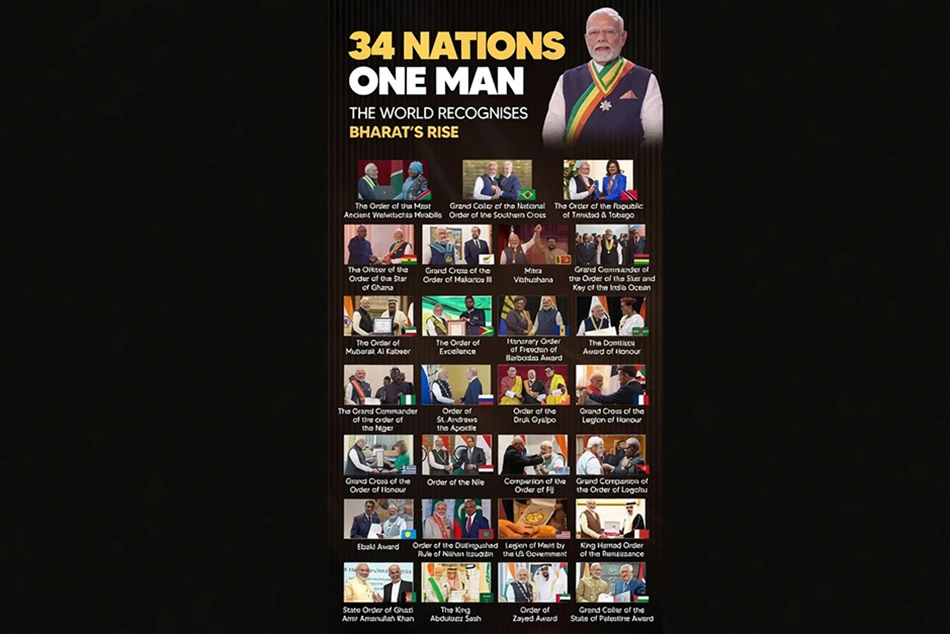
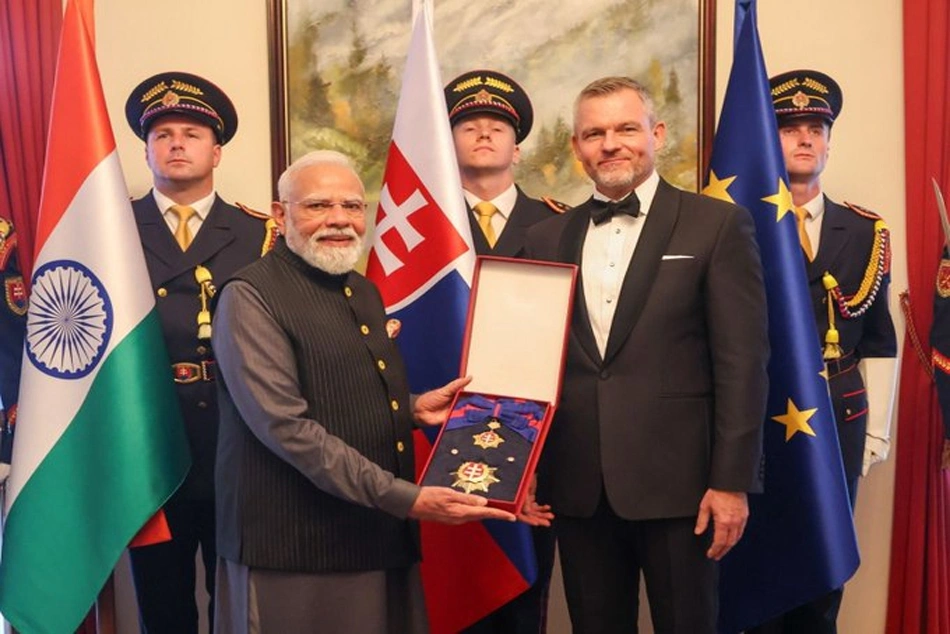
A recent opinion article published in The Guardian, titled 'Can Narendra Modi Accept Any Medal?', reignited a fierce debate about Prime Minister Narendra Modi’s international recognition and the moral legacy of his leadership
The Guardian Article That Sparked a Debate
A recent opinion article published in The Guardian, titled “Can Narendra Modi Accept Any Medal?”, reignited a fierce debate about Prime Minister Narendra Modi’s international recognition and the moral legacy of his leadership. The article argued that while Modi has received numerous state honours and awards from foreign governments, a more fundamental question remains unanswered: Can a leader be celebrated internationally while presiding over growing concerns about democratic decline, social polarization, and civil liberties at home?
The controversy quickly spread across political and media circles. Supporters dismissed the article as biased, while critics argued that it reflected concerns already expressed by international democracy watchdogs, human rights organizations, and sections of the global press.
Yet beyond political loyalties lays a deeper question—how should the success of a government be measured especially when it is led by man who is losing his credibility in the international community?
Economic growth, infrastructure projects, and geopolitical achievements may matter. But history suggests that leaders in the ruling governments are remembered not only for what they build, but also for the kind of people and society they leave behind.
A Government Must Be Judged by More than GDP
When we examine the record of any government, we often year the PM yelling a lot about the GDP growth, however, one must look beyond GDP growth, stock market performance, highways, airports, or digital initiatives.
The larger question is whether a government has strengthened the nobler instincts within society or legitimized its darker impulses. Every society contains both. Within every nation exists generosity and hatred, compassion and prejudice, truth and deception, courage and fear?
People possess the capacity to:
- Live peacefully with differences
- Extend kindness to strangers
- Practice tolerance
- Embrace curiosity
- Forgive
- Value truth
- Defend justice
At the same time, societies also harbour:
- Falsehood
- Suspicion
- Communal hatred
- Arrogance
- Violence
- Intolerance
- Vulgarity
- Blind obedience
Leadership plays a decisive role in determining which of these tendencies becomes socially acceptable. And in case of Mr. Modi, the latter points count a lot for him and his leadership.
The Moral Responsibility of Political Leadership
History demonstrates that leadership shapes public behaviour. People consciously and unconsciously imitate those they admire. The values embodied by national leaders gradually become social norms. The fundamental questions are therefore not merely political but moral.
Does a leader:
- Encourage citizens to think independently?
- Promote critical inquiry?
- Strengthen democratic institutions?
- Make people fearless?
Or does leadership instead:
- Encourage unquestioning loyalty?
- Portray critics as enemies?
- Normalize insults and hostility?
- Manufacture fear while presenting itself as the only protector?
Political scientists have long argued that democracies depend not merely on elections but on democratic culture—respect for disagreement, institutional restraint, and civic trust where we see Mr. Modi failing badly.
Research Suggests Rising Polarization
Several independent studies indicate that Indian society has become increasingly polarized during the last decade. The Pew Research Center’s Religion in India survey (2021) found that while Indians remain deeply committed to religious diversity in principle, many simultaneously prefer social separation across religious communities.
The Varieties of Democracy (V-Dem) Institute has classified India as an “electoral autocracy” since 2021, citing concerns over institutional independence, civil liberties, and media freedom.
Also Read: What exactly are Narendra Modi's Global Awards rewarding?
Freedom House has downgraded India’s democratic status from “Free” to “Partly Free,” pointing to restrictions on civil liberties and pressures on dissent.
The Economist Intelligence Unit’s Democracy Index has also recorded a decline in India’s democratic ranking over recent years.
Supporters of the government dispute these assessments, arguing that such organizations reflect Western biases. Nevertheless, these reports have become part of the global conversation about India’s democratic trajectory.
Fear and the Health of Democracy
A healthy democracy depends upon citizens who are willing to question authority without fear. When journalists, academics, comedians, students, activists, or opposition leaders increasingly face investigations, arrests, or intimidation, critics argue that public fear expands beyond legal consequences into self-censorship.
Multiple international press freedom assessments, including those by Reporters without Borders, have expressed concern about shrinking space for independent journalism.
Whether one agrees with these evaluations or not, the broader question remains relevant: Has Indian public life become more fearless—or more cautious? Ironically under the leadership of Modi, the health of democracy has only deteriorated turning bad to worse.
Truth, Propaganda, and Public Discourse
Democracies thrive when facts are debated openly. However, researchers studying misinformation have documented the rapid spread of political disinformation through social media ecosystems. Fact-checking organizations have repeatedly identified misleading claims circulated by political actors across the ideological spectrum.
Critics argue that political communication increasingly relies on emotional mobilization rather than evidence-based debate. Supporters counter that digital media merely amplifies existing political participation.
Regardless of perspective, public discourse has undeniably become more combative, personalized, and polarized. Modi has a low score when it comes to these elements as fake news and propaganda has remained the part and parcel of this regime.
From Citizens to Followers
Democracy rests upon citizens. Authoritarian politics seeks followers. Citizens ask questions. Followers defend personalities. Citizens hold governments accountable. Followers excuse governments.
The concern expressed by many political scholars is not simply the popularity of Narendra Modi but the emergence of personality-centric politics in which criticism of leadership is increasingly portrayed as criticism of the nation itself. Such identification between leader and nation narrows democratic space.
The Mirror of Twelve Years
Narendra Modi has now served more than twelve consecutive years as Prime Minister.
His supporters point to major infrastructure expansion, digital transformation, welfare schemes, international diplomacy, and India’s rising geopolitical influence. These achievements deserve serious examination. Yet another examination is equally necessary.
- What has happened to the moral climate of Indian society?
- Have fear and hostility diminished?
- Has public discourse become more civil?
- Has criticism become easier?
- Have institutions grown stronger?
- Has truth become more valuable?
- Has society become kinder?
Or have intimidation, propaganda, polarization, sycophancy, and majoritarian triumphalism gained greater legitimacy? These questions cannot be answered solely through election victories. They require examining the everyday experience of citizens.
How the World Sees India
India continues to command admiration for its economic growth, technological innovation, entrepreneurial energy, democratic traditions, and civilizational heritage. At the same time, international newspapers, academic institutions, democracy monitors, and human rights organizations increasingly express concern over religious polarization, shrinking civic freedoms, and democratic backsliding.
Whether these criticisms are entirely justified remains open to debate. But their existence shapes India’s global image. A nation’s reputation depends not only upon its economic achievements but also upon the moral confidence it inspires.
The Final Question
Every generation eventually confronts the same question. Not whether its leaders won elections. Not whether they built highways. Not whether they collected medals or international honours. But whether they made their people more humane, did they encourage courage instead of fear?
- Truth instead of propaganda?
- Citizens instead of followers?
- Tolerance instead of hatred?
- Curiosity instead of suspicion?
When India looks back on these twelve years, the most enduring judgment may not come from economic indicators or diplomatic awards. It may come from a far simpler question: When the nation looks into the mirror of this era, does it recognize a society that has grown morally stronger—or one that has become more fearful, more divided, and less free.
[The writer, Mohd Ziyauallah Khan, is a freelance content writer & editor based in Nagpur. He is also an activist and social entrepreneur, cofounder of the group TruthScape, a team of digital activists fighting disinformation on social media.]
Follow ummid.com WhatsApp Channel for all the latest updates.
Select Language to Translate in Urdu, Hindi, Marathi or Arabic