Behind The Anger of Students in India
To some, the students' protests appear sudden, but in reality, they are the culmination of years of frustration, broken promises, and institutional failures
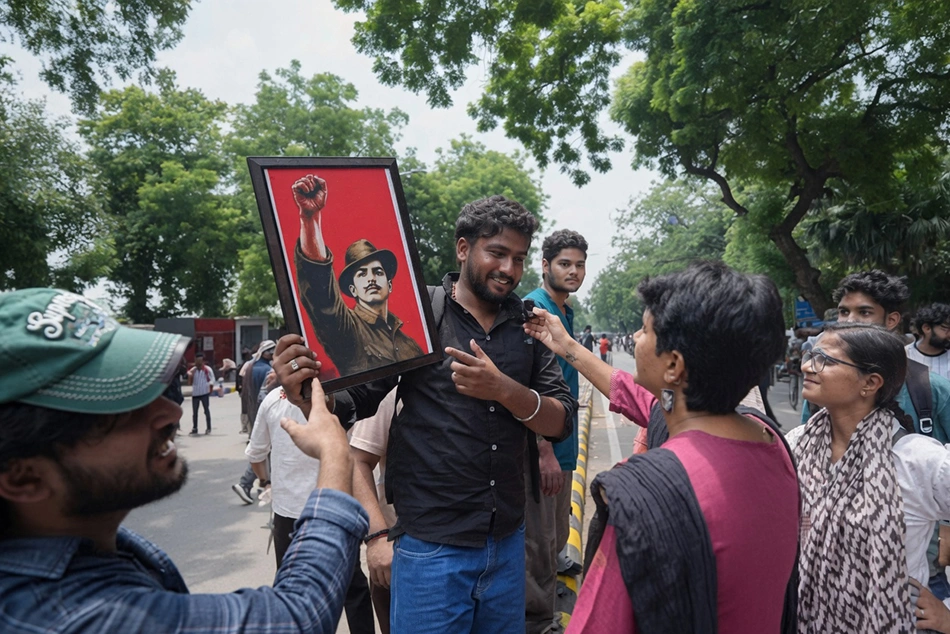
When a Broken State, Corrupt Examination System, and Shrinking Opportunities Collide
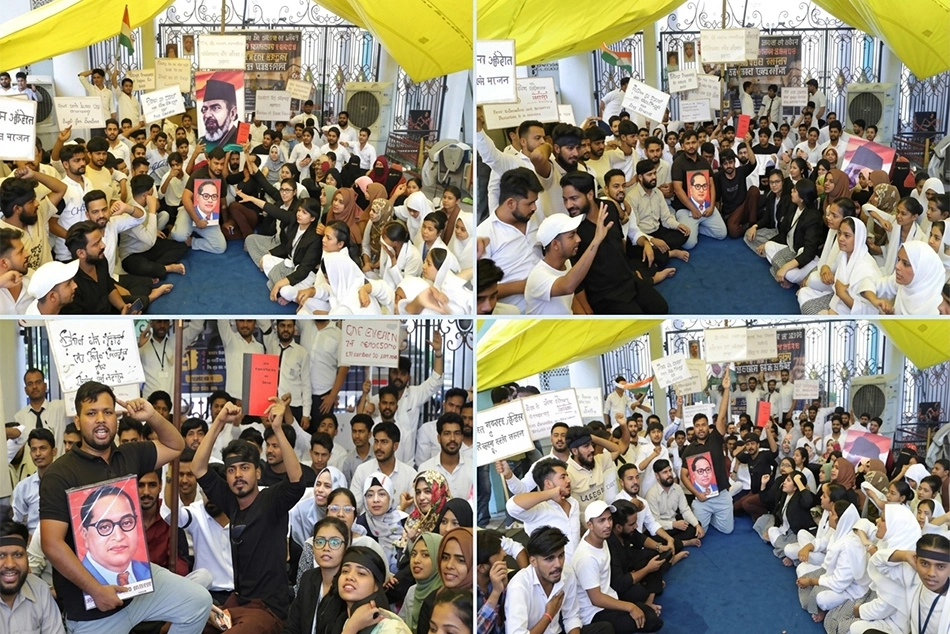
India is witnessing something that cannot simply be dismissed as another wave of students' protests. Across cities and towns, young people are raising their voices with an intensity that has surprised many observers. To some, the protests appear sudden. In reality, they are the culmination of years of frustration, broken promises, and institutional failures.
The immediate trigger may differ from examination irregularities to recruitment delays or allegations of corruption but the deeper causes lie elsewhere. These demonstrations are not merely about one examination or one recruitment drive. They reflect a generation’s growing distrust in institutions that were supposed to provide fairness, opportunity, and hope.
The question is no longer why young Indians are protesting. The real question is why it took so long.
The State We Experience Depends on Who We Are
To understand today’s youth anger, we must first understand India’s unequal relationship with the State.
For India’s affluent and privileged classes, the government’s presence in everyday life is often minimal. Their children attend private schools. Their healthcare comes from private hospitals. Their food security does not depend on ration shops. Their careers often lie in multinational companies where English, global networks, and private enterprise matter far more than government systems.
This class interacts with the State primarily when renewing passports, obtaining driving licences, paying taxes, or dealing with civic infrastructure.
For the majority of Indians, however, the State is everywhere.
It determines whether they receive subsidized food through the Public Distribution System (PDS), whether their children attend functional government schools, whether healthcare is available through public hospitals, whether scholarships arrive on time, and whether government jobs—the country’s largest source of stable employment—are awarded fairly.
The success or failure of the State directly shapes their future.
Government Jobs are More than Employment
For millions of Indian families, a government job is not merely a career. It represents financial security, social mobility, healthcare benefits, pensions, and dignity.
According to the Centre for Monitoring Indian Economy (CMIE), India’s unemployment rate among young people has consistently remained significantly higher than the national average in recent years. Meanwhile, the International Labour Organization (ILO) has repeatedly warned that educated unemployment is one of India’s most serious labour market challenges.
India produces millions of graduates every year, but formal employment opportunities have failed to keep pace. This has intensified competition for government jobs to extraordinary levels. It is no longer unusual for tens of millions of candidates to compete for a few thousand vacancies. The examination system has become the gateway to economic survival. When that gateway appears compromised, public anger becomes inevitable.
A Crisis of Trust in Competitive Examinations
Competitive examinations were designed to be the great equalizer. Regardless of caste, religion, geography, or family background, merit was supposed to determine success. That trust has been repeatedly shaken.
Over the past decade, India has witnessed numerous controversies involving paper leaks, examination cancellations, recruitment scams, delayed appointments, and allegations of manipulation across various states.
Each controversy sends the same message to aspiring candidates:
- Hard work may not be enough. For students who spend years preparing—often sacrificing income, family life, and mental health—the cancellation of an examination represents far more than administrative inconvenience.
- It can mean another lost year, another year of unemployment or another year of uncertainty.
Research Shows Growing Anxiety Among Young Indians
Multiple national and international studies point toward rising psychological stress among Indian youth. The World Health Organization (WHO) has repeatedly identified uncertainty about employment and education as major contributors to anxiety among young adults.
The UNICEF State of the World’s Children reports have similarly highlighted increasing mental health concerns among adolescents and young adults globally, with academic pressure and uncertain futures playing major roles.
The National Crime Records Bureau (NCRB) has consistently reported thousands of student suicides every year, reflecting the immense academic and competitive pressures faced by India’s youth. These figures should not merely be viewed as statistics. They are warning signs.
The Demographic Dividend Is Becoming a Demographic Challenge
Economists have long celebrated India’s demographic dividend. Nearly 65% of India’s population is below the age of 35. Former Prime Minister Dr. Manmohan Singh once described India’s young population as the country’s greatest strength. Prime Minister Narendra Modi has similarly referred to India’s youth as the nation’s biggest asset.
But demographics alone do not create prosperity. Employment does. Education does. Institutional credibility does.
Without these, a demographic dividend risks becoming a demographic burden, as economist Jean Drèze has frequently argued, India’s development cannot rely solely on economic growth figures while neglecting investments in education, public health, nutrition, and institutional capacity.
The Elite Often Misread Public Anger
One reason many commentators appear surprised by students' protests is because they experience the State differently. Urban professionals insulated by private services rarely depend on government institutions in the same way as ordinary citizens. The majority of Indians interact with government systems from birth.
- Government schools
- Anganwadis
- Public hospitals
- Scholarships
- Public transport
- Ration cards
- Employment exchanges
- Recruitment boards
- Police stations
- Courts
These interactions provide citizens with daily evidence of how effectively—or poorly—the State functions. Those who depend most on public institutions often understand governance better than those who observe it from a distance.
The Cost of Losing Institutional Credibility
Trust is the invisible foundation of democracy. Citizens accept examination results because they trust the process. They obey laws because they trust institutions. They vote because they believe change is possible. Once that trust begins to erode, repairing it becomes extraordinarily difficult.
Political scientist Francis Fukuyama has argued that societies with higher institutional trust enjoy stronger economic performance and greater political stability. On the contrary, declining trust fuels cynicism, polarization, and social unrest.
Young Indians are increasingly questioning whether effort alone determines success. That question should concern every policymaker.
Experts Have been Warning for Years
Economist Raghuram Rajan has repeatedly emphasized that India’s greatest long-term challenge is creating sufficient high-quality jobs for its rapidly growing workforce.
Former RBI Governor Duvvuri Subbarao has argued that sustained economic growth without employment generation creates social tensions that eventually become political challenges.
Labour economists, including Santosh Mehrotra, have extensively documented the mismatch between educational expansion and employment opportunities in India, warning that educated unemployment could become one of the country’s defining policy failures.
These concerns are no longer theoretical.
They are unfolding in real time.
Youth Are Demanding Fairness, Not Favours
One of the biggest misconceptions about today’s protests is that young people are demanding special treatment. They are not. Most candidates ask for remarkably simple things:
- Transparent recruitment
- Leak-proof examinations
- Timely results
- Merit-based selection
- Accountability for corruption
- Predictable recruitment calendars
These are not extraordinary demands. They are the minimum requirements of a functioning democracy.
This is More Than an Examination Crisis
Reducing the current unrest to a single examination controversy misses the larger picture.
The protests represent accumulated frustration over delayed recruitments, shrinking public sector opportunities, rising educational costs, unemployment, bureaucratic inefficiency, and declining institutional trust.
The examination system simply became the point at which all these pressures converged.
History repeatedly shows that societies become unstable not merely because opportunities are limited, but because people lose faith that opportunities are distributed fairly.
The Way Forward – Final Thought
India’s youth remain its greatest national strength. But that strength cannot be sustained on slogans alone.
The country urgently needs examination reforms that guarantee transparency and security, faster recruitment processes, independent investigations into paper leaks and corruption, stronger accountability for officials responsible for administrative failures, expanded employment opportunities, and greater public investment in education and skill development.
Most importantly, institutions must rebuild public trust. A nation asking its youth to study harder, compete longer, and wait indefinitely for a suitable job, cannot expect patience forever.
The protests unfolding across India are not merely expressions of anger. They are a message.
A message that fairness matters, that merit matters and that institutional credibility matters.
And that the future of India’s democracy depends on whether its young citizens continue to believe that hard work will be rewarded, not betrayed.
[The writer, Mohd Ziyauallah Khan, is a freelance content writer & editor based in Nagpur. He is also an activist and social entrepreneur, cofounder of the group TruthScape, a team of digital activists fighting disinformation on social media.]
Follow ummid.com WhatsApp Channel for all the latest updates.
Select Language to Translate in Urdu, Hindi, Marathi or Arabic