Scientists discover and explain why South Asian gut microbiomes are distinct
A new study led by scientists from Birbal Sahni Institute of Palaeosciences (BSIP) has found that South Asian gut microbiomes are distinct from those reported in other parts of the world and are shaped by local culture, diet, geography, and lifestyle
A new study led by scientists from Birbal Sahni Institute of Palaeosciences (BSIP) has found that South Asian gut microbiomes are distinct from those reported in other parts of the world and are shaped by local culture, diet, geography, and lifestyle.
The findings by the scientists from Birbal Sahni Institute of Palaeosciences (BSIP), an autonomous institution of the Department of Science and Technology (DST) along with the University of Chicago, and collaborating institutions across India, Sri Lanka, and the USA provide an important scientific foundation for developing microbiome-based diagnostics, personalized nutrition, and precision healthcare for South Asian populations, specifically for lifestyle disorders.
The scientists designed a study to understand how changing lifestyles influence the gut microbiome across different cultural, dietary, and ecological settings and to generate a comprehensive microbiome resource representing the diversity of South Asia.
South Asia is undergoing rapid urbanization while simultaneously experiencing a sharp increase in obesity, diabetes, and other cardiometabolic disorders. Although urbanization is known to influence the gut microbiome, it was unclear whether these changes occur similarly across diverse South Asian populations.
The scientists in one of the largest and most geographically diverse investigations discovered that changes in the gut microbiome of each community follows its own unique microbiome trajectory shaped by local culture, diet, geography, and lifestyle, Union Ministry of Science and Technology, New Delhi said.
Research methodology
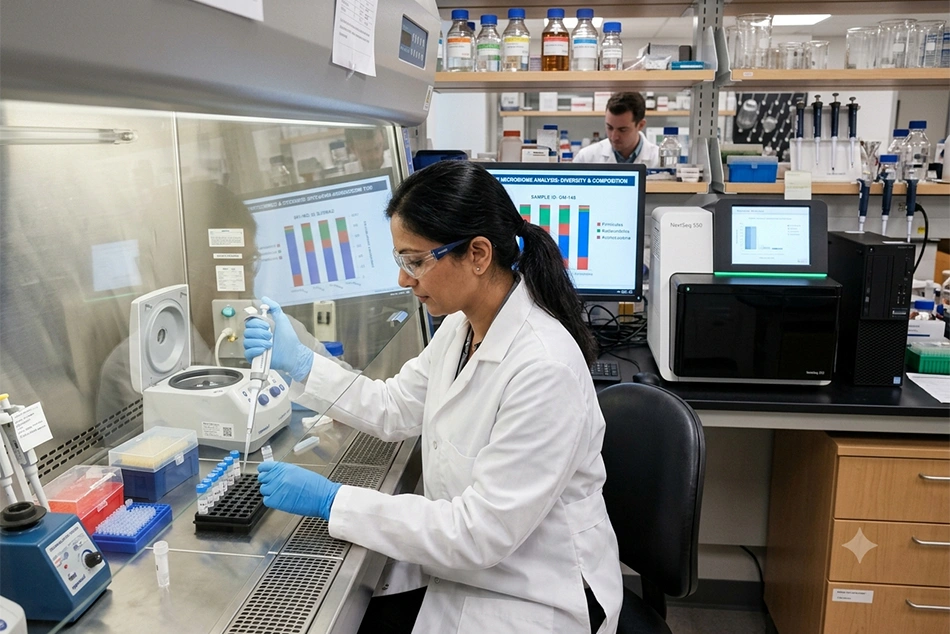
The researchers collected stool samples together with dietary, lifestyle, and health information from 575 healthy adults belonging to ten South Asian communities. Using the South Asian MicroBiome ARray (SAMBAR)launched for the first time in India by the scientists of BSIP, the gut microbiomes of 575 adults from ten culturally and geographically distinct communities across India and Sri Lankawe analysed.
The gut microbiome was characterized using high-throughput DNA sequencing of bacterial 16S rRNA genes, followed by advanced bioinformatic analyses. The researchers compared rural and urban individuals within each community and also compared South Asian microbiomes with global datasets.
Field teams worked closely with local communities across India and Sri Lanka to recruit participants and collect biological samples and lifestyle information.
Community-engaged approach
A community-engaged approach was followed throughout the study, with researchers sharing study findings back with participating communities. Laboratory analyses, DNA sequencing, and computational methods were then used to characterize gut microbial diversity and identify associations with geography, diet, urbanization, and metabolic health.
This approach enabled the team led by Shreya L. Ramachandran, Nagarjuna Pasupuleti, Richard J. Abdill, Niraj Rai and Maanasa Raghavan to identify both community-specific microbial signatures and common microbial changes associated with urbanization and metabolic health.
The study published in the journal Gut Microbes, highlights the importance of including underrepresented populations in global microbiome research. This is the first baseline gut microbiome data from India generated from the healthy individuals in India with huge medical and evolutionary impacts.
By demonstrating that different communities respond differently to urbanization, the study suggests that future microbiome-based therapies should be tailored to regional populations rather than adopting approaches developed solely from Western populations. The SAMBAR resource will also support future research on diabetes, obesity, cardiovascular disease, and other lifestyle disorders that are rapidly increasing across South Asia.
Follow ummid.com WhatsApp Channel for all the latest updates.
Select Language to Translate in Urdu, Hindi, Marathi or Arabic