Nepal blames USA, China and India for floods, seeks compensation
Nepal has blamed USA, China and India for the Rasuwa flash floods, and demanded compensation from the three countries for the losses it has incurred
Kathmandu: Nepal has blamed USA, China and India for the Rasuwa flash floods, and demanded compensation from the three countries for the losses it has incurred.
Speaking to a local TV channel, Nepal Foreign Minister Shishir Khanal said the greenhouse gas emissions from the three countries led to the floods in the country last Wednesday.
He said Nepal’s own greenhouse gas emissions were practically negligible yet the country was bearing the brunt of a crisis it had done little to create.
“We are shifting our diplomatic framework from ‘aid’ to ‘justice and compensation’. This is not a matter of charity; it is a matter of legal and moral liability”, Khanal told Kantipur TV in an inteview.
“The major industrial emitters—such as China, which is the world’s top emitter, the United States at number two, and India at number three—have a historical responsibility to compensate vulnerable nations like Nepal”, he added.
"The Ministry of Finance has officially dispatched a formal climate compensation claim letter to our international partners. We will be raising this issue with absolute firmness and clarity at every upcoming international forum", he said.
Nepal Flood Death Toll
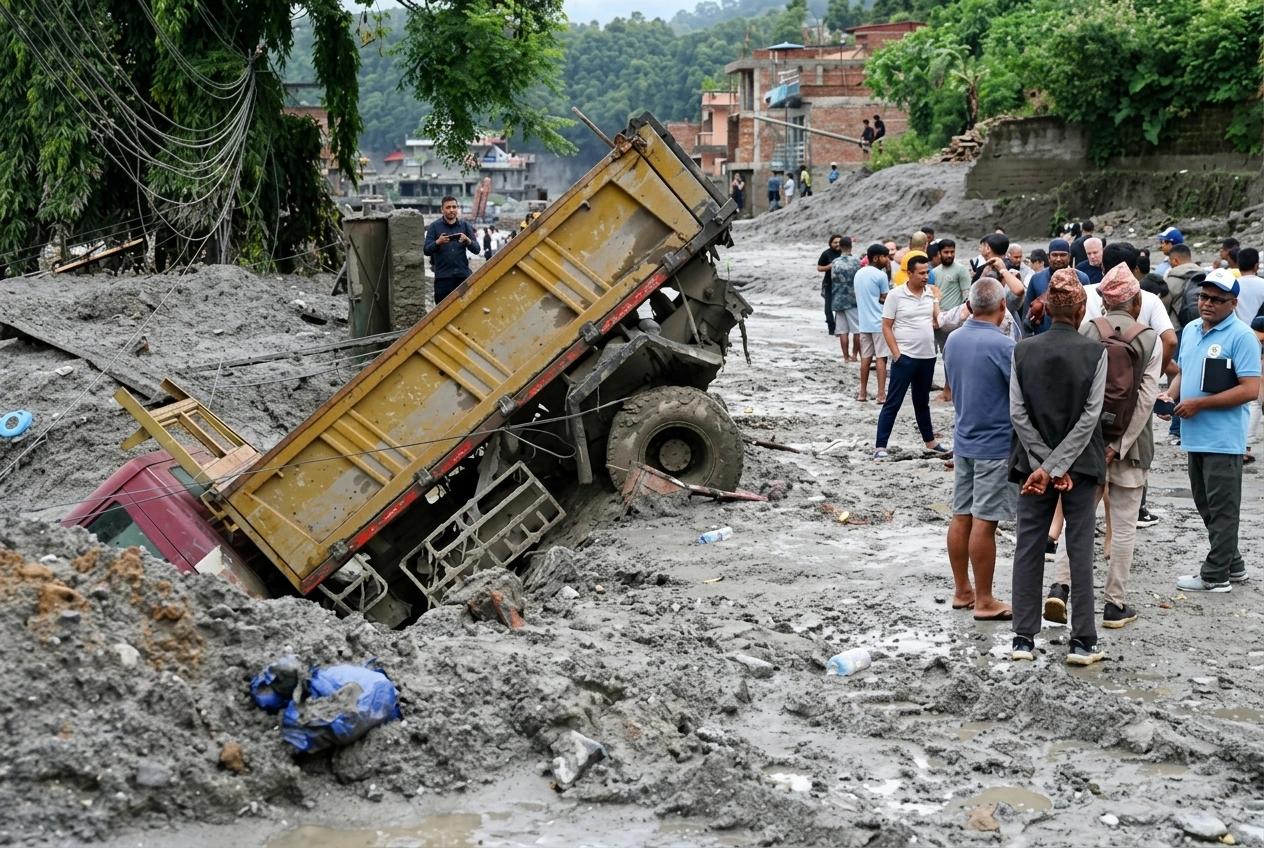
Nepal was devastated by the deadly flash floods last Wednesday. The flash flood was triggered by a rock slide near the Nepal-Tibet border, badly damaging a dozen hydropower projects and washing away several villages and bridges in Rasuwa, Dhading, Nuwakot, and Chitawan districts.
The massive flood entered into Trishuli river through Bhote Koshi in Timure due to the rock slide and swelling Lhende river situated in Nepal-Tibet border, said the National Disaster Risk Reduction and Management Authority (NDRRMA), Nepal.
At least 1,125 people have so far been confirmed dead with more than 4,500 still missing and untraceable even as the massive rescue operation is underway.
Balen Shah backs his cabinet colleague
Nepal Prime Minister Balen Shah also called for Nepal to raise the issue of compensation more forcefully with the international community.
Shah said the floods that entered Rasuwa through the Bhotekoshi River bordering Tibet was due to climate change. He said that climate change is a global contribution and disaster response remains a global responsibility.
The government officials in Nepal meanwhile have begun discussions over whether PM Shah should attend the 81st United Nations General Assembly and highlight the effects of climate change on Nepal, including the recent Bhotekoshi floods, while demanding climate justice at the world forum.
China is the world’s biggest emitter, accounting for roughly 29 to 33 percent of global CO₂ emissions. The United States ranks second, with annual emissions of nearly 6.2 billion metric tons, roughly 12.7 to 15 percent of global emissions.
India is the third-largest greenhouse-gas emitter globally, emitting around 4.4 billion metric tons of CO₂-equivalent each year, contributing 7.3 to 8.3 percent of annual global greenhouse gas.
Follow ummid.com WhatsApp Channel for all the latest updates.
Select Language to Translate in Urdu, Hindi, Marathi or Arabic