New Delhi World Book Fair 2026: A Walk Through Ideas and Cultures
The New Delhi World Book Fair was not merely a visit; it was an encounter with ideas, cultures, and urgent questions of our time.
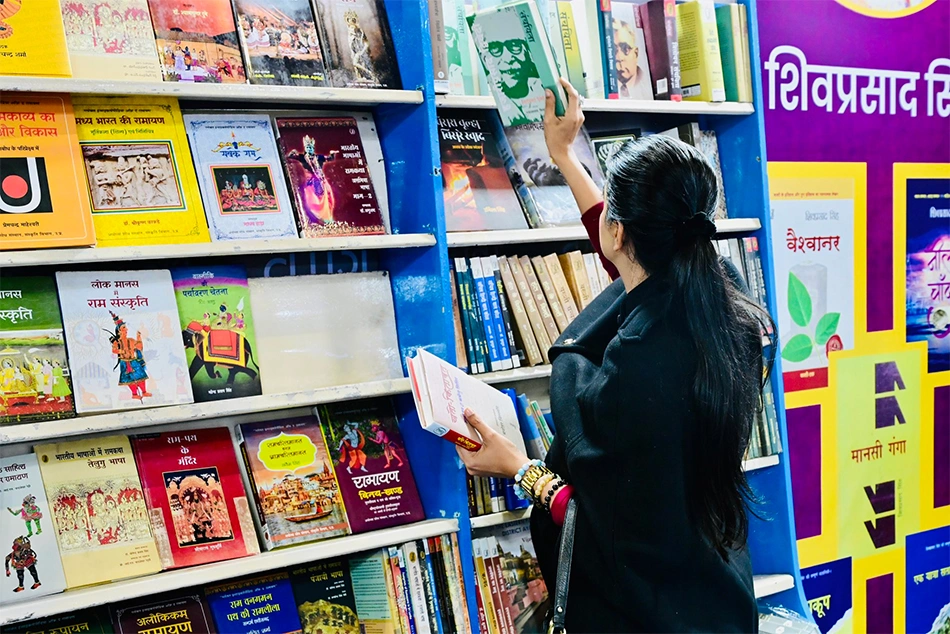
On 17 January 2026, the 8th day of the New Delhi World Book Fair (NDWBF) 2026, the fair was in its full momentum. Now in its 53rd edition, the NDWBF is organised by the National Book Trust (NBT), India, under the Ministry of Education, Government of India. Hosted at Bharat Mandapam, Pragati Maidan, New Delhi.
The fair was held from 10 to 18 January 2026, with Qatar as the Guest of Honour country. The overarching theme for this year was “Indian Military History – Valour & Wisdom @75”, marking 75 years of India’s Independence.
As in previous years, I was drawn to the fair by the sheer abundance of books, interviews, discussions, informal conversations, and the subdued yet palpable excitement that only a gathering of readers, writers, and intellectuals can generate.
Compared with the opening day, the eighth day presented a noticeably different atmosphere: denser crowds, more elaborately decorated stalls, livelier interactions, and a more confident rhythm to the fair. National and international publishers alike had fully settled in, transforming the halls into a sea of books and readers, a space that encouraged both close observation and deep immersion.
The arrangements at the entrance reflected careful logistical planning. Free shuttle services operated from designated entry points, transporting visitors efficiently to the exhibition pavilions. Seated in one such vehicle, I reached the venue with ease. Approaching the main entrance, I passed police and security force vehicles stationed at strategic points, a reminder of both the scale of the event and the emphasis on safety. Opposite the entrance, the Food Corner was already animated despite the early hours, offering a sensory contrast of aromas, voices, and movement. Nearby, the Children’s Pavilion stood out as a space dedicated to nurturing young readers through interactive activities, underscoring the fair’s commitment to cultivating the next generation of readers and thinkers.
On 10 January, the opening day of the fair, visitors were welcomed by a group of Arabian performers at the entrance. Dressed in traditional attire, they performed what appeared to be a cultural or ritual dance, their synchronised movements and rhythmic steps momentarily transforming the threshold of the fair into a site of cultural exchange. The performance served as an apt prelude to an event that prides itself on linguistic, religious, and cultural plurality.
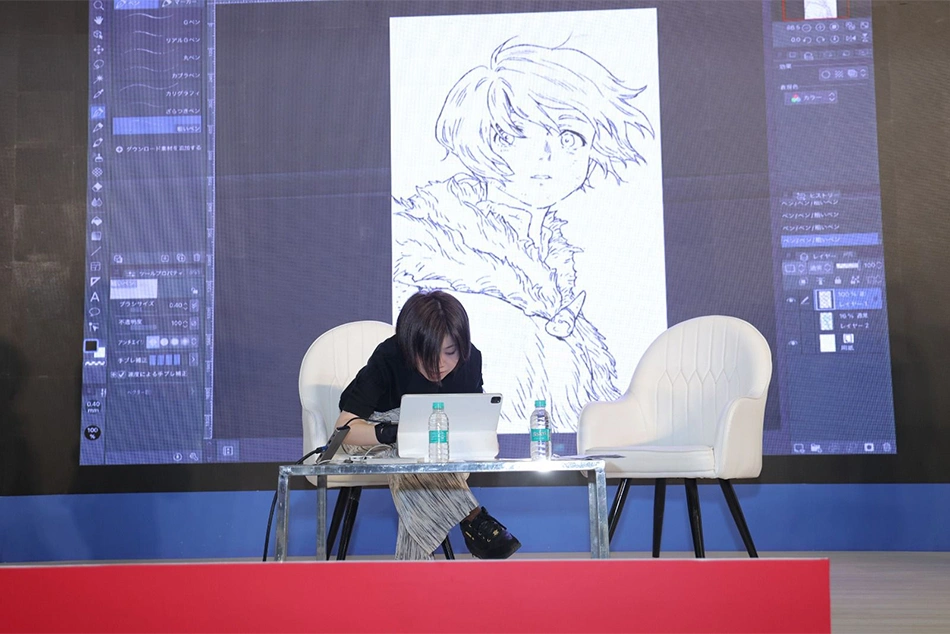
[The Japan Foundation organised a special event welcoming renowned manga artist Yoshitoki Ōima at the International Events Corner of the World Book Fair. Titled “Welcoming Manga to India” the session marked the first-ever public appearance of a Japanese manga artist in India.]
The contrast between the first and eighth days was striking. While the opening day allowed for relatively unhurried movement through the halls, the eighth day was overtly crowded, marked by animated conversations, a greater presence of international speakers, and more engaging, visually refined stalls. We made a deliberate effort to visit almost every stall, regardless of language, region, or religious orientation. This exercise revealed the vast intellectual geography represented within the fair.
Global publishing giants such as Penguin Random House, Oxford University Press, Atlantic, Cambridge University Press & Assessment, and HarperCollins stood alongside regional, independent, and university presses. Among these, Penguin Random House was particularly prominent. Its stall remained consistently crowded, with entry regulated through queues. This popularity reflected not only brand recognition but also the sustained appeal of its catalogue.
The Classics section, in particular, was extensive and drew readers repeatedly back to the shelves. I spent a considerable amount of time there, surrounded by familiar names and enduring texts that invited slow reading and quiet reflection. The experience reaffirmed the continued relevance of canonical literature in an age increasingly shaped by digital immediacy.
After exploring the international section, with its diverse range of languages and publishing traditions, attention turned to Indian publishers, especially those working in Urdu.
This year, recognised institutions and publishers such as the Urdu Academy, Delhi; the National Council for Promotion of Urdu Language; NCERT; the West Bengal Urdu Academy; Naamak Publication; Arshia Publication; and Hira Book Depot, Lucknow, among others, were present. Their stalls were intellectually engaging, offering works that directly addressed contemporary political, religious, and social debates.
Two titles stood out in particular: Murder in the Name of Allah (Ahmadiyya Muslim Community, Delhi) and Why Muslims Are Misfit in the Modern World? (Arshia Publication). The titles themselves were arresting, inviting curiosity as well as critical engagement.
Conversations with the publishers suggested that these works seek not sensationalism, but a serious confrontation with difficult questions surrounding violence, identity, faith, and modernity. Such exchanges underscored how book fairs function not merely as commercial marketplaces, but as forums for dialogue and reflection.
Murder in the Name of Allah, written by Hazrat Mirza Tahir Ahmad and translated by Syed Barakat Ahmad from the original Urdu Mazhab ke Naam Par Khoon, interrogates the misuse of religious language to justify violence and argues for a moral separation between faith and extremism.
Why Muslims Are Misfit in the Modern World? written by Arshad Maḥmūd and translated by Jamshed Iqbal, offers an internal critique, examining the tensions between inherited traditions and contemporary social realities. The themes explored in these books resonate strongly with the current global climate of ideological conflict, religious polarisation, and cultural anxiety.
That such works find space and readership at the NDWBF reflects the fair’s commitment to intellectual openness and plurality. It also highlights the enduring role of publishing in initiating conversations that are often marginalised or avoided in mainstream discourse.
Beyond individual books and publishers, the NDWBF emerged as a living cultural ecosystem, a space where languages intersect, traditions converse, and readers negotiate their relationship with the present through texts.
Families, students, scholars, casual readers, and publishers moved through the halls with shared purpose, each participating in a collective literary ritual. The surrounding environment with security arrangements, food stalls, transport facilities, and cultural performances contributed to making the fair both accessible and inclusive.
The New Delhi World Book Fair was not merely a visit; it was an encounter with ideas, cultures, and urgent questions of our time. From global publishing houses to regional Urdu presses, from classical literature to contemporary polemics, the fair reaffirmed the enduring power of books to challenge, comfort, and connect.
In an era often described as post-literary, the NDWBF stands as quiet evidence to the contrary: that reading remains a collective act, and that books continue to matter—perhaps now more than ever.
[The writer, Azmat Ali, is Delji based journalist. He can be reached via X @AzmatAli2025_]
Follow ummid.com WhatsApp Channel for all the latest updates.
Select Language to Translate in Urdu, Hindi, Marathi or Arabic