Rise of AIMIM: Broader Political Context
AIMIM’s rise in Maharashtra’s municipal politics is both a symptom and a signal, it reflects minority assertion, at the same time also exposes the systemic failure of mainstream opposition politics, particularly Congress
A New Urban Force Emerges
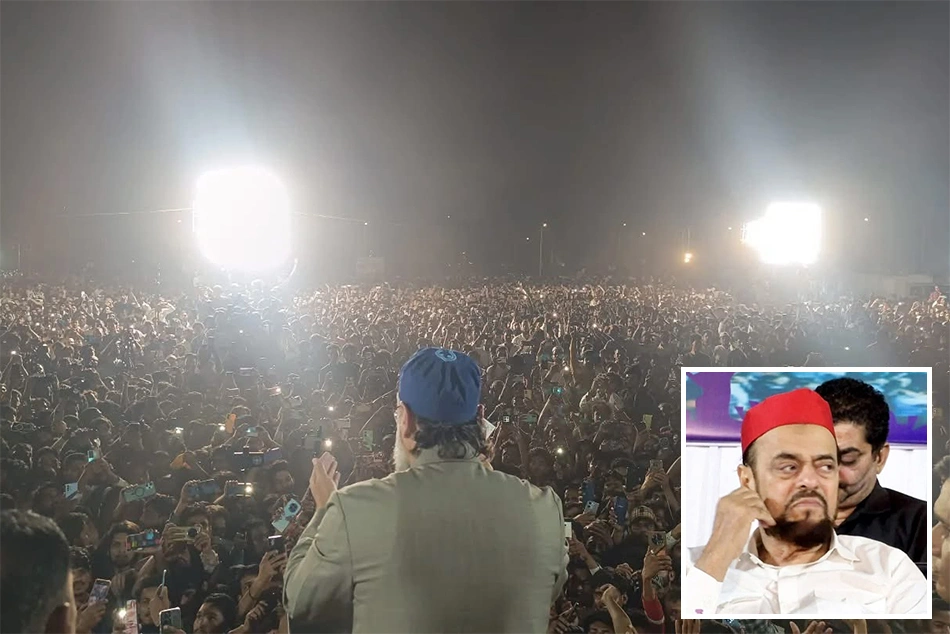
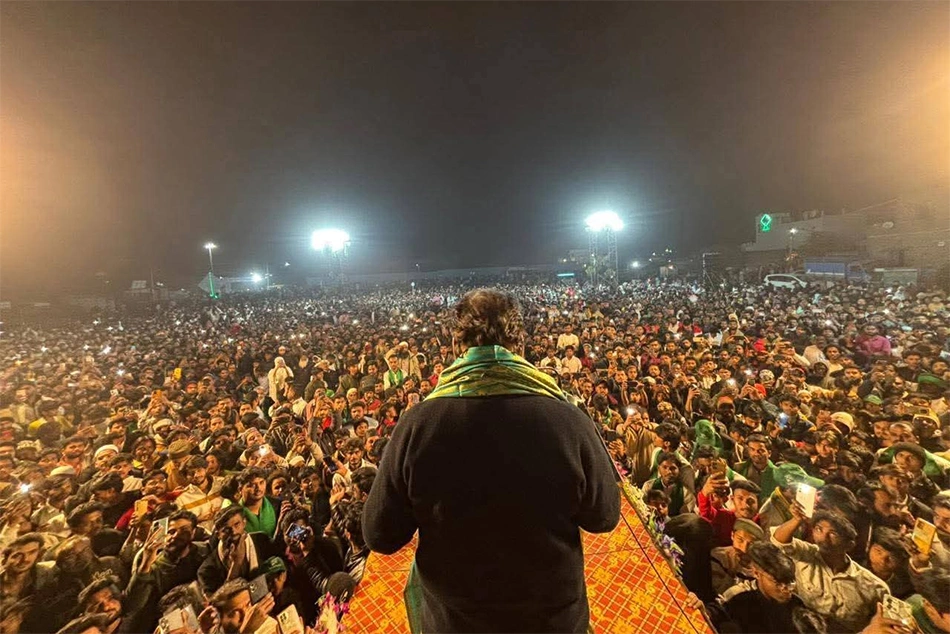
The recently concluded municipal corporation elections in Maharashtra (held on January 15, 2026), across 29 civic bodies covering nearly 2,868 wards, have significantly reshaped the state’s urban political landscape. At one side, the BJP won in 25 cities of the State, while among the most discussed outcomes was the strong performance of the All India Majlis-e-Ittehadul Muslimeen (AIMIM), led by Asaduddin Owaisi. It emerged as a notable force in several cities, gaining a significant number.
Winning between 114 and 125 seats, the AIMIM registered a substantial rise compared to its earlier outings. The party consolidated its presence, particularly in the Muslim-majority urban pockets, marking a decisive expansion of its municipal footprint in Maharashtra.
Where AIMIM Won Big
AIMIM’s key victories came from cities with sizeable minority populations. The party secured:
- 33 seats in Chhatrapati Sambhajinagar (Aurangabad)
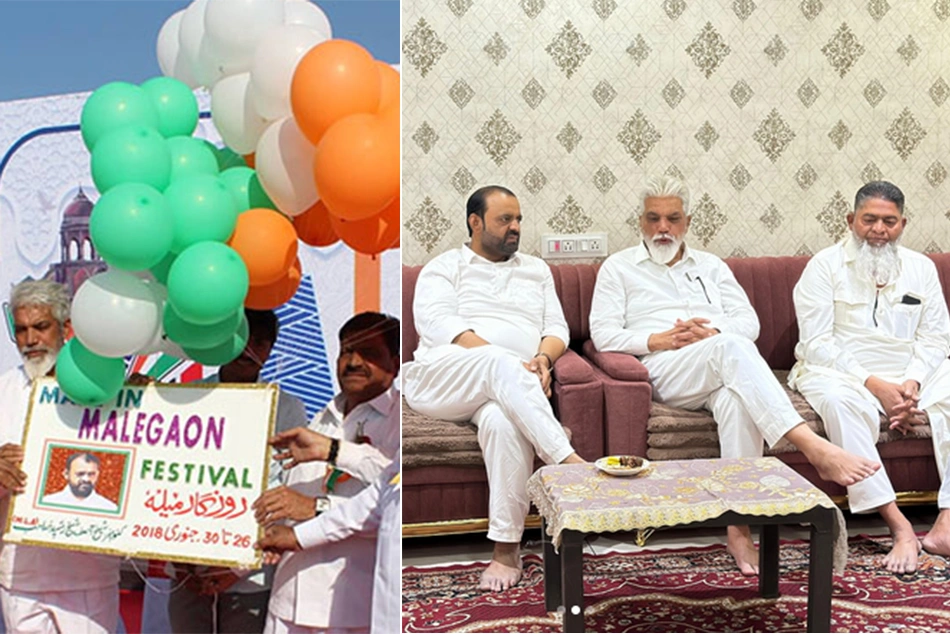
- 21 seats in Malegaon
- 14 seats in Nanded
- 12 seats in Amravati
- 10 seats in Dhule
- 8 seats each in Mumbai (BMC) and Solapur
- 6 seats in Nagpur
- 5 seats in Thane
Smaller but symbolically important gains were recorded in Akola, Ahmednagar, Jalna, and Chandrapur. In cities like Sambhajinagar and Malegaon, AIMIM emerged as the second-largest party, surpassing outfits such as the Maharashtra Navnirman Sena (MNS) and the Samajwadi Party (SP).
Notably, at least six non-Muslim (Hindu and Buddhist) candidates won on AIMIM tickets, an outcome the party’s supporters cite as evidence of growing inclusivity.
The Broader Political Context
While the BJP-led Mahayuti alliance dominated the overall electoral outcome, AIMIM’s rise triggered intense debate on social media platforms, particularly X, around minority politics, secularism, vote fragmentation, and urban demographic shifts.
Public discourse broadly falls into three strands: the good, the bad, and the ugly.
The Good: Assertion, Representation, and a Sense of Political Dignity
Supporters view AIMIM’s performance as a reassertion of minority political agency, especially among Muslims who feel electorally sidelined by mainstream parties. Many argue that the results reflect voter fatigue with Congress and SP, which are increasingly perceived as transactional seeking minority votes without offering proportional leadership or policy advocacy.
AIMIM’s leadership, grassroots mobilisation, and sustained presence in smaller towns were widely credited for this success. Leaders such as Imtiaz Jaleel and Waris Pathan highlighted door-to-door campaigns and local engagement as key drivers.
The victory of non-Muslim candidates further strengthened AIMIM’s claim that it is evolving beyond a single-community label, at least at the municipal level.
The Bad: Vote Fragmentation and Strategic Limits
Critics argue that AIMIM’s growth, while electorally impressive in local bodies, weakens broader secular coalitions. According to this view, AIMIM consolidates Muslim votes in wards but fails to convert this strength into state or national policy leverage, inadvertently benefiting the BJP by splitting opposition votes.
There is also criticism that AIMIM relies heavily on identity-driven rhetoric, which limits its ability to build wider alliances and sustain long-term governance impact beyond symbolic victories.
If the party fails to attract and give space to non-Muslim candidates and include them within its cadre, it will only lead to the consolidation of Muslim voters while alienating other communities unlike the inclusive cadre-building long practiced by the BJP.
Adopting a genuinely inclusive approach is essential to preserving the country’s social fabric, which the BJP has significantly damaged over the past 11 years of its rule. The Muslim community does not need a replica of the BJP within its own ranks, repeating the same divisive politics and causing similar harm to the nation.
How Secular Parties including Congress Created the Space AIMIM Occupies?
To understand AIMIM’s rise fully, one must also examine the failure of Congress, often overlooked in the debate.
In the 1980s and 1990s, Doordarshan was India’s primary broadcaster, offering engaging and culturally rich programmes such as Chandrakanta, Tipu Sultan, The Great Maratha, Bharat Ek Khoj, and Mahabharat. Alongside historical epics, shows like Mowgli, Byomkesh Bakshi, and Shaktimaan catered to diverse audiences and built deep viewer loyalty.
When cable television arrived—with channels like Zee TV, Sony TV, Star Plus, and Cartoon Network—many households adopted cable, yet a large segment of viewers continued to watch Doordarshan. Even modest shows like Shaktimaan and Shikwa were enough to retain audience trust.
The decline began when Doordarshan started repeating low-quality, illogical, and uninspiring content, ignoring audience expectations. Its administrators bored and alienated loyal viewers to the point where switching to cable became inevitable. Doordarshan did not collapse because of competition—it collapsed because it stopped competing.
Had Doordarshan evolved with strong scripts, creativity, and relevance, it might still have been dominant.
Congress mirrors this trajectory
For decades, Congress has sought votes from Muslims, Dalits, and secular voters by invoking democracy, Hindu–Muslim unity, and fear of the BJP. Yet it failed to curb the rise of organisations like RSS, Bajrang Dal, and VHP, failed to deliver corruption-free governance, and more critically allowed polarization to deepen, often by design or neglect.
Congress continues to ask minorities for votes but hesitates to speak firmly on their issues. It has made little effort to retain its traditional voter base. The Muslim community, in particular, has felt politically orphaned leading many voters to turn towards polarisation-driven but assertive alternatives like AIMIM.
Also Read: Redrawing Muslim Politics: AIMIM’s Rise and SP’s Fall in Maharashtra
At the same time, Congress has weakened or absorbed smaller democratic and secular formations such as NCP, WPI, BRSP, Azad Hind groups, and even the Aam Aadmi Party in some regions. Leaders elected on Congress tickets frequently remain silent spectators in the face of injustice or defect to the BJP after winning.
Thus, it is inaccurate to argue that only the BJP fuels AIMIM’s growth. Congress plays a silent but significant role by vacating political space and then blaming others for filling it. In effect, Congress often acts as an inadvertent mediator between BJP’s polarisation and AIMIM’s consolidation.
The Ugly: Alliances, Polarisation, and Fear Narratives
The most contentious debates arose around reports of AIMIM entering local arrangements with the BJP in places such as Akot and Ambernath. These instances triggered accusations of opportunism and ideological inconsistency, reinforcing scepticism among secular voters.
The right-wing leaders framed AIMIM’s success as a demographic or security threat, amplifying communal anxieties. Symbolic controversies and selective misinformation often debunked later further poisoned public discourse.
Critics argue that AIMIM’s rise splits the anti-BJP vote, indirectly strengthening the BJP-led alliance. Analysts like Zaheer Ali warn that distancing from broader opposition coalitions weakens Muslim political influence, keeping them out of real power-sharing.
Risk of Polarisation
AIMIM’s assertive politics, unlike the “soft Hindutva” of regional parties, may intensify communal polarisation in key pockets.
Another troubling aspect is the party’s over-identification with the Owaisi family, much like the Congress’s long-standing reliance on the Gandhi family.
To avoid repeating the same mistakes, AIMIM must move away from this personality-driven culture and consciously develop strong regional and independent leadership. So, failing to do so can risk burdening the party with the very malaise that weakened the Congress.
Conclusion: A Symptom, Not an Anomaly
AIMIM’s rise in Maharashtra’s municipal politics is both a symptom and a signal. It reflects minority assertion, but also exposes the systemic failure of mainstream opposition politics, particularly Congress.
In a political environment where the BJP consolidates Hindu votes and Congress fails to inspire confidence, AIMIM fills a vacuum not merely by choice, but by default.
Whether AIMIM evolves into a broader, governance-oriented force or remains confined to identity-based consolidation will shape its future. But the larger question remains unanswered: who will reclaim the political middle ground before it disappears entirely?
Follow ummid.com WhatsApp Channel for all the latest updates.
Select Language to Translate in Urdu, Hindi, Marathi or Arabic