About Leave India Notice to Imran Khan
Bollywood actor Imran Khan has been issued a 'Leave India Notice' (Externment Notice) by Mumbai Police on October 15, 2026, and has been formally ordered to leave India by October 28, 2026 following his participation in a political demonstration
A strong and effective voice of protest is a fundamental cornerstone of a healthy democracy. It serves as a vital mechanism for citizen engagement, accountability, and social progress. But this basic democratic dictum is facing an existential crisis under Narendra Modi’s rule, one even more severe than what India witnessed in 1974 under Indira Gandhi. The right to protest in India under Modi faces intense scrutiny and a severe crisis amid widespread mass detentions and security lockdowns.
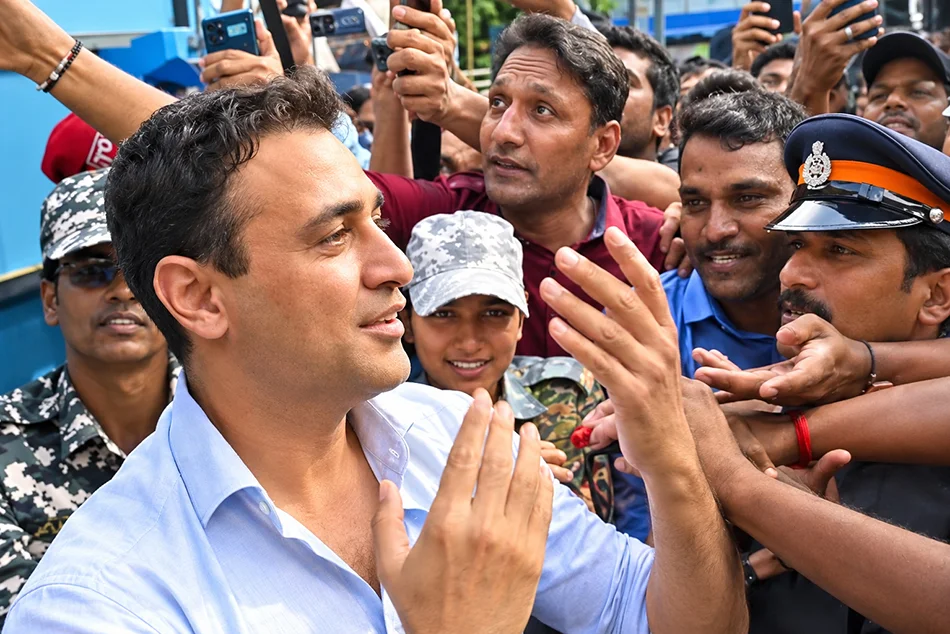
On October 15, 2026 the Mumbai Police issued a “Leave India Notice” (externment) to Bollywood actor Imran Khan. He has been formally ordered to leave the country by October 28, 2026 following an investigation into his participation in a political demonstration. This draconian order by the Mumbai Police has shaken the democratic conscience of the country, as people are busy trying to understand when the right to political protest was banned in India. The right to peaceful assembly is a fundamental right guaranteed under Article 19(1)(b) of the Constitution.
Though the government frequently uses specific legal provisions to enforce localised or temporary bans on protests, no statute specifically states that even a peaceful political protester can be externed. This simply implies that the police across the country, under the control of Amit Shah, have developed utter contempt for the Constitution and the Supreme Court and treat themselves as the supreme authority. The police have come to believe that no one can touch them, not even the Chief Justice of India, with Amit Shah as their boss.
Right to Protest: Article 19(1)(b) of the Indian Constitution guarantees citizens the right to assemble peacefully and without arms. This right does not require state approval or a licence, though the state may impose reasonable restrictions in the interest of public order. Even if we assume that the right to protest is not absolute and that protests disrupt daily life, the police cannot extern any protester.
True enough, the Supreme Court should have taken suo motu cognisance of this violation of basic rights. Unfortunately, it has preferred to remain a passive spectator, virtually allowing the police to act arbitrarily and dictate people’s lives in a manner contrary to the spirit and tenets of the Constitution. Since Modi came to power in 2014, India has increasingly restricted public protests on the pretext of ending social unrest.
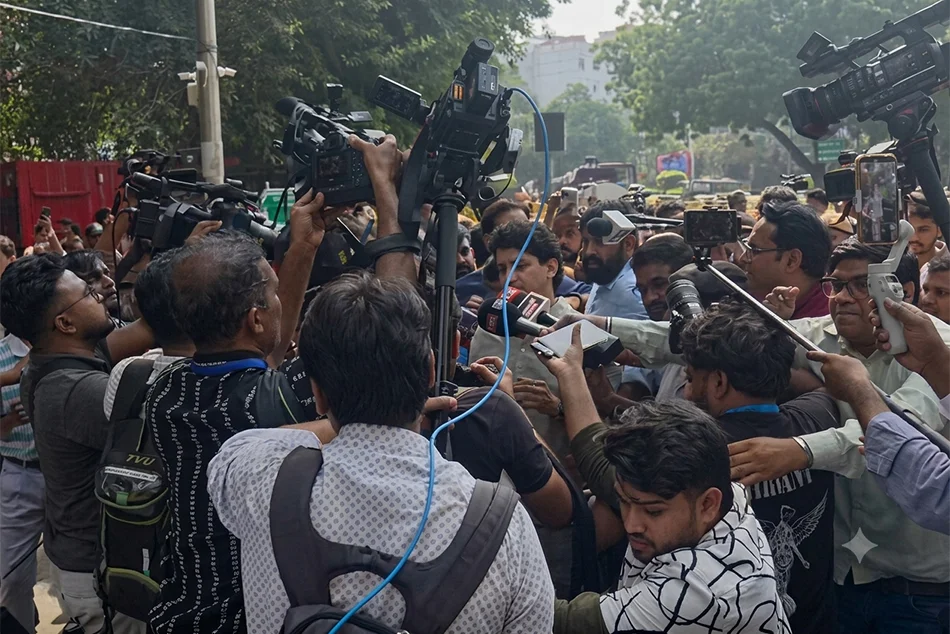
Following the Mumbai Police’s directions, people are keen to know the reasons for Imran Khan’s externment. The reason provided appears fragile and unconvincing. On October 10, 2026, the actor participated in a protest organised by the Cockroach Janta Party (CJP) at Mumbai’s August Kranti Maidan. The demonstrators were demanding the resignation of Chief Election Commissioner Gyanesh Kumar. Imran Khan, the nephew of superstar Aamir Khan, was detained by the police along with his partner, Lekha Washington, and others. What helped the Mumbai Police accomplish its objective was the fact that Imran is an American national. The police subsequently served him with an official notice ordering him to leave India by October 28 for allegedly violating the Immigration and Foreigners Act by participating in local political protests.
The Mumbai Police has nevertheless not clearly stated whether Imran Khan was an onlooker, an active participant, or someone associated with the CJP, the organiser of the meeting. Not everyone present at the venue can be described as a participant. In simple terms, a participant is someone who takes part in or is involved in an event, activity, game, study, or group. When people gather to do something together, rather than merely watch, they are considered participants.
In contrast, someone who simply watches an activity is an observer or onlooker. There is a significant difference between a participant and an onlooker. The Mumbai Police must clarify how, and whether, Imran was involved in the CJP programme.
The relationship between Indian Americans, Narendra Modi, and Donald Trump highlights a notable duality in diaspora politics. Modi is free to travel to the US and appeal to the Indian diaspora to vote for Donald Trump, but Indian Americans cannot question or protest against his policies. It cannot be denied that, by holding an American passport and an Overseas Citizen of India (OCI) card, Imran has forfeited the right to support a protest. He now has to face police action following a complaint by BJP leader Kirit Somaiya. This desperate action by the police points to their growing vulnerability to pressure from BJP cadres.
BJP and RSS cadres have been specifically targeting Muslims. In this case, Imran Khan is also a Muslim, making him a prime target for Kirit Somaiya, who has lately been sidelined in party activities. BJP leader Kirit Somaiya has demanded action against Khan, questioning the right of a foreign national with OCI status to participate in a political agitation against the Indian government. The Mumbai Police is yet to specify whether Imran was a protester, a participant, or an onlooker. Unfortunately, however, the judgement appears to have already been pronounced.
This is a notable paradox that highlights how differently public figures are treated depending on the nature of their public visibility. We Indians believe in and practise duplicity. When an Indian American or a member of the Indian diaspora achieves success in corporate leadership, politics, science, or academia, they are widely praised and eulogised as a testament to the “model minority” success story, reflecting positively on both the diaspora and the community’s work ethic. Indians are never tired of identifying such individuals as their own.
However, when an individual engages in controversial political activism or protests, they face backlash, public scrutiny, or institutional persecution. This duality often stems from societal expectations. “Achievers” align with established and comfortable narratives of success, while “protesters” challenge the political status quo, leading to a much more polarised reception.
Ever since Modi came to power, the BJP has adopted a dangerous vision of India: one in which Hindus reign supreme and religious minorities, particularly Muslims and Christians, are treated as second-class citizens. Modi and the BJP espouse a distinctive authoritarian and supremacist ideology. The Indian American Muslim Council (IAMC) has released its annual report, 365 Days of Hate: 2023 in Modi’s India, which analyses BJP policies and their relationship to human rights conditions in India. It also meticulously documents state-led persecution, hate crimes, and economic discrimination that have come to dominate everyday life in Modi’s India. A complaint, investigation, OCI cancellation, and deportation are distinct legal stages, and Khan would have legal options, including challenging the allegations before the authorities or seeking judicial intervention.
The remittances sent by Indians settled abroad are used by their families and contribute to the economy. If they have a role to play, should they not have the right to point out the government’s mistakes or attend a protest meeting? The massive volume of remittances sent by the Indian diaspora is a vital pillar of the Indian economy, funding households and boosting foreign exchange reserves. Because of this substantial economic contribution, many diaspora members argue that they should have a greater say in governance. While the Indian government actively encourages their economic partnership, it maintains strict legal boundaries regarding political participation by foreign nationals to safeguard national sovereignty. If they cannot have a say in India’s internal affairs, the government should refuse to accept the remittances they send.
The decision to extern Imran is a strategic move by the Modi government to warn OCI cardholders and members of the diaspora against opposing his government and supporting the Congress and other opposition parties. It is significant that this action against Imran comes in the wake of Indian American diaspora groups and organisations organising coordinated protests and meetings across several US cities to express opposition to the Modi government over its alleged misgovernance and dismantling of democracy. The recent surge in political opposition within the diaspora has focused primarily on a large-scale domestic voter registration and electoral roll revision process in India, which critics claim has led to selective disenfranchisement.
Multi-city rallies have been organised by Hindu, Dalit, and broader South Asian progressive organisations. Gatherings have taken place in states including Massachusetts, New Jersey, Georgia, Texas, New York, and California. Many of these US diaspora meetings were held in solidarity with the Cockroach Janta Party (CJP).
The comparison between the Modi administration and historical dictatorships such as that of Adolf Hitler is a subject of intense political debate, driven by differing viewpoints among domestic opposition groups and international watchdogs. Modi has already used anti-terror laws such as the Unlawful Activities (Prevention) Act (UAPA) and preventive detention against journalists, student leaders, and activists as a means of silencing political opposition. The autonomy of vital institutions—including the judiciary, the Election Commission, and Parliament—has been compromised to favour the BJP.
[The writer, Arun Srivastava, is a Senior Journalist.]
Follow ummid.com WhatsApp Channel for all the latest updates.
Select Language to Translate in Urdu, Hindi, Marathi or Arabic