Since When Call for Regime Change Become Sedition?
When changing the Congress government in 2014 was democracy in action, then why is calling for a change of government today being portrayed as anti-national?
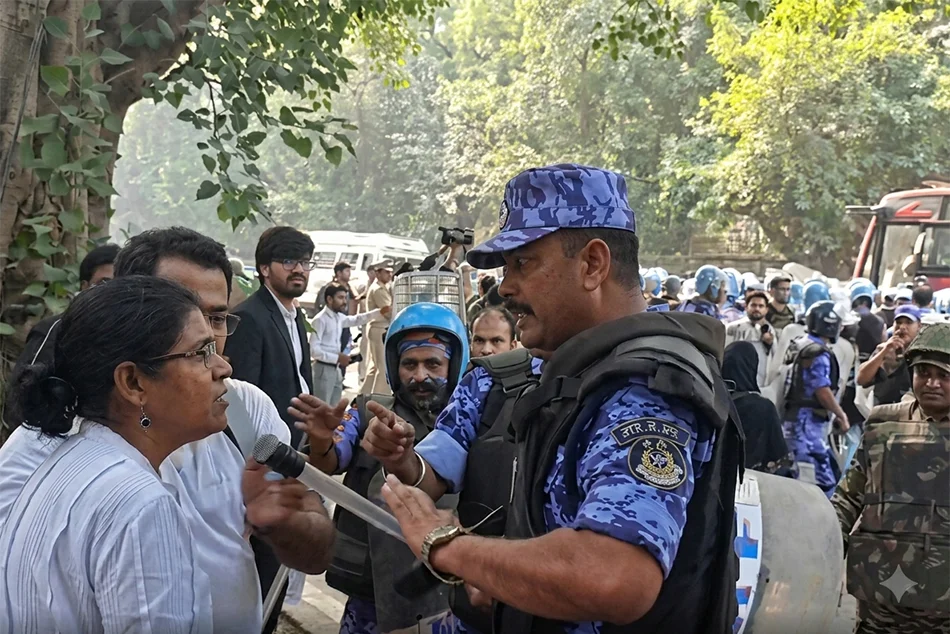
Changing the Congress government in 2014 was democracy in action. Why, then, is calling for a change of government today being portrayed as anti-national? Nepal, Bangladesh and Egypt offer sobering lessons on the cost of ignoring public anger and clinging to power.
A huge controversy has erupted over a term that, in a democracy, should not be controversial at all: regime change. The way it is being used in political discourse these days, one would think that merely calling for a change of government amounted to waging war against the country.
What exactly is wrong with regime change?
Did we fight for the right to vote so that we could cast our ballots once every five years and then spend the next five years accepting everything those in power do, without question? Democracy exists precisely because people must have the freedom to choose their government—and the freedom to replace it when they no longer want it.
Voters elect panchayat members, village heads, municipal councillors, MLAs and MPs. Governments are formed through their elected representatives. Five years later, voters can re-elect the same government or send it packing. There is nothing criminal, conspiratorial or anti-national about this. It is how democracy is supposed to work.
So why has the very idea of changing a government suddenly become so dangerous? Does the right to seek a change of government belong only to the party in power?
Changing the government was patriotic in 2014. Why is it anti-national today?
Let us revisit 2014. After ten years in power, the Congress-led UPA government lost the general election. The BJP-led NDA came to power, and Narendra Modi became prime minister. The BJP campaigned against the previous government’s policies, allegations of corruption and rising prices. Voters gave it a chance, and the government changed.
That was democracy at work. It was exactly as it should have been.
But if someone says today that the government should be changed in the next election, how does that make them anti-national? How does demanding a change of government suddenly turn someone into an “urban Naxal”?
Was changing the government in 2014 legitimate, but calling for a change today a crime? Do the rules of democracy change once a party comes to power? Does occupying the seat of government give a political party the right to equate itself with the nation?
That is the real problem. The ruling party is not the country. The government is not the same as democracy. Criticising a government is not an attack on the nation, and calling for a change of government is not a conspiracy to change the country.
Governments come and go. The country and its democratic institutions endure. That is a distinction we must never lose sight of.
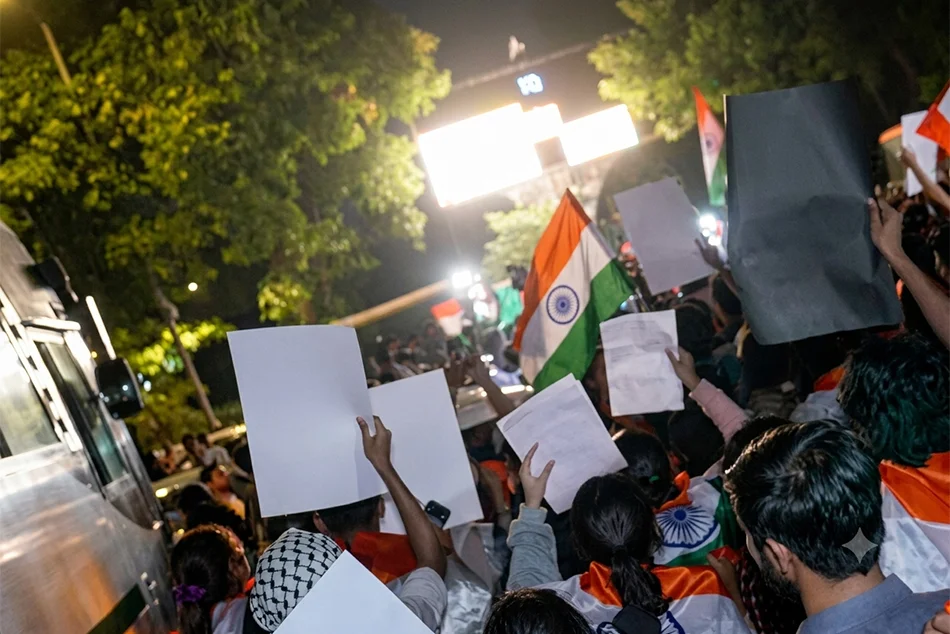
Lessons from Nepal, Bangladesh and Egypt
Around the world, governments have paid a heavy price for ignoring public anger and clinging to power.
In Nepal, a social media ban in September 2025 triggered protests among young people already frustrated by corruption, unemployment and distrust of the political leadership. The government’s crackdown, which resulted in deaths, intensified the unrest and eventually forced Prime Minister KP Sharma Oli to resign.
In Bangladesh, a student movement against quotas in government jobs escalated into a nationwide uprising in August 2024. A violent crackdown and mounting public anger deepened the crisis, eventually forcing Prime Minister Sheikh Hasina to resign and leave the country.
In Egypt, mass protests against corruption, unemployment and political repression forced President Hosni Mubarak to step down in 2011. But in 2013, the military removed the elected president, Mohamed Morsi, and established a military-backed order. Egypt demonstrated that removing a ruler and building a functioning democracy are two very different things.
The circumstances in these three countries were different, and their experiences should not be treated as identical to India’s. But they offer a common lesson: public anger cannot be suppressed indefinitely. When governments respond to grievances by trying to silence dissent rather than address it, a political crisis can deepen.
Keeping democratic channels open for people to express their discontent is a government’s responsibility. Branding demands for a change of government as anti-national does not make public anger disappear. It risks widening the divide between the people and the political establishment.
These examples also remind us that removing a ruler is not, in itself, a democratic victory. What matters is how power changes hands and what happens afterwards to democratic institutions, civil liberties and the rights of citizens.
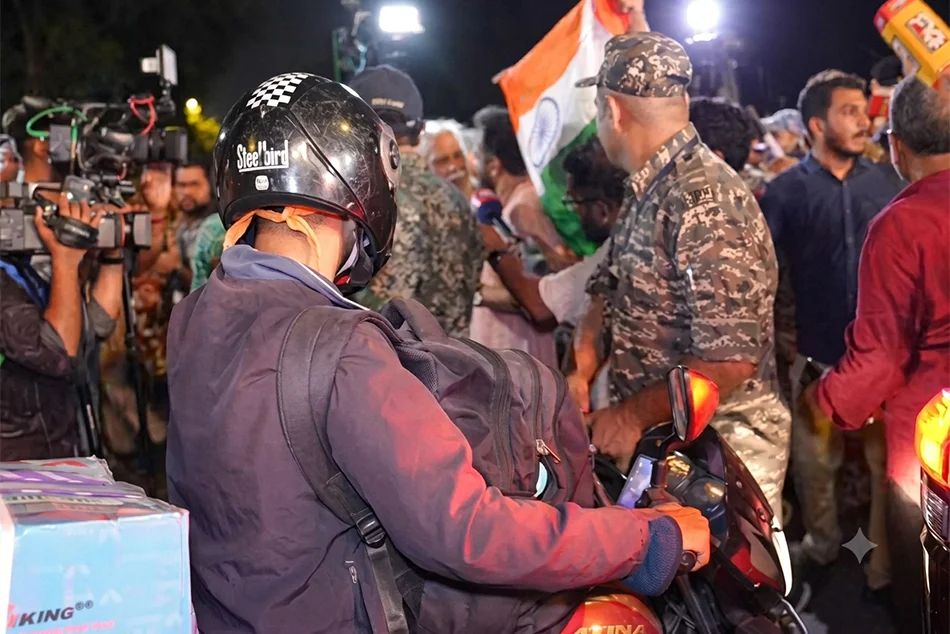
Was the change of government in 1977 also anti-national?
We need not look abroad for lessons. India’s own history offers a powerful example.
In 1975, Prime Minister Indira Gandhi imposed Emergency. Opposition leaders were jailed, the press was censored and civil liberties were curtailed. When elections were finally held in 1977, voters threw the Congress out of power. Indira Gandhi herself lost her seat in Rae Bareli, and Morarji Desai became the head of India’s first non-Congress government at the Centre.
The opposition had campaigned to remove Indira Gandhi from power. It had urged people to vote against the Congress. Was that sedition? Had voters committed an offence by changing the government? Was that landmark election in independent India’s history a conspiracy against democracy?
Of course not. It was a defining moment in the restoration of democracy. Through the ballot box, the people delivered a clear message: however powerful a government may be, it is not above the people.
If the change of government in 1977 was a victory for democracy, how can demanding a change of government today be called anti-national?
That is the question at the heart of the current controversy. Those in power must remember that political office is temporary. The people’s mandate is what matters. Those who govern today may find themselves in opposition tomorrow. The possibility of losing power must be accepted as a normal feature of democracy, not portrayed as a conspiracy against the nation.
The lesson from these examples is not that every demand for regime change is justified. It is that governments must understand public anger, allow it to be expressed and address the grievances behind it. It is easy to blame people for the smoke once a fire has broken out. Preventing the fire in the first place requires far greater political wisdom.
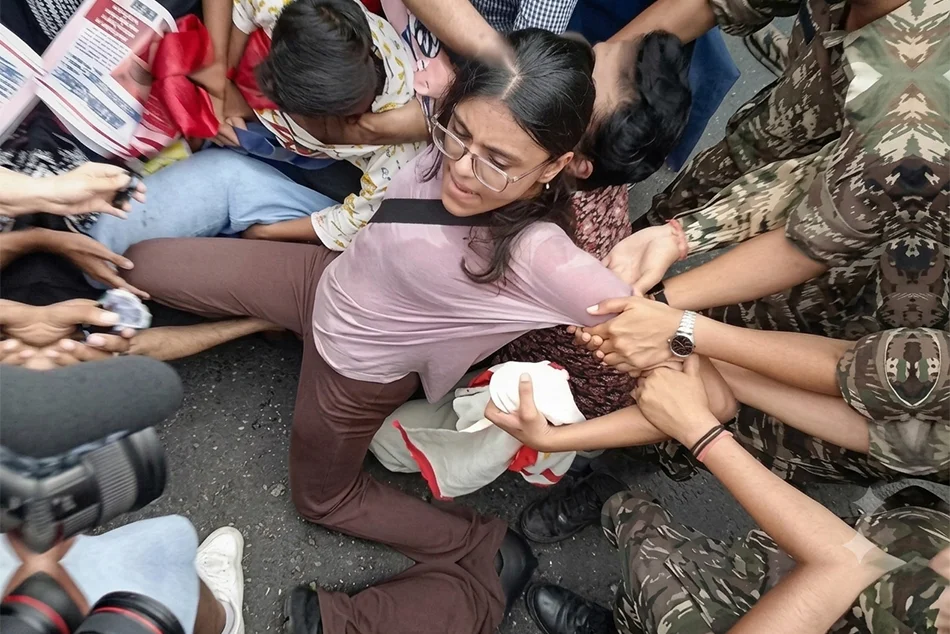
Why is there so much fear of losing power?
This question needs to be asked. If a government believes in its own performance, if it enjoys public support and if its policies are working, why should it fear calls for a change of government?
Let elections take place. Go to the people. Present your record. Allow the opposition to make its case. Voters will decide who deserves to remain in power and who must leave.
Why, then, is there a need to paint demands for a change of government as anti-national?
Are those in power worried that public confidence in them is eroding? Do they fear being held accountable for their decisions once they leave office? Or has the desire to remain in power become so overwhelming that even the prospect of losing it is seen as an attack on democracy?
These are legitimate questions that deserve answers. It would be wrong to claim, without evidence, that a government is deliberately preparing the ground for anarchy. But it is entirely reasonable to ask why an ordinary democratic demand for a change of government is being treated with such suspicion.
Not everyone who criticises the government is anti-national. Not every protest is a foreign conspiracy. Not every critic is an urban Naxal. And not every opposition leader is an enemy of democracy.
If there are allegations of wrongdoing, produce the evidence. If a crime has been committed, take action in accordance with the law. But if dissent itself is treated as a crime, what remains of democracy?
Does trying to block political change risk inviting disorder?
Elections, the judiciary, independent institutions, the media and peaceful protests provide channels through which people can express discontent and hold governments accountable. Their purpose is to ensure that grievances can be raised through constitutional means.
But when these channels lose public credibility, when those asking questions are treated as enemies and when demands for a change of government are portrayed as conspiracies against the nation, the distance between the people and the political establishment can grow.
There is, therefore, a genuine risk that narrowing the space for dissent may aggravate a crisis rather than resolve it. This does not mean that anarchy or violence should be justified. The distinction between peaceful protest and violence must remain clear.
But another question cannot be ignored: if the situation deteriorates, will all the blame simply be placed on the opposition and the people? Will anyone ask what those in power did to address public grievances? Did they keep the channels of dialogue open or shut them down? Did they answer criticism or put the critics themselves on trial?
Ignoring the conditions that fuel public anger and then blaming people for expressing it is a way for governments to evade accountability.
Those who defend every government decision and encourage the suppression of dissent must also remember that a weakened democracy does not harm the opposition alone. The entire country eventually pays the price.
In a democracy, power is temporary. Accountability is not
Those in power must remember one fundamental truth: the people elect them, and the people can remove them. This right is not a gift bestowed by any government. It is a basic principle of democracy.
The opposition’s job is to seek a change of government. The government’s job is to earn public trust through its performance. The people’s right is to choose between them.
If the opposition has no convincing case, voters will reject it. If the government has performed well, voters can elect it again. What, then, is there to fear?
Those who brand demands for a change of government as sedition seem to forget that the ruling party, too, may one day have to sit in opposition. Those who today label calls for a change of government anti-national may themselves need the same democratic right tomorrow.
Would they then accept having their voices silenced? Would they be willing to be dismissed as urban Naxals or traitors simply for wanting a different government?
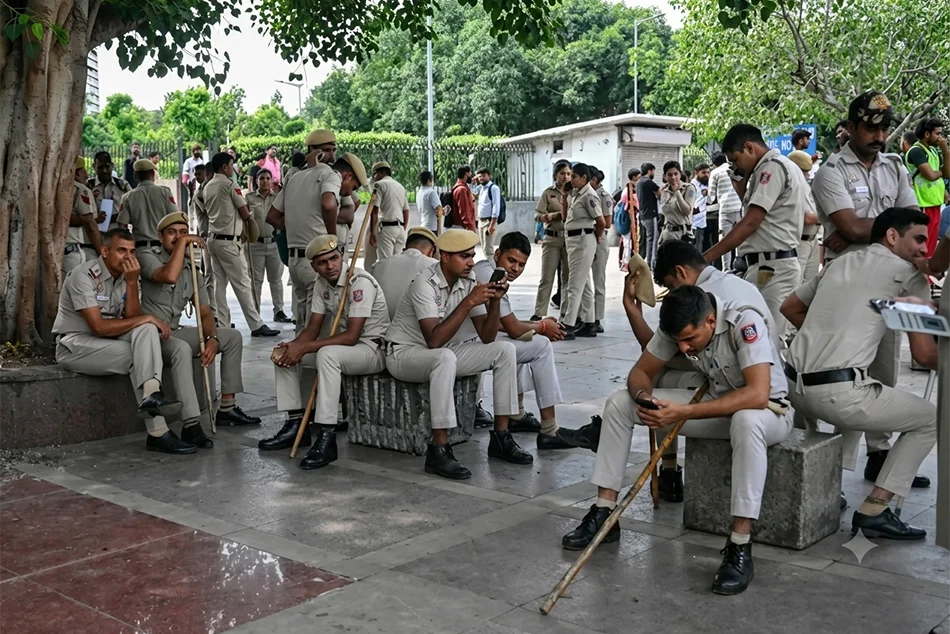
Democratic rights cannot be accepted when convenient and denied when inconvenient. If demanding a change of government was legitimate in 2014, it is legitimate today. If campaigning against a government was democratic when the BJP was in opposition, portraying the same demand as sedition now is equally wrong.
Those who seek to discredit legitimate calls for political change must understand that power is nobody’s personal property. Those who support efforts to weaken democratic institutions and civil liberties cannot escape responsibility for the consequences.
The biggest question in a democracy is not who runs the government. It is this: Who decides whether the government stays or goes—the people, or those already in power?
The answer is clear. The people choose the government. The people can change it. Accepting that verdict is what democracy means.
Anyone afraid of the possibility of losing power should understand what democracy means before lecturing others about it.
[The writer, Aman Namra, a seasoned Development Journalist with a remarkable three-decade career, has made significant contributions in the field. As the Incharge and Resident Editor of the prominent National Development Communication Network “Charkha,” headquartered in Delhi, Aman has played a pivotal role in advancing the organization’s mission. Notably, “Charkha” was established by the renowned social worker Sanjoy Ghose, whose life was tragically cut short by Ulfa Extremists.
Aman’s commitment to fostering knowledge and awareness extends beyond the editorial desk. He has conducted approximately 50 media workshops across multiple states, including Madhya Pradesh, Chhattisgarh, Bihar, Jharkhand, Rajasthan, Uttarakhand, Mizoram, and Uttar Pradesh. These workshops have engaged journalists, social activists, and thought leaders, reinforcing the importance of Development Journalism.
Recognized as an authority in the field, Aman has been invited to share his insights on Development Journalism at prestigious institutions such as the Indian Institute of Mass Communication, Lady Irwin College in Delhi, and Makhan Lal National University in Bhopal. His expertise and experiences are highly regarded in academic circles.
Aman’s influence extends to the realm of the written word. He has penned over 100 articles covering a diverse range of topics, which have been published in various newspapers and magazines. His literary accomplishments include the authorship of two books on traditional water harvesting, both published by esteemed institutions, the National Book Trust and the National Foundation of India in Delhi.
Aman’s commitment to knowledge exchange and cross-border understanding is exemplified by his selection as a South Asia Media Exchange Fellow. During his fellowship, he conducted research in Nepal, focusing on traditional water harvesting and natural foresting systems, thereby contributing to regional knowledge and sustainable practices.]
Follow ummid.com WhatsApp Channel for all the latest updates.
Select Language to Translate in Urdu, Hindi, Marathi or Arabic