Taking Sir Syed Ahmad Khan’s legacy beyond the AMU Campus
If Sir Syed’s example teaches us anything, it is that educational reform must begin with a clear understanding of the obstacles that prevent individuals and communities from participating fully in intellectual and social life.
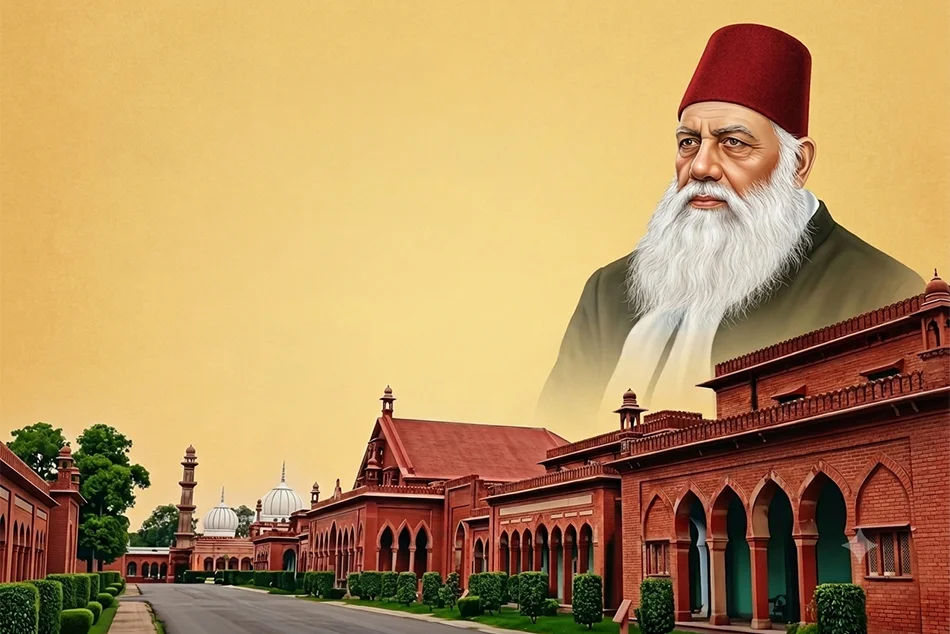
For me, Sir Syed Ahmad Khan’s legacy cannot be confined to the pages of history or the nostalgia that lingers in the corridors of the Aligarh Muslim University (AMU) long after one has walked through its gates for the last time. The Aligarh Muslim University is not merely a campus one inhabits for a few years. It is an intellectual landscape that continues to inhabit those who have passed through it. Its pathways seem to lead far beyond its physical boundaries, its classrooms leave questions that outlive their lectures, and its libraries quietly remind us that the world is always larger than the limits of our understanding.
Having studied Political Science at Aligarh Muslim University and now pursuing Law at the University of Kashmir, I have come to realise that education is not simply a ladder to personal advancement, but a window through which we learn to see the world in its uncomfortable complexity. Political Science taught me to look beyond the imposing architecture of power and examine the foundations upon which it rests — who commands, who participates, whose voices find an echo in the chambers of authority, and whose silence is mistaken for consent. Law, in turn, has brought me face to face with the delicate bridge between the promises enshrined in the Constitution and the realities encountered by ordinary citizens, a bridge that justice must continually strive to strengthen.
Somewhere between the lecture halls of the Aligarh Muslim University and the classrooms of Kashmir, between the study of political power and the pursuit of legal justice, I have begun to understand education as a journey from merely observing the world to questioning it, and from questioning it to accepting the responsibility of changing it.
Perhaps this is where my journey converges with Sir Syed’s vision in the conviction that a university must be more than a collection of buildings, that its true architecture lies in the minds it awakens, and that its greatest legacy is not the number of students who pass through its gates, but the courage with which they carry its light into a world still struggling to distinguish knowledge from prejudice, authority from justice, and the comfort of inherited beliefs from the necessity of intellectual growth.
The Aligarh Muslim University holds a unique position in this intellectual journey because its foundational vision arose from the understanding that past challenges could not be overcome merely through nostalgia. Sir Syed recognized that a community unable to confidently adapt to evolving intellectual and political landscapes risked becoming sidelined in the emerging world. In response, he aimed to use education as a means of revitalization. This required him to address skepticism, challenge intellectual laziness, and convince people that learning from diverse traditions does not necessitate the abandonment of their own identity.
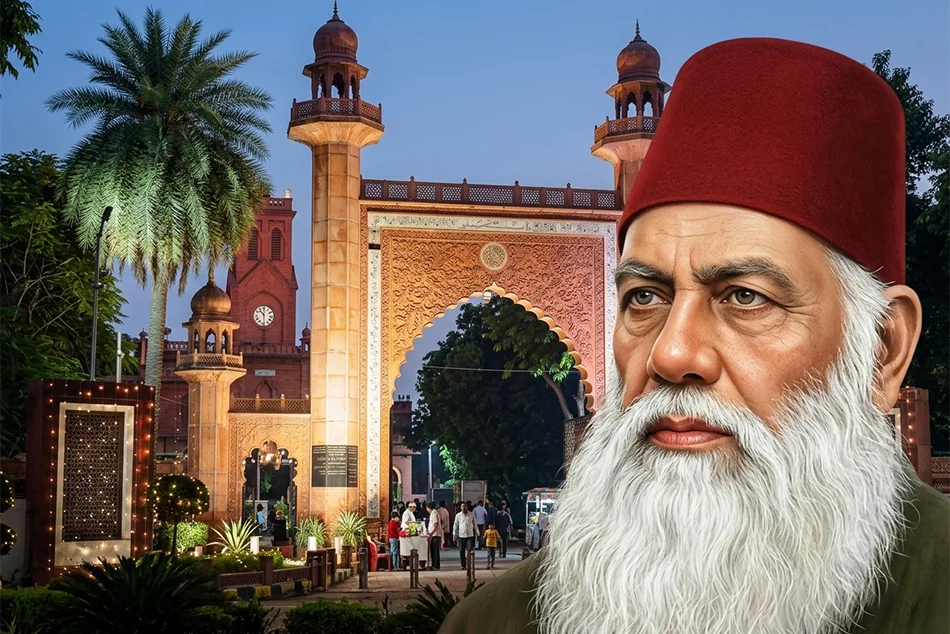
The importance of this endeavor goes beyond the university's 19th-century context. Even today, communities frequently face the allure of relying on inherited beliefs as replacements for inquiry and historical recollections as substitutes for pragmatic solutions. Sir Syed’s example reminds us that cultural confidence and intellectual openness need not be enemies. Indeed, a mature sense of identity should make engagement with new ideas less threatening, not more.
What I find most profound in Sir Syed’s legacy is the courage to understand that no community can navigate its future by remaining perpetually in the shadow of its past. History may be the soil from which a society draws its identity, but it cannot become a roof beneath which its intellectual growth remains confined. The memories of former glories can give us roots, yet it is education that gives us wings; and no amount of reverence for the journeys of those who came before us can substitute for the courage to begin our own. The achievements of one generation may illuminate the path ahead, but they cannot walk it on behalf of the next. This is a lesson that becomes particularly vivid within the walls of a university, where the past arrives in the form of inherited ideas, the present confronts us with uncomfortable realities, and the future waits to be imagined in the minds of young students.
A campus must therefore be more than a museum of intellectual achievements or a factory producing degrees. It must be a living laboratory of ideas, where established assumptions are examined, unfamiliar questions are welcomed, and the boundaries of human understanding are continually pushed outward. For students today, the real challenge is not merely to emerge from a university with certificates and degrees that open doors to employment, but to leave with minds capable of recognising which doors remain unjustly closed to others.
Education should cultivate the independence to think beyond prescribed answers, the discipline to distinguish evidence from prejudice, and the courage to question even those ideas that offer us the comfort of certainty. After all, a university fulfils its highest purpose not when it teaches a student how to fit comfortably into the world as it exists, but when it gives that student the intellectual vision to recognise what must change and the moral courage to participate in that change. Perhaps this is the enduring lesson Sir Syed leaves behind - we inherit the past not to live beneath its shadow, but to use its light to illuminate paths that our predecessors could never have imagined.
This conviction has become particularly meaningful to me as I move from the study of politics to the study of law. A constitution may promise equality, liberty and dignity, but the existence of these promises does not automatically ensure their realisation. Their meaning depends on institutions, public awareness, access to justice and the willingness of citizens to defend the rights of others, including those with whom they disagree. Law, therefore, cannot be understood only as a collection of statutory provisions and judicial decisions.
At its most consequential, it is also a way of examining the relationship between authority and accountability, between individual rights and collective interests, and between the ideals a society proclaims and the conditions in which its people actually live. Education becomes meaningful when it enables us to recognise these distinctions and gives us the intellectual honesty to examine them without prejudice.
This is also why Sir Syed’s educational mission remains relevant to contemporary India. A country aspiring to become a knowledge-driven society cannot measure educational progress exclusively through enrolment figures, examination results, university rankings or the number of degrees awarded each year. These indicators matter, but they reveal only part of the picture. We must also ask whether students are learning to distinguish evidence from assertion, whether classrooms encourage reasoned disagreement, whether research receives the support it requires and whether young people from disadvantaged backgrounds possess a genuine opportunity to participate in higher education. Access to a university is not the same as equality of opportunity within it. A student may enter an institution and still struggle with financial insecurity, inadequate schooling, a lack of academic guidance or the social pressures that make continuing an education difficult.
For this reason, the unfinished task of educational reform lies as much in the conditions surrounding learning as in the curriculum itself. Scholarships must reach those who need them; public institutions must remain accessible and academically rigorous; teachers must be supported in their work; and universities must create environments in which students can develop without being reduced to their economic circumstances or social backgrounds.
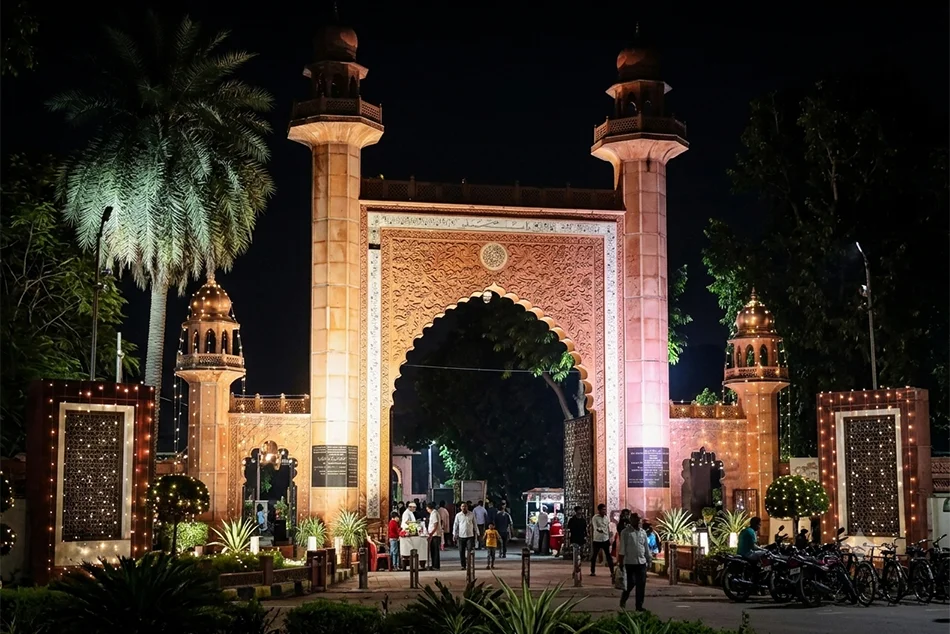
The promise of education becomes hollow when a talented young person is prevented from realising their potential because opportunity remains the privilege of those already equipped to access it. If Sir Syed’s example teaches us anything, it is that educational reform must begin with a clear understanding of the obstacles that prevent individuals and communities from participating fully in intellectual and social life.
Universities also have a responsibility to cultivate the habits necessary for a plural and democratic society. They bring together individuals with different experiences, convictions and interpretations of the world. This diversity should not be treated as an inconvenience to be managed, but as an intellectual resource that can deepen understanding. Yet diversity alone does not guarantee dialogue. For dialogue to become meaningful, students must be able to question arguments without humiliating their opponents, defend their convictions without denying the humanity of others and revise their positions when evidence demands it. Such habits cannot be developed through textbooks alone. They require institutional cultures that value academic freedom, responsible debate and the distinction between disagreement and hostility.
This is where the contemporary challenges facing universities acquire a significance beyond campus administration. Questions of student representation, institutional autonomy and freedom of expression are ultimately questions about the kind of citizens higher education seeks to produce. A university cannot remain indifferent to discipline or accountability, but neither should discipline be confused with the suppression of legitimate questioning. Academic freedom does not place teachers or students above criticism; it makes serious criticism possible. Institutions become intellectually stronger when their decisions can be examined, their arguments challenged and their shortcomings acknowledged. The objective should not be to create spaces without disagreement, but to ensure that disagreement is governed by reason, evidence and respect.
The same principle applies to the relationship between minority educational institutions and the constitutional framework of India. The educational rights of minorities are not merely matters of institutional identity; they belong to the larger constitutional conversation about equality, cultural freedom and the conditions necessary for different communities to participate in national life.
The debate surrounding Aligarh Muslim University’s minority character illustrates the importance of approaching such questions with legal precision and intellectual seriousness. The Supreme Court’s November 2024 judgment revisited the legal principles governing the determination of minority character and left the institution’s status to be assessed under the principles laid down by the Court. The significance of this discussion extends beyond Aligarh. It invites a broader reflection on how a constitutional democracy can uphold minority educational rights while sustaining academic standards, institutional accountability and a shared commitment to public education.
For me, this relationship between education and constitutional responsibility is especially important. Studying law has reinforced the understanding that rights are meaningful not merely because they are written into legal texts, but because institutions and citizens take responsibility for their protection. The constitutional promise of justice requires more than the existence of courts and statutes; it also requires an informed public capable of recognising injustice and understanding the remedies available against it. In this sense, education and the rule of law are deeply connected. Education helps citizens understand their rights, while constitutional guarantees create conditions in which learning, expression and participation can be protected. Neither can fully realise its potential when separated from the other.
There is, moreover, a danger in reducing education to economic advancement alone. Employment is an essential concern, particularly for young people whose families depend on their ability to become financially secure. Universities must take the relationship between education and employment seriously. Yet education loses something fundamental if its only purpose is to make individuals economically productive.
A society also needs people capable of questioning misinformation, understanding public policy, recognising discrimination, engaging with scientific developments and thinking critically about the consequences of political decisions. These capacities are not luxuries reserved for a privileged minority. They are essential to the functioning of a democratic society.
The challenge has become more complex in an age shaped by Digital Media and Artificial Intelligence (AI). Information is increasingly available, but the ability to evaluate it remains unevenly distributed. The rapid circulation of unverified claims can weaken public reasoning, while algorithmic systems can influence what people encounter and how they interpret events. Artificial Intelligence (AI) offers important opportunities for learning and research, yet it also raises questions about academic integrity, unequal access, privacy and the development of independent judgment. The response cannot be an indiscriminate rejection of technological change. Nor should innovation be accepted without scrutiny. The task of education is to equip students to use new tools intelligently, examine their limitations and retain responsibility for the conclusions they reach.
Seen in this light, Sir Syed’s emphasis on modern education should not be interpreted as an instruction to imitate the intellectual priorities of another age. It should instead encourage us to preserve the spirit of inquiry that made his educational project significant. The knowledge required today differs in many respects from the knowledge available in the nineteenth century, but the need for intellectual courage remains. Every generation must learn how to engage with the developments of its own time without surrendering the capacity for independent judgment.
My association with the Aligarh Muslim University has therefore left me with a question that extends beyond personal achievement: what responsibilities do we inherit from the institutions that educate us? If education has enabled us to understand society more critically, it should also make us more attentive to those excluded from its opportunities. If it has introduced us to the language of rights, it should deepen our concern for those whose rights remain insecure. If it has given us the confidence to think independently, it should also give us the courage to examine our own prejudices. And if it has helped us advance in our chosen professions, it should remind us that professional success and social responsibility need not be opposing ambitions.
I do not believe that honouring Sir Syed requires us to agree with every position he adopted or to treat his historical choices as beyond criticism. Such an approach would reduce a reformer to a monument and his ideas to a ritual. A more meaningful engagement recognises the circumstances in which he worked, examines the limitations of his approach and asks what his intellectual example can teach us today. Respect for a thinker is not measured by our unwillingness to question him; it is measured by our willingness to take his central concerns seriously enough to continue the conversation.
One may leave the Aligarh Muslim University geographically, pursue another discipline or begin an entirely different chapter of life. Yet, the real measure of the university’s influence lies in whether the education received there continues to shape one’s conscience. Its legacy is carried forward whenever a student chooses evidence over prejudice, whenever a graduate uses knowledge in the service of others, and whenever an institution protects the freedom necessary for serious intellectual work.
Perhaps, then, the most meaningful way to remember Sir Syed Ahmad Khan is to understand his educational mission as an unfinished responsibility rather than a completed historical achievement. The task is not simply to preserve the institution he helped establish, but to sustain the larger conviction that education can widen opportunity, strengthen democratic life and enable societies to confront their shortcomings with honesty and reason. The Aligarh Muslim University (AMU) gave generations of students a place from where to imagine different futures. Our responsibility is to ensure that this promise remains available to those who have yet to arrive.
For me, this is what it means to carry the Aligarh Muslim University beyond its campus: to allow the education it gave me, to inform not only what I seek to become, but also what I believe a society ought to be. If Sir Syed’s legacy is to remain alive, it must continue to produce minds that are curious, citizens who are conscious of their responsibilities and institutions willing to place knowledge above complacency. The ultimate tribute to him is not that we remember his name every year, but that we continue to practise the intellectual courage his educational vision demanded.
[The writer, Basit Nabi Haroo, is an AMU alumnus, who completed MA Political Science from the Aligarh Muslim University, and is currently pursuing LLB from Kashmir University in Srinagar. The above article is published to mark the Sir Syed Day observed on October 17 every year.]
Follow ummid.com WhatsApp Channel for all the latest updates.
Select Language to Translate in Urdu, Hindi, Marathi or Arabic