What makes Chinese airports different from others
From Shanghai to Xi’an, and from Xi’an to Beijing, Chinese airports appear markedly different from those in advanced capitalist and developing countries
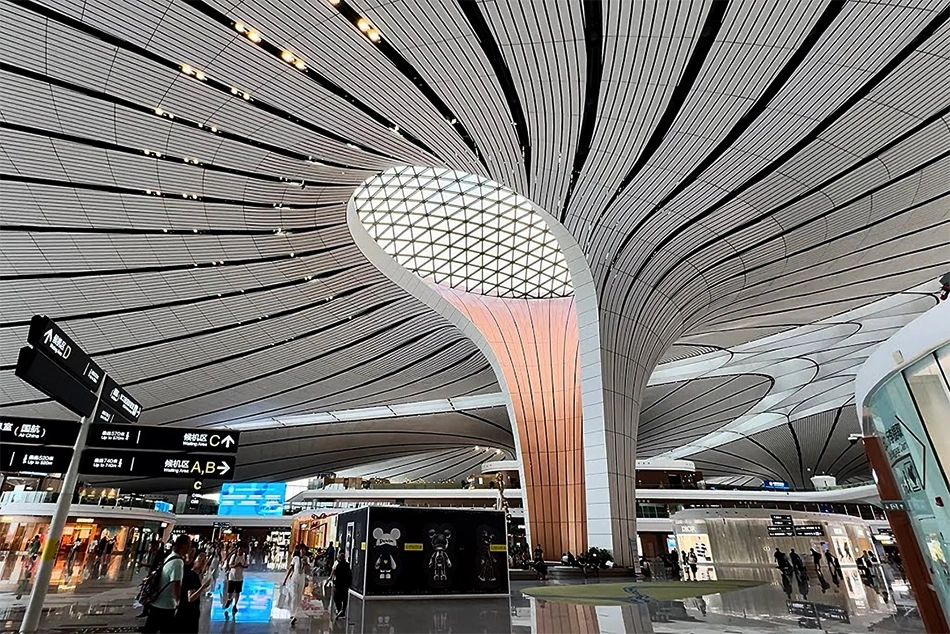
Airports are not merely places of transit for people, commodities, and services. They are indicators of wealth and symbols of prosperity. A cocktail of capitalist corporations, the monetisation of space, and nationalist cultural pride shapes the design and architecture of airports. Between departures and arrivals, passengers encounter dominant and all engulfing corporate hoarding boards that act as messengers of capitalism and its power, seducing consumers beyond the boundaries of the airport.
Airports are defined by a culture of orderly objects, where class hierarchy operates as a governing principle — from check-in counters and security checks to passenger lounges. In most advanced capitalist and developing countries, airport shops and security infrastructure dominate and occupy the majority of airport space. Passengers often feel subservient to the seductive power of advertisements and surrender to the so-called duty-free shopping experience. The economic ability of a few passengers allows them to access pleasurable travel experiences, while the majority endure a “cattle-class” experience both within and beyond the territory of the airports.
From Shanghai to Xi’an, and from Xi’an to Beijing, Chinese airports appear markedly different from those in advanced capitalist and developing countries. Chinese airports are large, modern, technologically advanced and designed with passenger welfare prioritised over the monetisation of space. There are no dominant corporate hoarding boards or sprawling retail outlets. Security and immigration officials occupy relatively small areas, while expansive spaces are available for travellers to move freely, sit, relax and travel.
Numerous chairs are placed around small shops, allowing passengers to enjoy a more comfortable travel experience. The airports offer excellent childcare facilities, as well as free hot and cold drinking water for passengers. Rather than displaying a rigid culture of orderly objects, these airports feel as though the space truly belongs to the passengers.
Chinese airports display local products in their shops, yet one must actively search to find cultural symbols which are presented without overt pride or any sense of undermining other cultures and traditions. There is no signs of local or national chauvanism in the airports. There appears to be an operational harmony between passengers and airport management, with passenger welfare placed at the centre of airport governance.
Unlike the often stressful travel experiences common in advanced capitalist countries, it is difficult to find visibly stressed passengers in Chinese airports. Digitalisation has further enhanced traveller welfare and overall experience, contributing to a smoother and more humane airport environment.
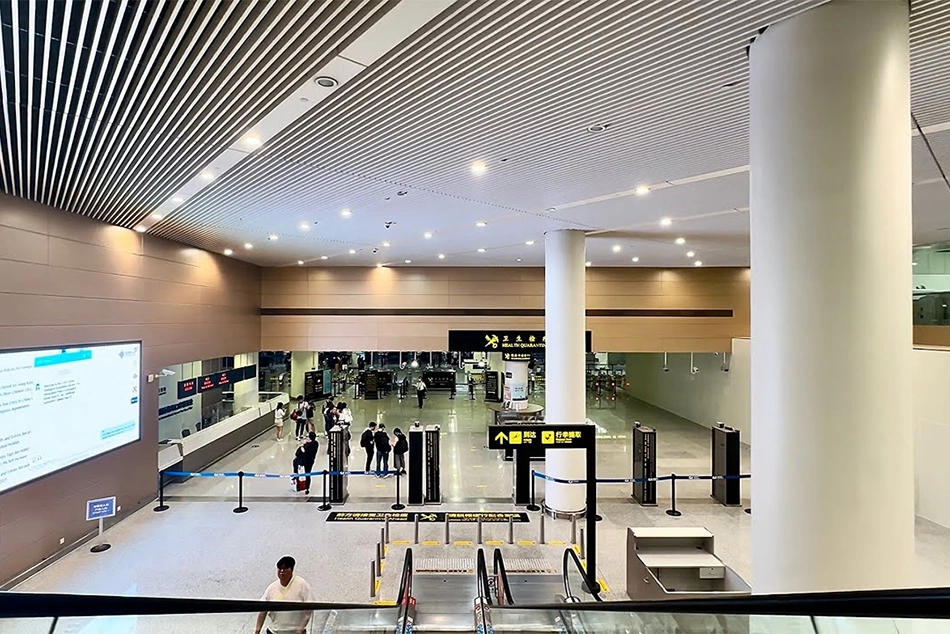
Socialist ideology, harmonious Chinese cultural values, and their everyday significance shape the operational ethos and culture of Chinese airports, whereas monetisation, securitisation, and the corporatisation of space define airports in advanced capitalist countries. In China, socialism is not merely the guiding ideology of the state and government; it also informs the everyday efficiency and functioning of airports.
In an age of anti-Chinese propaganda, one needs to visit and experience not only the cultural differences evident in Chinese airports but also witness how such a large country, with its vast population, is moving forward in the path of development, peace and harmony. Between take-off and landing, socialist culture blossoms within Chinese airports, enabling passengers to enjoy local food and fragrances without the presence of all-engulfing billboards or expansive retail spaces.
Efficiency is another defining feature of Chinese airports, offering the world an alternative model — one in which passengers are empowered in an airport that belongs to the people, rather than to corporations.
Socialism in China demonstrates efficiency across everyday spaces, from airports to agricultural fields. Friendly Chinese people and technologically advanced airports welcome the world with warmth, reflecting the country’s modern socialist development. Socialism works - and it works well. Experience it firsthand in China.
[The writer, Bhabani Shankar Nayak, is a Political Commentator.]
Follow ummid.com WhatsApp Channel for all the latest updates.
Select Language to Translate in Urdu, Hindi, Marathi or Arabic