4 ways US Israel war against Iran will change the world
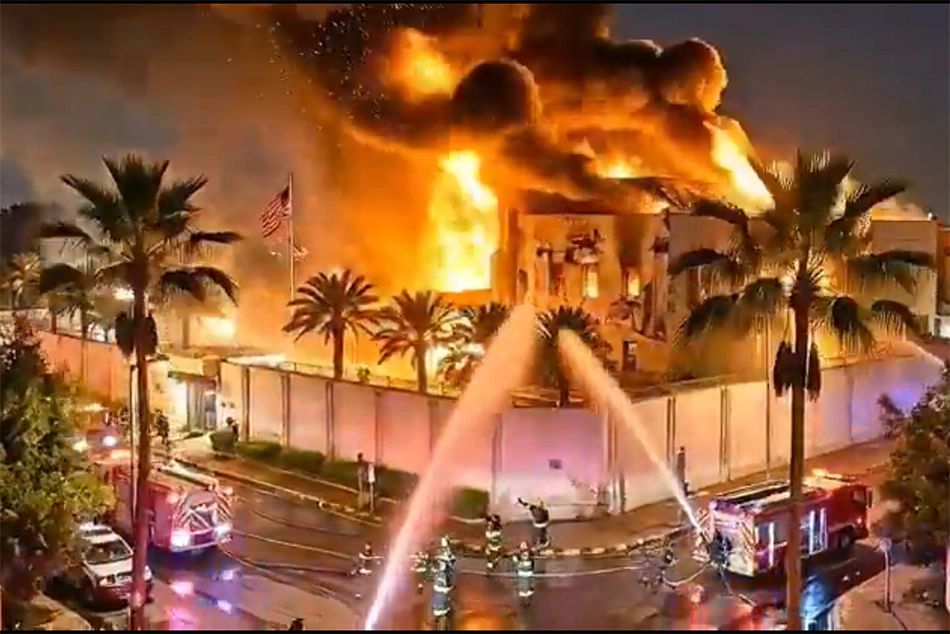
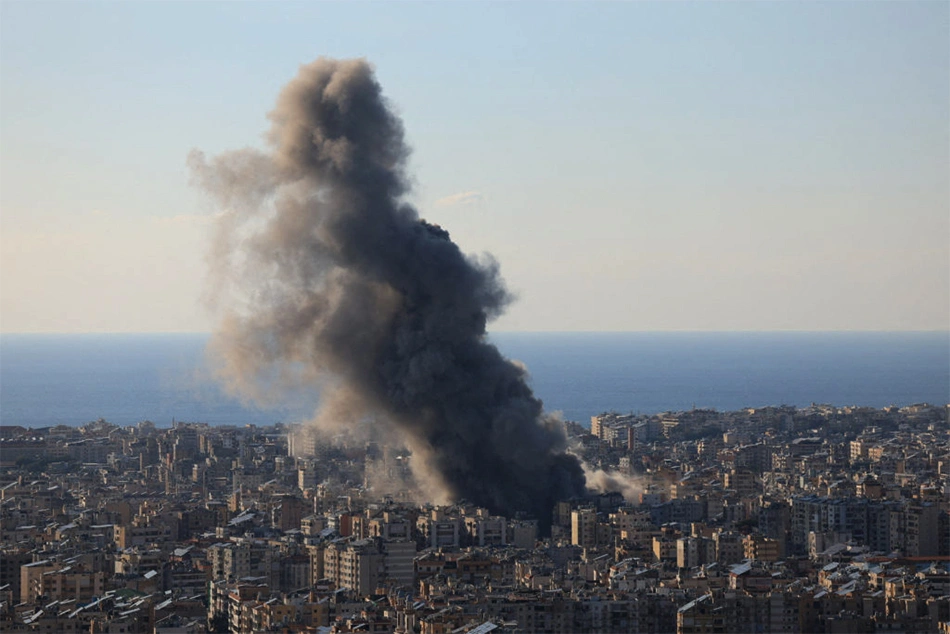
As the smoke clears over the ruins of Tel Aviv and the burning tankers in the Strait of Hormuz, a historical irony is emerging: The US-Israel war against Iran intended to cement American dominance may instead be the moment the United States loses its status as the world’s sole superpower

The joint U.S.-Israeli offensive launched on February 28, 2026 — dubbed Operation Epic Fury, is the culmination of a century-long American effort to “teach Iran a lesson” for its refusal to submit to a Western-aligned regional order.
Yet, as the smoke clears over the ruins of Tel Aviv and the burning tankers in the Strait of Hormuz, a historical irony is emerging: The very war intended to cement American dominance may instead be the moment the United States loses its status as the world’s sole superpower.
The inability of the ‘greatest army in the history of the world’ to achieve swift victory against a middle-tier power has shattered the myth of American military invincibility. If the U.S. cannot decisively “settle” the Middle East while deploying two carrier strike groups and its most advanced stealth fighters, its ability to deter peer competitors like China or Russia is fundamentally compromised. It is clear that the conclusion of the current war will be marked by a cold, hard realignment of global power.
Here are some ways the world will change:
1. The American “Suez Moment”
This conflict is the terminal point of U.S. global hegemony. The US loss of diplomatic credibility worldwide is today absolute. By bypassing the United Nations and abandoning international law, the U.S. has lost all moral authority globally. Its unconditional support for Israeli objectives, even at the risk of regional chaos, has convinced much of the world that the U.S. is no longer a rational actor that needs to be contained or bypassed altogether.
And, much like the 1956 Suez Crisis—where Great Britain attempted to forcibly stop Egypt’s nationalization of the Suez Canal and subsequently lost its ‘Empire’ status—the U.S. has hit a wall of reality about its own impotence. Just as the U.S. refused to back Britain in 1956 the UK and France’s reluctance and Spain’s outright refusal to support the U.S. in its ongoing Iran misadventure, signals the end of Pax Americana.
The U.S. is transitioning before our eyes from a “hyperpower” to a ruder, louder and more disliked version of Canada —still influential, but no longer the arbiter of global destiny.
2. The Internal Fracture of Israel
While Israel initially viewed this conflict as the final blow to Iran, its “existential nemesis”, the results are proving catastrophic for both its regional standing and internal cohesion as a nation. Rather than securing its hegemony, the war is actively dismantling the foundations of Israeli dominance and indeed the very State of Israel.
First, the alliance with the Gulf Cooperation Council (GCC) countries—painstakingly built through the Abraham Accords—is breaking. The GCC states, particularly the UAE and Saudi Arabia, did not choose this war. As Iranian missiles strike luxury hotels in Dubai and oil refineries in Ras Tanura, these nations feel exposed and abandoned by an Israeli-U.S. strategy that prioritized a “lesson” over regional stability. The dream of an “Arab-Israeli NATO” is dying under the weight of Iranian retaliation, as Gulf leaders realize that normalization with Israel has brought them more pain than security.
Second, the war is fracturing Israeli society from within. The staggering cost—estimated at $3 billion per week—has forced a near-total shutdown of the domestic economy. After two and a half years of continuous military mobilization since October 2023, the Israeli public is reaching a breaking point. Discord is erupting between a leadership committed to “total victory” and a citizenry facing economic ruin and pummelled constantly by both Iran and Hezbollah’s rockets. Moderates and extremists in Israel are now pitted against each other in a struggle that threatens the very fabric of the state.
Finally, Israel’s international reputation – especially in the US itself – already severely harmed by its extreme actions in Gaza, is now facing total collapse. Much of the world sees the strike on Tehran as an unprovoked act of aggression that has triggered a global energy crisis. The moral capital Jerusalem once held has been exhausted, replaced by a global perception of Israel as a rogue state that values its own messianic objectives over the survival of the global economy.
3. The Iranian spark for global resistance
Perhaps most surprising to Western elites is the widespread sympathy for Iran across the world. This support is a recognition of Iran’s chutzpahand audacity to take on both the regional bully, Israel, and the global bully, the USA, despite the heavy costs involved. To many, this represents the most significant challenge to Western colonialism and imperialism since the Vietnam War.
The Iranian defiance acts as a green light for many countries in Africa, Asia, and Latin America to intensify their own struggles against Western domination. Much like how the 1955 Bandung meeting signalled the rise of the Non-Aligned Movement, the 2026 war has proven that Western “imperial discipline” can be successfully resisted.
Iran’s example however is not just at the spiritual or inspirational level alone. It has also demonstrated the technological and organizational capabilities needed to fight a modern war with the most powerful adversaries. In particular, the proliferation of cheap drones in the war has permanently flattened the technological pyramid, allowing traditionally weaker nations to challenge global superpowers with unprecedented military boldness.
In the early phases of “Operation Epic Fury,” Iranian one-way attack drones—costing as little as $20,000 to $50,000 each—successfully forced the United States and its partners to expend defensive interceptors, such as the Patriot and THAAD, which cost between $4 million and $15 million per shot.
Iran has provided a blueprint for asymmetric deterrence that is being closely studied by the Global South nations. Weaker states now recognize that they do not need to match a superpower’s exquisite fleet of stealth jets or aircraft carriers to achieve strategic effects; they only need the “mass” to saturate defences and impose unsustainable economic and logistical strain on the intervenor. The “drone revolution” of 2026 has stripped away the primary advantage of expensive Western platforms, emboldening nations to resist imperial pressure not just through diplomatic rhetoric, but through credible, high-frequency military defiance.
4. The Isolation of the “Lackey” States
Finally, the citizens of many nations around the world today are realizing their leaders are merely “vassals” of the US rather than protectors of the national interest.
In Asia for example, Japan and South Korea are being exposed as technological giants with the political spines of lackeys. By having no independent policy outside of Western dictates, they risk being sidelined by their own populations that value sovereign assertion. They risk becoming the 21st-century versions of the “Vichy” governments—highly efficient in administration but lacking any true legitimacy or agency.
Similarly, in South Asia, both India and Pakistan have been exposed as Trojan Horses for Western imperialism by openly collaborating with the US and Israel. They have lost respect worldwide and within their own borders by failing to stand by Iran in its courageous stand against US imperialism, betraying a total loss of memory of their own past as nations subjugated by British colonialism.
In South-East Asia the same is true of both Indonesia and Malaysia, which despite being nations with large Muslim populations, have shamelessly sided with US and Israeli aggression to protect their own narrow political and commercial interests.
There will of course be many more implications – geopolitical, economic and social – due to the demise of the US as the dominant superpower on Planet Earth. As of now it is sufficient to say that this opens up the possibility of the world moving to a future of greater mutual respect among nations and the emergence of genuinely fairer world, where all laws are not just forged democratically but also applied equally without consideration of size, wealth or muscle power.
[The writer, Satya Sagar, is a journalist and public health worker who can be reached at sagarnama@gmail.com.]
Follow ummid.com WhatsApp Channel for all the latest updates.
Select Language to Translate in Urdu, Hindi, Marathi or Arabic