US-Israel War Against Iran: Is It A Religious War?
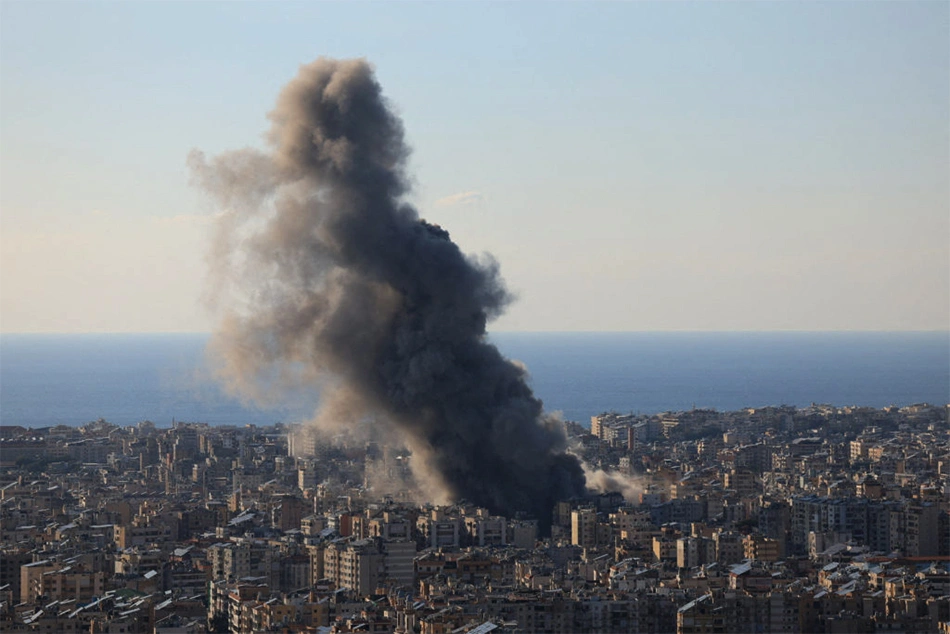
US and Israeli leaders are framing the ongoing conflict with Iran as a religious war primarily for domestic mobilisation, civilisational framing, and strategic narrative construction.
US and Israeli leaders are framing the ongoing conflict with Iran as a religious war primarily for domestic mobilisation, civilisational framing, and strategic narrative construction.
While the US-Israel led war against Iran could primarily be described as the one which is aimed at reducing Iran, the only country in west Asia, as it is a direct threat to the American hegemony in the region. Most other countries in the region are under the direct or indirect influence of the US either due to safeguarding their financial empires and dynastic rules.
Democracy has been elusive to the region. The Arab Spring could be described as a wishful movement to promote democratic culture in the region, but it was very subtly buried by the covert US operations supporting the dynastic or anti-democratic rulers in the region.
Over the years Iran has remained the only Islamic country in the region which has remained a threat to the US hegemony in the region and also aborted its plans to control the flow of Iranian oil, for the American control and dominance of the world’s oil market.
Meanwhile the rest of the so-called leaders of the Islamic world like Saudi Arabia, and other Gulf countries like the UAE, Bahrain, Qatar, Oman etc have bowed down to the American pressures and have established relations with Israel, the biggest abomination to the Islamic world. One also tends to either forget or ignore another fact here that Israel’s ultimate plan is to reduce the Islamic world to smithers and establish a Greater Israel, as per the teachings of its religious books.
So, the current conflict has two primary objectives, first is how to control the oil supply of the world (led by US) and second, how to establish a Greater Israel (for Israel). So far, the narrative setting has not tried to cover these two objectives in its overall spiel.
While the Iranian oil and its nuclear stockpile might be reason advanced by US-Israel alliance as the main reason to attack Iran. The religious angle is fast emerging as another dominant one, but being masked under a different narrative.
Recent reports speak of the American scheme to enlist soldiers and public support for kits military campaign by describing this as a Religious War.
A US watchdog has reported that US troops have been told the war is intended to “induce the biblical end of times”. US Secretary of State Marco Rubio also recently stated that Iran is run by “religious fanatic lunatics”.
US watchdog Military Religious Freedom Foundation (MRFF) said it has received emailed complaints that US service members were told the war with Iran is meant to “cause Armageddon”, or the biblical “end times”.
An unnamed non-commissioned officer wrote in an email to MRFF that a commander had urged officers “to tell our troops that this was ‘all part of God’s divine plan’ and he specifically referenced numerous citations out of the Book of Revelation referring to Armageddon and the imminent return of Jesus Christ”.
The MRFF is a nonprofit organisation dedicated to upholding religious freedom for US service members. The officer claimed the commander had told the unit that Trump “has been anointed by Jesus to light the signal fire in Iran to cause Armageddon and mark his return to Earth”.
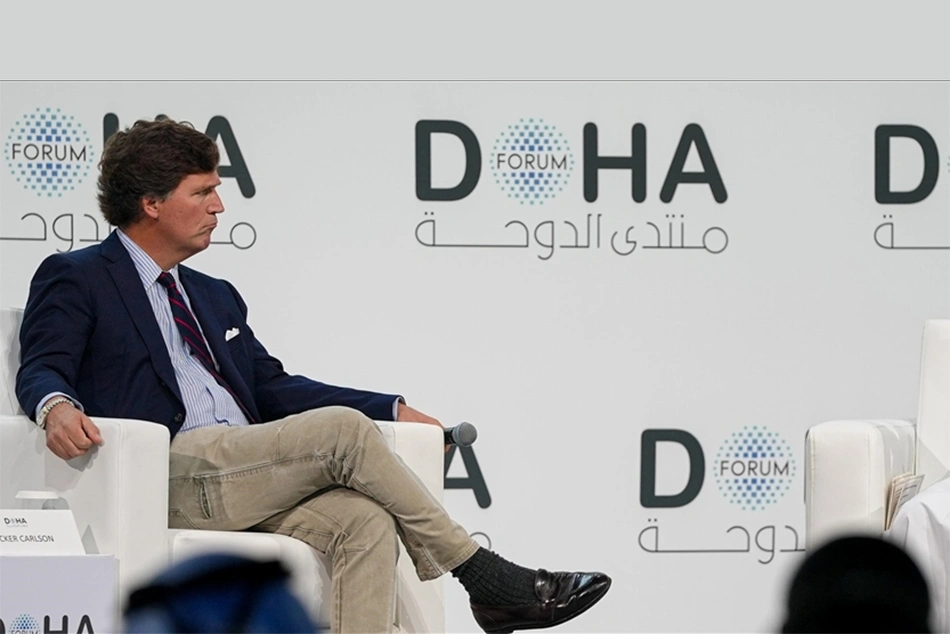
Meanwhile, Israeli and US leaders have also resorted to religious rhetoric in public. Last month, Mike Huckabee, the US ambassador to Israel, told conservative US commentator Tucker Carlson during an interview that it would be “fine” if Israel took “essentially the entire Middle East” because it was promised the land in the Bible. However, Huckabee added that Israel was not seeking to do so.
Speaking to the media on Tuesday this week, Rubio said: “Iran is run by lunatics – religious fanatic lunatics. They have an ambition to have nuclear weapons.” And, the previous day in a Pentagon news briefing, US Secretary of Defence Pete Hegseth said: “Crazy regimes like Iran, hell-bent on prophetic Islamic delusions, cannot have nuclear weapons.”
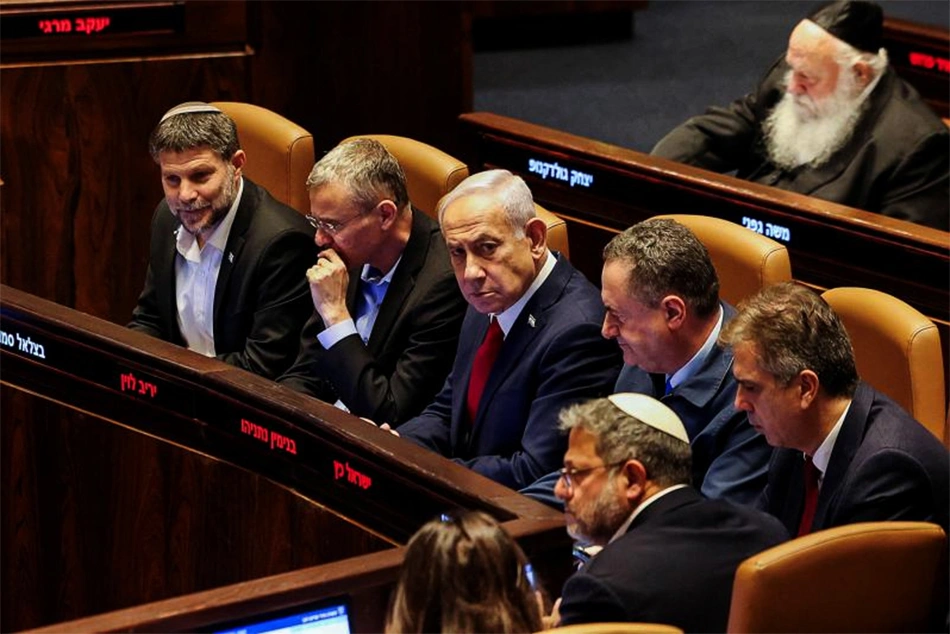
On Sunday, Israeli Prime Minister Benjamin Netanyahu referenced the Torah, comparing Iran with an ancient biblical enemy, the Amalekites. The “Amalek” are known in Jewish tradition as representing “pure evil”. “We read in this week’s Torah portion, ‘Remember what Amalek did to you.’ We remember – and we act.”
In its statement on Hegseth’s statement, Council on American-Islamic Relations (CAIR), claimed that Hegseth’s words are “an apparent reference to Shia beliefs about religious figures arising near the end times”. The statement added that every American should be “deeply disturbed by the ‘holy war’ rhetoric” being spread by the US military, Hegseth and Netanyahu to justify the war on Iran.
“Mr Hegseth’s derisive comment about ‘Islamist prophetic delusions’, an apparent reference to Shia beliefs about religious figures arising near the end times, was unacceptable. So is US military commanders telling troops that war with Iran is a biblical step towards Armageddon.”
Overall, it is not difficult to understand the reason for this religious diversion, religious rhetoric activates deeply held beliefs among evangelical Christians and Christian Zionists in the US, who view Middle East conflicts as part of a biblical "end times" narrative. This includes references to Armageddon, the return of Jesus Christ, and the pre-tribulation rapture—core tenets of dispensational premillennialism. Such language rallies political and religious support by framing the war as morally urgent and divinely sanctioned.
Leaders use religious symbolism to create a stark "us vs. them" dichotomy, portraying the conflict as a clash between civilisations—Jewish survival against Shia Islam—rather than a geopolitical dispute. Israeli Prime Minister Benjamin Netanyahu has invoked biblical figures like Mordechai and Esther (Purim) and the Amalekites (from the Torah) to depict Iran as an existential, "pure evil" threat. This narrative simplifies complex regional dynamics into a moral drama that resonates with public audiences.
By framing the war as a divine mission, leaders moralise the conflict, justify military action, and discourage political compromise. However, this approach risks undermining international alliances (especially with secular democracies and Sunni Arab states), validating Iran’s own theocratic rhetoric, and alienating Iranian dissidents who seek freedom and reform.
It also raises constitutional concerns, as the Military Religious Freedom Foundation (MRFF) reports that US commanders have told troops the war is part of God’s plan to bring about Armageddon, a practice seen as crossing the line between religious expression and state policy.
Critics, including Eli Federman and the CAIR, warn that this religious framing is dangerous, fuels Islamophobia and anti-Semitism, and makes peace harder to achieve. They argue that the conflict is fundamentally geopolitical—driven by power, nuclear proliferation, and regional hegemony—not a war of religions.
Here, we should also not ignore the fact that Iran which is described as a theocratic, Islamic fundamentalist regime has not tried to paint the current war as a religious one, but is the US – the so-called global leader of democracy and liberal thinking promoting religious tolerance and coexistence.
[The writer, Asad Mirza, is Delhi based Journalist and Author.]
Follow ummid.com WhatsApp Channel for all the latest updates.
Select Language to Translate in Urdu, Hindi, Marathi or Arabic