Easing Sanctions On Iranian Oil - A Pragmatic Move?
The decision last week by the United States to temporarily ease sanctions on Iranian oil shipments already at sea sparked immediate reactions
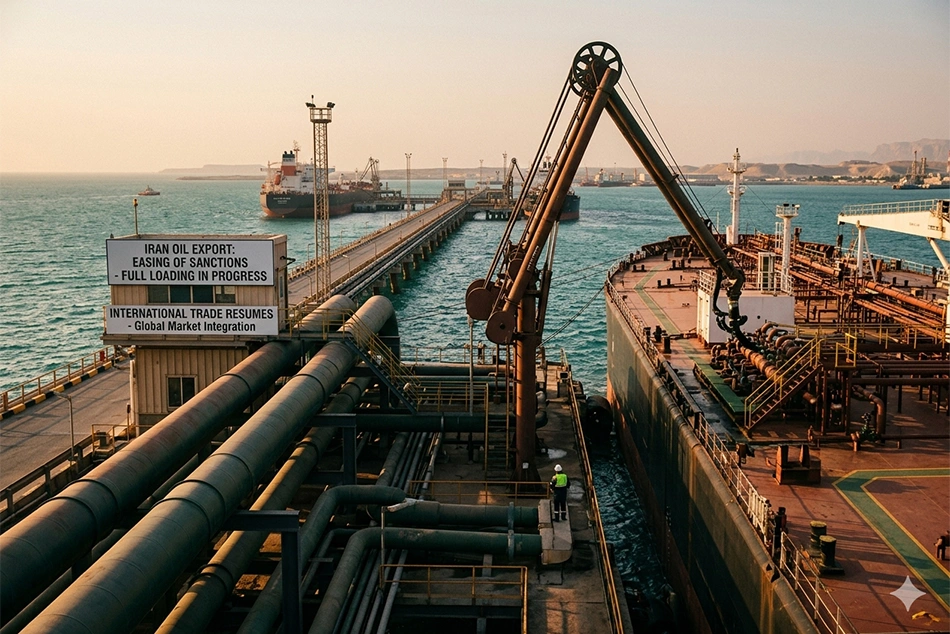
The decision last week by the United States to temporarily ease sanctions on Iranian oil shipments already at sea sparked immediate reactions on social media. Apparently, the hasty American move is viewed by experts at cooling surging global energy prices amid the ongoing West Asia conflict. However, in the current scenario India stands to benefit from this move and it may ease the pressure a bit on the Indian demand side.
The US decision to temporarily ease sanctions on Iranian oil shipments already at sea, sparked online reactions, Iran’s Parliament Speaker Mohammad Bagher Ghalibaf mocked the move on X, writing: “Lifting sanctions on Iranian oil currently stranded at sea? Sorry—we’re sold out."
Treasury Secretary Scott Bessent on Friday (March 20) framed the move as “using the Iranian barrels against Tehran to keep the price down as we continue Operation Epic Fury.”
“Iran will have difficulty accessing any revenue generated and the United States will continue to maintain maximum pressure on Iran and its ability to access the international financial system,” he wrote on X.
Highlighting the rationale behind the decision, Bessent noted that the measure would help ease supply pressures.
According to CNN, the 30-day waiver, could bring about 140 million barrels of oil into global markets. Oil prices have climbed roughly 50% to more than $100 a barrel, their highest level since 2022, raising concerns in the White House about the impact on businesses and consumers ahead of the November midterm elections.
Bessent said the temporary measure could help stabilise supply and reduce price pressures. In a statement posted on X, he said the US was “temporarily unlocking this existing supply for the world" to counter disruptions linked to the conflict.
The licence also states that Iranian oil could be imported into the United States if necessary to complete sales or deliveries, though it remains unclear whether any shipments will actually reach US ports. Regions such as Cuba, North Korea and Crimea are excluded from the licence, reports CNN.
The rationale behind the US decision
However, the optics of the American decision are rather discomfiting. Though the US’s avowed aim is to decimate the Iranian regime militarily, this move would rather allow the Iranian regime to benefit financially. A rather unique paradox, where you are helping your enemy financially to save your own skin and also create trouble for another enemy, i.e. China. Further, it’s also a tacit acknowledgement of the intense economic and political pressure that Iran has put on the US by closing the Strait of Hormuz.
Reportedly, American officials warmed to the idea in recent days, they’ve arguedthat this oil would have eventually been purchased by China in spite of US sanctions. Instead, US allies could buy it, easing their immediate supply concerns at only a slightly higher price than China would have paid Iran otherwise.
As for President Donald Trump, the dynamics are particularly awkward. After repeatedly criticising former President Barack Obama for sending cash to Iran as part of his nuclear deal with the country earlier, Trump is now effectively encouraging Iran to step-up its oil sales.
Further, through this move, the US might have increased competition for Iranian barrels among other countries and China. While it may lead to end of discounts on Iranian oil, oil importing countries would still be keen as in the current scenario, supply security is being prioritised over price considerations.
A boon for India
The US move could help Indian refiners capitalise on the opportunity, just like they did by ramping up imports of Russian crude in recent weeks. As amid the tight global supply today, every barrel counts.
Around 2.5–2.7 million bpd of India’s crude imports — around half of the overall oil imports — have transited the Strait of Hormuz in recent months, while the longer-term average is around 40%. India depends on imports to meet over 88% of its requirement of crude oil. At the global level, around 20 million barrels a day of crude oil usually passes through the Strait of Hormuz.
India has not imported any oil from Iran since May 2019, after the expiration of the sanctions waiver that the US had provided to major buyers of Iranian oil. Not complying with American sanctions would have made Indian oil companies vulnerable to secondary sanctions from Washington. Prior to that, India had been a regular buyer of Iranian oil, even during previous sanctions periods of the pre-Trump era, when import volumes of Iranian crude declined, but were still not insignificant.
Apparently, this move could be described as a very calculated move by the Trump administration, killing not two but several birds with one stone.
Firstly, the general licence makes provision for some Iranian oil to be sold to American oil companies, too, thus easing pressure on the US economy. Secondly, it would stop supply of oil to China, impacting its economy in the long-run besides pressurising it. Thirdly, it would ease pressure on the global oil supply and also result in lower oil prices, thus impacting favourably the American allies. And lastly, it would also impact the sale of Russian oil in the global markets.
However, the decision does not seem to be a pragmatic one, rather as a one taken in haste, and ultimately it would help Iran not the US in any manner.
As reported by The Wall Street Journal the value of Iran’s currency jumped Saturday (March 21). The rial strengthened by 6.7% to 1.559 million per US dollar.The rial has been falling in value since the beginning of the war and this is the first time it made a large uptick.
This was an immediate gain for Iran; the rest may come in the long-run. Apparently, the wider Iranian strategy forced the US to take such an unpragmatic decision, and this also shows Iran’s upper hand in the ongoing war.
[The writer, Asad Mirza, is Delhi based journalist and author.]
Follow ummid.com WhatsApp Channel for all the latest updates.
Select Language to Translate in Urdu, Hindi, Marathi or Arabic