Modi's Foreign Policy: From Strategic Autonomy to Enforced Submission
Far from leading the world, India today risks dissolving its independent voice within the very power structures it once sought to challenge
“Freedom is not merely the absence of foreign rule; it is the presence of an independent voice in the councils of the world.”
– Jawaharlal Nehru
The proclamation that India is emerging as a “Vishwa Guru” is not just an exaggeration – it is a carefully constructed illusion. It attempts to cloak a profound shift in India’s foreign policy: from strategic autonomy to strategic submission. Far from leading the world, India today risks dissolving its independent voice within the very power structures it once sought to challenge.
To understand the depth of this decline, one must return to the foundations laid by Jawaharlal Nehru. In the aftermath of colonial rule, Nehru refused to accept a global order dominated by competing imperial blocs. His leadership in the Non-Aligned Movement was not a passive attempt to remain equidistant from power—it was an active rejection of the legitimacy of that power.
Non-alignment was, at its core, a doctrine of resistance. It sought to carve out a sovereign space for newly independent nations, ensuring that their futures would not be dictated by Washington or Moscow. Nehru stood alongside figures like Gamal Abdel Nasser and Josip Broz Tito, building a moral and political coalition that challenged Western dominance not merely through policy, but through principle.
Critics have often dismissed this approach as idealistic – an exercise in moral posturing that ignored material realities. The Sino-Indian War is frequently cited as evidence of the failure of Nehruvian strategy. Yet such critiques miss a crucial point. The problem was not that India sought autonomy, but that it lacked the economic and military strength to sustain it under pressure.
Even then, Nehru did not abandon the principle of independence. The temporary reliance on Western assistance during crisis did not translate into long-term subordination. India’s foreign policy retained its distinctiveness, refusing to be absorbed into alliance systems such as SEATO or CENTO, which were instruments of American strategic control in Asia.
This distinction matters because it highlights what has changed. Nehru’s India may have faltered, but it never surrendered its intent. That intent found a more assertive expression under Indira Gandhi. If Nehru articulated autonomy, Indira Gandhi enforced it.
The defining moment came during the Bangladesh Liberation War. Faced with a humanitarian crisis and geopolitical hostility, India chose intervention despite explicit opposition from the United States. The dispatch of the US Seventh Fleet into the Bay of Bengal was not symbolic—it was a direct attempt to coerce India into retreat. India did not retreat.
This was not merely a military victory; it was a strategic assertion of independence. It demonstrated that a postcolonial nation could act decisively in its own interests, even in the face of superpower intimidation.
The Indo-Soviet Treaty of Peace, Friendship and Cooperation must be understood in this context. It was not an abandonment of non-alignment, but its evolution – a pragmatic instrument to counterbalance American pressure while preserving India’s decision-making autonomy. Unlike formal alliances, it did not subsume India’s foreign policy under Soviet direction.
Similarly, the Smiling Buddha nuclear test was a declaration that India would not accept a global order in which nuclear power—and by extension, geopolitical influence – remained monopolised by a select few. It was an act of defiance against a system designed to perpetuate inequality.
Taken together, the Nehru and Indira Gandhi eras reveal a consistent thread: India’s refusal to be subordinate, even when the costs were high and the risks significant. That thread appears to have frayed in the present.
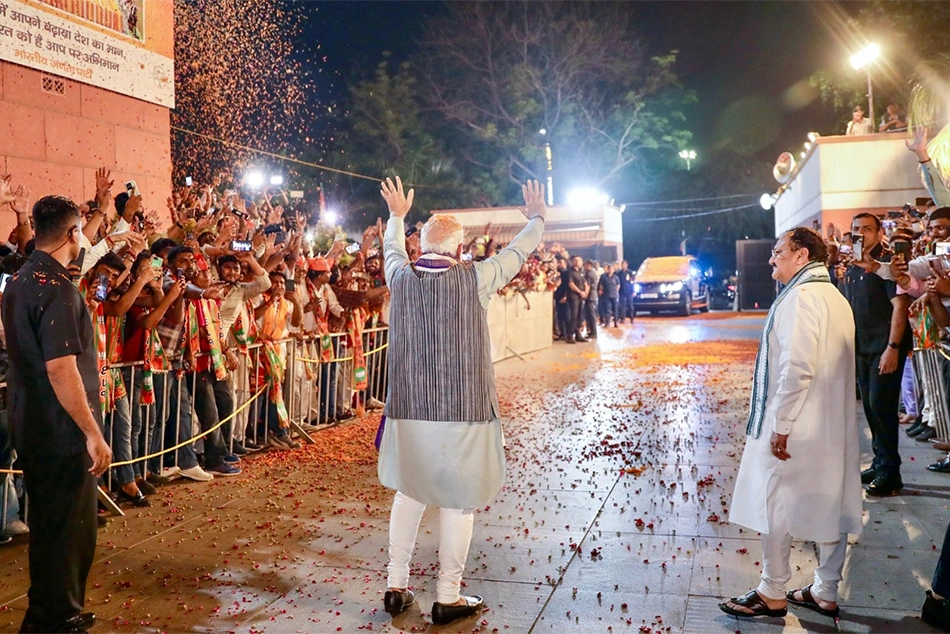
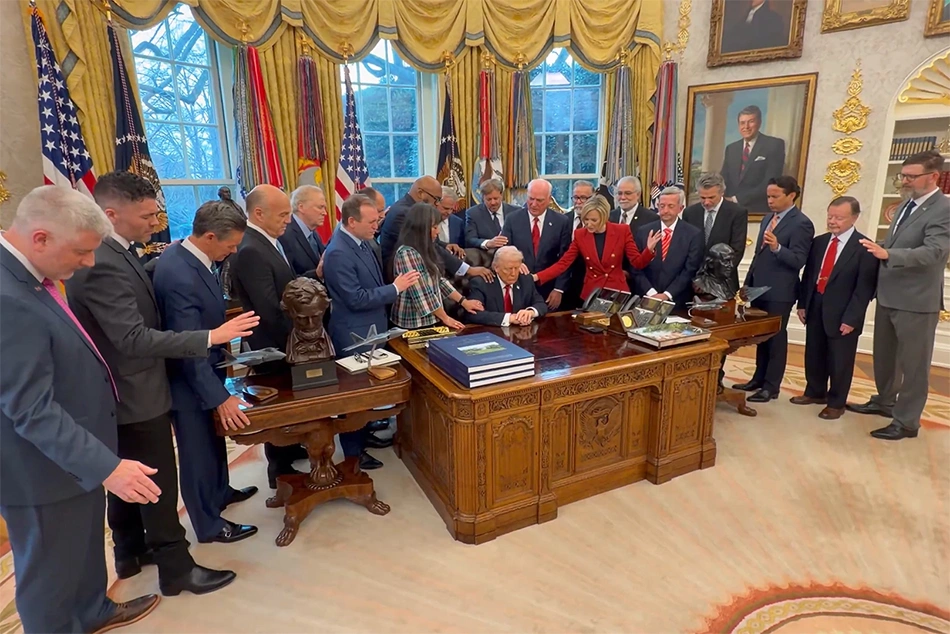
Under Narendra Modi, India’s foreign policy has undergone a qualitative transformation. The language of autonomy remains, but its substance has eroded. Strategic partnerships with the United States have deepened across defence, intelligence, and economic domains. Agreements that bind India into US-led frameworks are presented as pragmatic necessities, yet they carry long-term implications for sovereignty.
This is not the non-alignment of Nehru, nor the calibrated balancing of Indira Gandhi. It is a progressive integration into an existing hegemonic order. India today participates in geopolitical arrangements that are explicitly designed to counter other powers, aligning itself with Western strategic priorities in ways that would have been unthinkable in earlier decades. This is not an expansion of influence; it is a narrowing of independent space.
The irony is stark. India is now far stronger than it was in the 1950s or 1970s. Its economy is larger, its military more capable, its global presence more pronounced. Yet, it exhibits less willingness to act independently than when it was materially weaker.
What explains this shift? Part of the answer lies in the substitution of substance with spectacle. The rhetoric of “Vishwaguru” seeks to project an image of civilisational leadership, but it avoids the harder question of political autonomy. Leadership in the global arena is not derived from cultural claims or historical narratives; it is earned through the capacity to act without external constraint.
A nation that aligns itself closely with a dominant power – militarily, economically, and strategically—cannot simultaneously claim to be an independent pole of influence. The two positions are fundamentally incompatible.
This contradiction is not accidental; it is structural. The pursuit of closer ties with the United States is often justified in terms of economic growth, technological access, and security cooperation. But these benefits come with conditions – explicit and implicit – that shape policy choices and limit strategic flexibility.
Over time, such dependencies accumulate. They create a framework within which deviation becomes costly, and compliance becomes the path of least resistance. The result is not formal subordination, but something more insidious: self-limitation.
This is the true measure of decline. Not a dramatic loss of sovereignty, but its gradual erosion through alignment and dependence.
In this context, the invocation of “Vishwaguru” becomes not just hollow, but distracting. It shifts attention away from the material realities of foreign policy and toward symbolic assertions of greatness. It replaces critical evaluation with emotional appeal. What is lost in this process is the very quality that once distinguished India on the global stage: its willingness to challenge dominant power structures, even at significant cost.
The contrast with the past is therefore not one of nostalgia, but of trajectory. Nehru imagined an alternative world order. Indira Gandhi asserted India’s place within a hostile one. Both, in their own ways, upheld the principle that independence must extend beyond borders into the realm of global politics. Today, that principle stands diluted.
India has not become a Vishwaguru. It has, instead, moved closer to becoming a participant within a system it once sought to transform. The tragedy is not that India lacks the capacity to act differently. It is that it no longer appears willing to do so.
“Let us not be deceived. We are not neutral between justice and injustice, between freedom and oppression. We stand for a world where nations are free, equal, and unafraid.”
– Sukarno was an Indonesian statesman, activist, and revolutionary
[The writer, Ranjan Solomon, has worked in social justice movements since he was 19 years of age. After an accumulated period of 58 years working with oppressed and marginalized groups locally, nationally, and internationally, he has now turned author- researcher-freelance writer focussed on questions of global and local/national justice., Ranjan Solomon has stayed in close solidarity with the Palestinian struggle for freedom from Israeli occupation, and the cruel apartheid system since 1987. Ranjan Solomon can be contacted at ranjan.solomon@gmail.com.]
Follow ummid.com WhatsApp Channel for all the latest updates.
Select Language to Translate in Urdu, Hindi, Marathi or Arabic