Had Israel Never Been Created
Imagining a world in which the Balfour Declaration was never issued in 1917 and the State of Israel never emerged in 1948 requires re-examining the entire geopolitical architecture of the modern Middle East
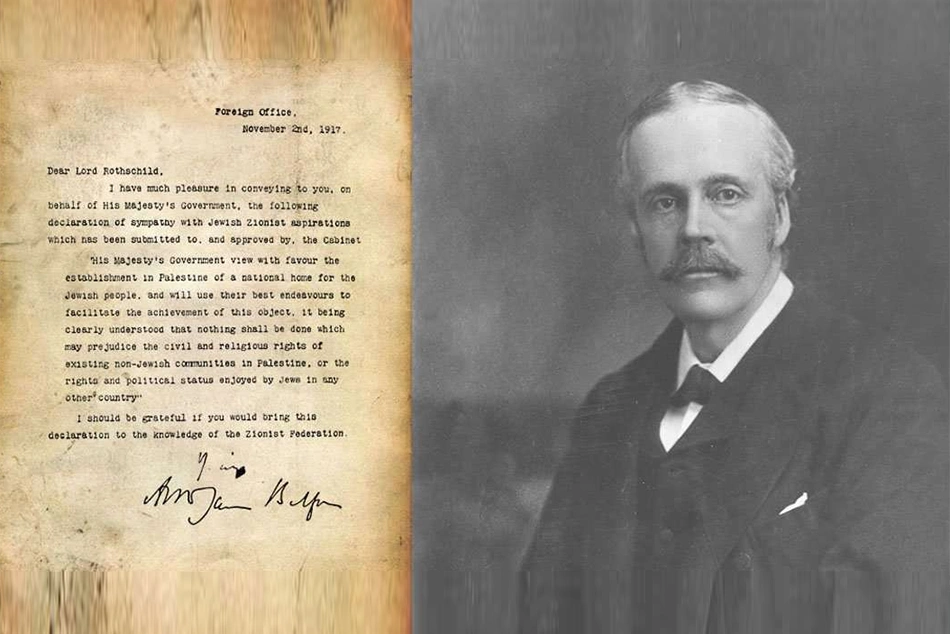
I have often wondered how different our world might have been had the State of Israel never come into existence. Its birth was not inevitable; it was the product of a political decision made far from Palestine. The infamous Balfour Declaration of November 2, 1917 — Britain’s promise to establish a “national home for the Jewish people” in a land it did not control — was, as Abba Eban later admitted, “the decisive diplomatic victory of the Jewish people in modern history.”
Yet the Declaration itself was layered atop earlier imperial bargains. Only a year before, Britain and France had secretly negotiated the Sykes–Picot Agreement, carving up the Arab provinces of the dying Ottoman Empire and predetermining the fate of lands they had not yet conquered. The Balfour Declaration was subsequently woven into the League of Nations Mandate for Palestine, transforming a wartime pledge into an international legal commitment and charging Britain with creating the conditions for a Jewish state in a territory overwhelmingly inhabited by Arabs.
Thirty years later, in November 1947, the United Nations voted to partition Palestine — 33 in favor, 13 against — setting in motion the events that would reshape the Middle East and reverberate across the world. The rest, as we say, is history. But history is not destiny. It is the outcome of choices. And had different choices been made, the Middle East of 2026 might have looked profoundly different.
Before imagining what the Middle East might have become, we must first confront the immense human toll unleashed by this infamous Declaration.
1. Mandatory Palestine violence (1920s–1948)
- Palestinian Arabs: Several thousand killed in riots, revolts, and the 1936–39 uprising.
- Jews in Palestine: Several hundred killed in riots and insurgency.
2. 1948 war (Nakba / War of Independence)
Palestinians/Arabs (Palestine, Egypt, Syria, Jordan, Iraq, Lebanon):
- Commonly cited: ~ 15,000 killed, 750,000+ uprooted.
- Israelis/Jews: ~ 6,000–6,500 killed.
3. 1956 Suez/Sinai war
- Egyptians: ~ 3,000 killed.
- Israelis: ~ 200–250 killed.
4. 1967 Six‑Day War
- Egyptians: Often estimated 10,000–15,000 killed.
- Syrians: Several thousand killed.
- Jordanians: ~ 700–1,000 killed.
- Israelis: ~ 700–800 killed.
5. 1967–1970 War of Attrition
- Egyptians: Several thousand killed.
- Israelis: ~ 1,400 killed.
6. 1973 October/Yom Kippur War
- Egypt + Syria combined: Often cited ~15,000–20,000 killed.
- Israelis: ~ 2,600–2,800 killed.
7. 1982 Lebanon war and occupation
- Lebanese (civilians + fighters): Estimates vary widely, ~ 15,000–20,000+ killed.
- Palestinians in Lebanon: Several thousand Palestinians were killed in Lebanon during the 1982 Israeli invasion, including the 2,000–3,500 Palestinian and Lebanese civilians massacred in Sabra and Shatila by Christian Phalangist militias operating under Israeli military oversight.
- Israelis: ~ 1,200 killed.
8. First Intifada (1987–1993)
- Palestinians (West Bank, Gaza): Roughly 1,000–1,200 killed.
- Israelis: ~ 200 killed.
9. Second Intifada (2000–2005)
- Palestinians: ~ 4,000–5,000 killed.
- Israelis: ~ 1,000–1,100 killed.
10. Gaza wars and operations (2008–2023, excluding Oct 7 aftermath)
Palestinians killed in Gaza (Approximate combined):
- 2008–09: ~1,400 killed
- 2012: ~150–200
- 2014: ~2,100
- 2021: ~250+
- 2022, 2023 smaller escalations: Hundreds more
So, several thousand Palestinians killed in Gaza alone before October 7, 2023.
Since October 7, 2023: As of March 25, 2026, the latest verified figures show that the Gaza death toll has surpassed 72,000 Palestinians killed and over 171,000 injured in what can be called genocidal crimes of Israel. Many bodies remain unrecovered due to rubble and inaccessible areas; entire Gaza has been turned into a rubble. Lancet and Brown University findings suggest that the actual death counts may be higher than 90,000, and supersede 100,000.
Israelis: Dozens killed across these rounds (soldiers + civilians between 2008-2023).
2,039+ Israelis killed (including October 7, 2023 and subsequent fighting). This total includes deaths caused by Israeli friendly fire on October 7, as acknowledged by the IDF, though the exact number remains undisclosed. While most October 7 fatalities were civilians, the majority of Israeli deaths after Oct 7 have been IDF soldiers and young recruits.
Palestinians in West Bank: Since October 7, 2023, more than 1,000 Palestinians have been killed in the occupied West Bank, including East Jerusalem, largely in raids by Israeli forces and attacks by Israeli settlers; nearly a quarter of those killed are children, according to UN and OCHA‑based data. Additional Palestinian citizens and residents have been killed inside Israel’s 1948 borders, bringing the total to well over a thousand Palestinians killed outside Gaza during this period.
11. Lebanon–Israel clashes post‑2000
2006 Lebanon war:
- Lebanese (civilians + fighters): ~1,000–1,200 killed.
- Israelis: ~160–170 killed.
2025–2026 Israeli invasion and bombardment of Lebanon:
Israel’s expanded regional war, launched in parallel with its Gaza and Iran campaigns, has caused several thousand Lebanese deaths, including civilians, Hezbollah fighters, and other militia members.
Heavy Israeli strikes on southern Lebanon, the Bekaa Valley, and Beirut’s southern suburbs have produced the highest Lebanese casualty levels since 1982, with the toll continuing to rise in 2026. The latest Israeli invasion has displaced between 700,000 and 900,000 Lebanese, according to UN and government figures, with total displacement across Lebanon—including refugees—exceeding one million people.
12. Broader regional effects (Iran, Iraq, Yemen, etc.)
Iran:
Before June 2025, there was no large‑scale direct war between Iran and Israel. Iranian losses were primarily from Israeli strikes on IRGC personnel and allied militias in Syria, Iraq, and Lebanon, along with targeted assassinations—amounting to hundreds to low thousands, not tens of thousands.
However, the joint U.S.–Israeli expanded regional campaign in 2025–2026 — including repeated strikes on IRGC units in Syria, Iraq, and Lebanon, as well as direct attacks inside Iran — has killed several thousand Iranian military personnel and allied militia members. The cumulative toll from these operations now exceeds 2,000
Iraq:
Before 2003, Iraqi losses in conflicts where Israel was a factor (1948, 1967, 1973, 1991) were real but relatively limited compared to later catastrophes. The overwhelming majority of Iraqi deaths came from other causes — the Iran–Iraq War, the Gulf War, sanctions, and especially the 2003 U.S.–U.K. invasion launched on the false claim of Iraqi WMDs, a narrative strongly promoted by the Israeli government of Benjamin Netanyahu.
The 2003 invasion and its aftermath killed hundreds of thousands of Iraqis. Peer‑reviewed studies estimate between 500,000 and over 1 million Iraqis killed, with millions more injured, and over 4 million displaced. These losses dwarf all earlier Iraq–Israel–related casualties combined.
Yemen:
The country’s catastrophic humanitarian crisis remains overwhelmingly the result of the Saudi–Emirati–Houthi war (2015–present), famine, disease, and economic collapse. However, since October 2023, Yemen has also become directly involved in the Gaza war. The Houthi movement launched missiles and drones toward Israel in solidarity with Hamas, prompting Israeli airstrikes on Yemen beginning in late 2023 and continuing intermittently through 2024–2026.
These Israeli strikes have killed dozens of Yemenis and wounded many more, including civilians and Houthi personnel. While Israel is not a primary driver of Yemen’s mass death, it is now a direct belligerent in Yemen for the first time, and its attacks have added to Yemen’s already immense human suffering.
If we sum direct conflict deaths in which Israel is a central belligerent (Arabs + Israelis, 1920s–2020s, outside the Iraqi invasion in 2003), we are looking at something on the order of:
Well over 100,000 people killed, with Arabs/Palestinians/neighboring states bearing the vast majority of the deaths.
If we then add indirect deaths (sanctions, displacement, long‑term health impacts, regional destabilization), the true human cost is much higher, but it becomes impossible to quantify rigorously.
In contrast, one official Israeli summary notes 685 Jewish residents of Mandatory Palestine killed between 1920–1947 from Arab riots, British actions, and WWII attacks.
By 2010, Israel’s Memorial Day roll commemorated 22,684 fallen soldiers and security personnel (including pre‑state Yishuv fighters) and 3,971 civilian terror victims. Not every one of those deaths is strictly “at the hands of Arabs” but includes accidents, friendly fire, etc.
In what follows, we explore the possibilities of a Middle East unshaped by Zionism. No counterfactual can predict with certainty, but historical patterns allow us to sketch the broad contours of a region unshaped by Zionism.
Also Read: Deception, Bribery and Blackmail - How Israel was Born
Imagining a world in which the Balfour Declaration was never issued in 1917 and the State of Israel never emerged in 1948 requires re-examining the entire geopolitical architecture of the modern Middle East. This counterfactual exercise is not an attempt to erase Jewish history or deny the profound tragedies that marked the twentieth century.
Rather, it is an effort to understand how differently the region—and the world—might have evolved had a European imperial power not unilaterally promised a land already inhabited by an indigenous population to a global diaspora, setting in motion one of the most enduring and violent conflicts of the modern era.
In this alternative 2026, the absence of a Zionist state in historic Palestine would have reshaped regional politics, global alliances, and the trajectory of multiple wars. The Middle East would still face its inherited burdens: colonial borders, resource rivalries, Cold War interventions. But the specific chain of conflicts tied to the Israeli–Palestinian struggle would not exist. Oil and gas would still shape the region’s political economy and global relevance, but without Israel the strategic logic tying U.S. military power to Middle Eastern energy security would be fundamentally different. The region, and indeed the world, would almost certainly have been less militarized, less polarized, and far more stable than the one we inhabit today.
1. Palestine Without Partition: A Different Political Evolution
Without the Balfour Declaration, Britain’s post‑Ottoman mandate in Palestine would have unfolded very differently. Instead of facilitating mass European settlement and privileging one community over another, the British would have administered the territory much like neighboring Transjordan or Iraq—colonially, imperfectly, but without engineering a demographic transformation.
By the mid‑20th century, Palestine would likely have emerged as an Arab-majority state, perhaps federated with Jordan or aligned with the pan-Arab movements that swept the region. Its cities Jerusalem, Jaffa, and Haifa would have remained multicultural hubs, home to Palestinian/Arab Muslims, Palestinian/Arab Christians, and long-established Jewish communities who had lived there for centuries without the political project of Zionism.
The catastrophic displacement of more than 750,000 Palestinians in 1948 — the Nakba — would never have occurred. Millions of refugees in Lebanon, Syria, Jordan, and Gaza would have remained in their ancestral towns and villages. The demographic, social, and political wounds that still shape the region in 2026 would not exist.
2. No Arab–Israeli Wars: A Region Without Perpetual Crisis
The wars of 1948, 1956, 1967, 1973, 1982, and the repeated assaults on Gaza would not have taken place. These conflicts reshaped the Middle East, toppled governments, militarized societies, and drew global powers into regional rivalries.
Without Israel:
- Egypt would not have lost the Sinai in 1967.
- Syria would not have lost the Golan Heights.
- Lebanon would not have endured repeated invasions and occupations.
- Jordan would not have absorbed waves of refugees that altered its political landscape.
- Iraq and Yemen would not have been drawn into proxy conflicts tied to the Israeli–Palestinian struggle.
The Middle East would still have faced Cold War pressures and internal political struggles, but the single most combustible fault line – the Arab–Israeli conflict – would not exist.
3. Iran Without the Shadow of Israel
Iran’s modern political identity has been shaped in part by its opposition to Israeli policies and its support for Palestinian self‑determination. In a world in the absence of Israel:
Iran would not be cast as the primary regional adversary of a nuclear‑armed state.
Its relationships with Lebanon, Syria, and Yemen would not be filtered through the lens of resistance to Israeli military power.
The U.S.–Iran confrontation, intensified by Washington’s commitment to Israel’s security, would likely be far less severe.
Iran would still be a major regional power, but its foreign policy would be oriented toward the Persian Gulf, Central Asia, and internal development rather than a decades-long confrontation with a state that, in this scenario, never existed.
4. Lebanon Without Civil War and Occupation
Lebanon’s 15‑year civil war and its long occupation by Israel profoundly shaped its modern history. Had Israel never been created:
- There would be no influx of Palestinian refugees fleeing the Nakba.
- No 1982 Israeli invasion that devastated Beirut.
- No rise of Hezbollah as a resistance movement against occupation.
Lebanon would still face sectarian challenges, but the most destabilizing external pressures would be absent. Its political evolution would likely resemble that of other small Mediterranean states—complex, but not perpetually at war.
5. Yemen, Iraq, and the Wider Arab World
Many regional conflicts that later became entangled with Israeli–Arab tensions would have unfolded differently. Yemen’s internal struggles, Iraq’s wars, and the broader Sunni–Shia political dynamics would not be intensified by the perception of a common external threat or by the militarization of regional alliances built around the Israeli–Palestinian conflict.
The Arab world’s political imagination, shaped for decades by the cause of Palestine, would have focused more on economic development, governance, and post‑colonial state‑building.
6. The United States Without Its Most Costly Alliance
The U.S.–Israel relationship has profoundly shaped American foreign policy. Without Israel:
- The U.S. would not have inherited a permanent military commitment to the Middle East.
- It would not have fought wars or maintained bases primarily to secure Israel’s strategic environment.
- It would not have faced global backlash for supporting Israeli military actions.
- American diplomacy would likely have been more balanced, less militarized, and less entangled in regional rivalries.
7. Jewish Safety and Identity in a Different World
This counterfactual scenario does not deny the horrors of antisemitism or the need for Jewish safety. But without the Zionist project, Jewish communities might have strengthened their diasporic identities, as many did in the United States, Europe, and elsewhere. The absence of a state built through displacement and conflict might have reduced, rather than increased, global antisemitism by removing the political conflation of Judaism with a state engaged in repeated wars.
Jewish life in historic Palestine would have continued as it had for centuries—religious, cultural, and integrated into the broader fabric of the region.
8. A More Stable Middle East—and a Less Polarized World
By 2026, in this alternative timeline, the Middle East would still face challenges, but the region would not be defined by a single, unending conflict. The absence of Israel as a settler‑colonial project would mean:
- No apartheid system dividing populations by ethnicity and religion.
- No decades‑long occupation of Palestinian land.
- No cycles of bombardment, blockade, and displacement.
- No global polarization around a conflict that has shaped international politics for generations.
The world would not be perfect, but it would be less violent, less militarized, and less fractured.
History cannot be rewritten, but it can be understood. And understanding the choices that produced the world we inhabit is the first step toward imagining—and building—a different future. A world without Israel may be hypothetical, but the human toll of the choices that created it is tragically real.
[The writer, Dr. Habib Siddiqui, is a Peace Activist.]
Follow ummid.com WhatsApp Channel for all the latest updates.
Select Language to Translate in Urdu, Hindi, Marathi or Arabic