Andaman and Nicobar Erupts Over Higher Education Reforms
Students across the Andaman and Nicobar Islands have launched sustained protests against changes in the affiliation and administrative status of government colleges, arguing that the reforms threaten affordable higher education and create uncertainty regarding degrees, infrastructure, and future employment prospects
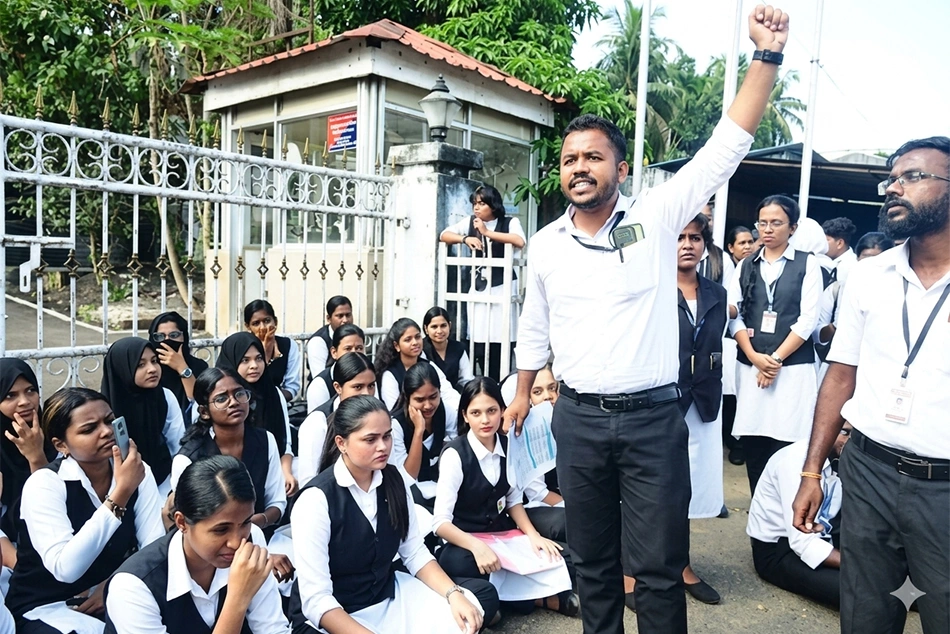
Students across the Andaman and Nicobar Islands have launched sustained protests against changes in the affiliation and administrative status of government colleges, arguing that the reforms threaten affordable higher education and create uncertainty regarding degrees, infrastructure, and future employment prospects.
The protests first emerged at Dr. B. R. Ambedkar Institute of Technology (DBRAIT), where students raised concerns that the shift in affiliation had already resulted in delays in evaluations and the issuance of marksheets and degrees. Subsequently, students of Jawaharlal Nehru Rajkiya Mahavidyalaya (JNRM) took to the streets to oppose the granting of deemed-to-be university status to their institution, after students in the new cohort were asked to pay higher fees.
According to the protesting students, the transition from affiliation with a central university to the Netaji Subhas Candra Bose Institute of Higher Learning threatens the accessibility and affordability of higher education in the islands. They argue that public institutions have enabled students from economically modest backgrounds to pursue higher studies and that increased fees and uncertainty over institutional standards could place education beyond the reach of many families.
The changes affect several colleges in the islands, including JNRM, DBRAIT, the Andaman and Nicobar College of Law (ANCOL), Tagore Government College of Education (TGCE), and Mahatma Gandhi Government College (MGGC), all of which are now to be affiliated with the Netaji Subhas Candra Bose Institute of Higher Learning.
Students and allied political and civil society organizations have questioned the manner in which the changes were introduced. During open house meetings with the administration, they criticised what they described as the lack of consultation and the introduction of gazette notifications without the prior consent or participation of those directly affected.
The agitation that began in February expanded beyond individual campuses and gained broad public support. Following continuous demonstrations outside colleges, an island-wide bandh was observed in solidarity with the students. The growing movement eventually led to the formation of a Joint Action Committee seeking the withdrawal of the gazette notifications and engaging in negotiations with the Director of Education.
The protests have also received support from the Member of Parliament from the islands, who publicly expressed dissatisfaction with what he described as the dismissive attitude of administrative officials towards concerns raised by students and local residents. The MP later communicated the demand for continued affiliation with a central university to the Union Education Minister.
Students maintain that affiliation with a central university is essential for ensuring adequate infrastructure, standardized curricula, technical resources, and the long-term value of degrees in the job market. They point out that many island students already take loans to pursue studies in mainland cities such as Bengaluru, Chennai, and Kolkata, while others from remote islands depend on hostel facilities in Port Blair, recently renamed Sri Vijayapuram, to access higher education. For many of them, studying outside the islands remains an aspiration rather than a practical option.
The student movement has remained non-violent despite attempts by the police to disperse gatherings. Student representatives who engaged in discussions with officials have expressed disappointment, arguing that their concerns were not addressed with sufficient seriousness. Nevertheless, students across colleges have continued to act collectively and have been joined by sections of the wider society that regard public educational institutions as vital social assets and remain wary of policies that could lead to greater dependence on private funding.
Critics of the government’s approach argue that the present controversy reflects broader concerns about the implementation of an educational model in which institutions may increasingly be required to secure their own resources despite inadequate infrastructure. They view the current developments as indicative of a wider push towards the commercialization of higher education in the islands.
United across campuses, the students continue to demand the rollback of the notifications and the preservation of accessible, publicly funded higher education in the Andaman and Nicobar Islands.
[The writer, Mohammed Kamran, is pursuing his PhD in Theatre and Performance Studies at the School of Arts and Aesthetics, Jawaharlal Nehru University where he also completed his M.Phil. in 2021. His research interests include but are not limited to theatre and performance historiography, Sufi poetics and cultural production, critical ethnography, South Asian studies, sound studies, and regional/area studies. He is also a published novelist and poet. His debut novel titled No Bridge Over the Troubled Waters was published by Sahitya Akademi in 2019.]
Follow ummid.com WhatsApp Channel for all the latest updates.
Select Language to Translate in Urdu, Hindi, Marathi or Arabic