Mamata Banerjee: Down But Not Out
After defeat in the 2026 West Bengal Polls and rebellion in the Trinamool Congress, the question being widely discussed in political circles is whether Mamata Banerjee will rise again like a phoenix in the coming years.
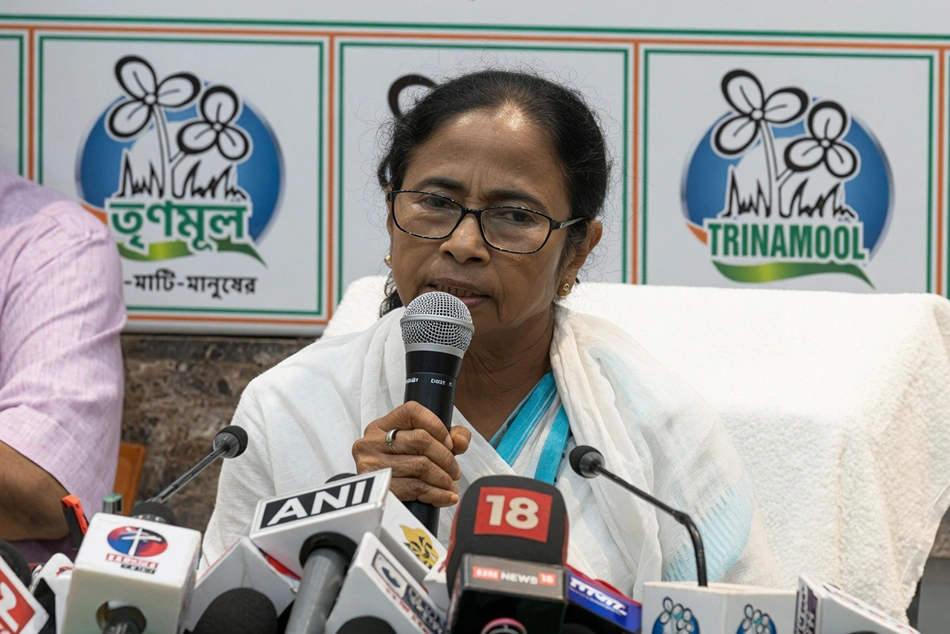
The question being widely discussed in political circles is whether Mamata Banerjee will rise again like a phoenix in the coming years.
Autocrats often view democratic dissent as a threat because free expression, independent institutions, and political accountability challenge their monopoly on power. Rather than engaging in open debate, they seek to consolidate control by demonizing opponents, rewriting rules, and weakening civil society.
Narendra Modi, according to many of Mamata Banerjee’s supporters, remains wary of her political resilience. Her enduring presence poses a challenge to the BJP’s ambitions in eastern India. For more than a decade, Modi and Amit Shah have made sustained efforts to dislodge her from power in West Bengal. This time, critics of the BJP argue, they succeeded only because the electoral process was allegedly influenced in their favour.
However, defeating Mamata electorally was never the sole objective. The larger goal, many in the Trinamool Congress believe, has been to end her political relevance altogether. Recent developments involving dissident TMC legislators are viewed by her supporters as part of a broader strategy to weaken and eventually fragment the party.
Reports suggest that nearly 58 TMC MLAs have aligned with an alternative faction, evoking comparisons with the political realignments seen in Maharashtra. Supporters of Mamata allege that state power and political pressure were used to encourage defections. They also fear that efforts are continuing to persuade more legislators to leave her camp.
Yet writing off Mamata Banerjee may prove difficult. Her most defining political struggle was waged largely on her own. The mass movements against land acquisition in Singur and Nandigram transformed her from an opposition leader into the architect of the 2011 victory that ended 34 years of Left Front rule in West Bengal. At that time, she lacked the organizational strength she possesses today. She now retains a committed grassroots network as well as loyal legislators and parliamentarians.
Many of her supporters argue that the effort to politically neutralize Mamata has been years in the making. From their perspective, Bengal remains a crucial battleground because of its 42 Lok Sabha seats, and TMC dominance has long been an obstacle to the BJP’s expansion plans in the state.
Critics of Mamata often cite allegations of corruption. Her defenders counter that if the evidence against her were compelling, central agencies would have already acted decisively. They point to repeated investigations involving her nephew, Abhishek Banerjee, who has faced multiple rounds of questioning by the Enforcement Directorate in connection with the coal-smuggling case but has not been arrested.
Supporters of the TMC also argue that Abhishek Banerjee has become a major political target. They cite the attack on him in Sonarpur on May 30, 2026, during a visit to families affected by post-election violence. Abhishek himself alleged that there was a conspiracy to kill him. At the same time, rebel TMC legislators and BJP leaders have accused him of authoritarian functioning and corruption, charges his supporters dismiss as politically motivated.
The BJP, for its part, has consistently attacked the TMC on issues ranging from governance and corruption to national security and illegal immigration. It has accused the party of appeasement politics and protecting infiltrators, while the TMC has opposed measures such as the National Register of Citizens (NRC). Central agencies, including the ED and CBI, have investigated several TMC leaders and officials, a move the BJP describes as part of anti-corruption efforts and the TMC characterizes as political targeting.
The battle for Bengal remains politically significant. For the BJP, weakening Mamata Banerjee is essential to expanding its influence in a state where it has struggled to displace the TMC. For Mamata, survival and revival are equally crucial, as she remains one of the most recognizable regional leaders capable of challenging the BJP nationally.
Supporters of Mamata also point to what they describe as organized online campaigns against her and Abhishek Banerjee. They argue that social media has become a powerful tool for shaping public perceptions and amplifying political attacks.
There is little doubt that Mamata Banerjee’s political future is facing a severe stress test following her electoral defeat. Yet her supporters believe that losing office may ultimately make her more combative. Significantly, after the election result was declared on May 4, she described herself as a “free bird” while refusing initially to accept the verdict, a stance that briefly contributed to a constitutional confrontation before a new government was sworn in.
In a notable development on June 2, Mamata publicly raised the issue of the killing of Bangladeshi activist Sharif Osman bin Hadi. Speaking at a protest rally in Kolkata, she praised the West Bengal Police Special Task Force for tracking and arresting suspects who allegedly entered India through the Meghalaya border after the killing.
Mamata further alleged that Union Home Minister Amit Shah had personally requested that she refrain from publicizing the matter in the national interest. She claimed to know who had masterminded the assassination but declined to reveal the names, arguing that doing so could trigger major political repercussions in Bangladesh.
Hadi was attacked on December 12, 2025, while campaigning as an independent parliamentary candidate in Dhaka’s Purana Paltan area. He suffered a gunshot wound that severed his brain stem and was airlifted to Singapore General Hospital, where he died on December 18. He was known for his outspoken political activism and criticism of India, as well as his opposition to the Awami League government.
Mamata’s remarks have generated considerable political speculation. Observers are divided over why she chose to raise the issue at this moment. Some interpret it as a warning to the Modi-Shah leadership that she possesses information capable of creating political difficulties for them if further attempts are made to marginalize her.
Whether that interpretation proves correct remains uncertain. What is clear, however, is that Mamata Banerjee has repeatedly demonstrated a remarkable ability to survive politically. Her opponents may have succeeded in removing her from power, but eliminating her from the political landscape altogether could prove to be a far more difficult proposition.
[The writer, Arun Srivastava, is a Senior Journalist]
Follow ummid.com WhatsApp Channel for all the latest updates.
Select Language to Translate in Urdu, Hindi, Marathi or Arabic