China’s New Ethnic Unity Law and Erasure of Minority Identities
China’s newly enacted 'Law on Promoting Ethnic Unity and Progress' marks a definitive shift from managing diversity to enforcing homogeneity.
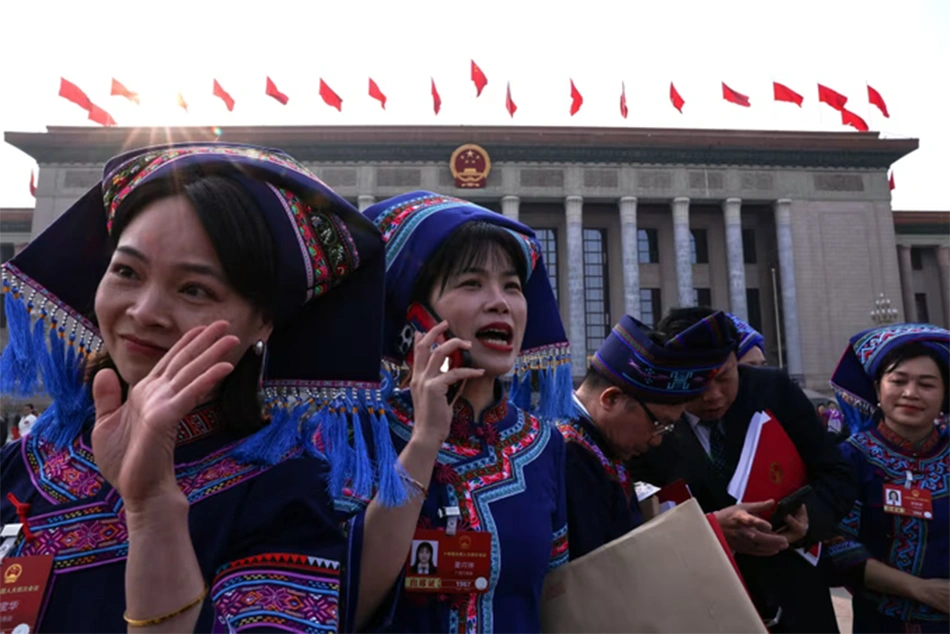
China’s newly enacted "Law on Promoting Ethnic Unity and Progress" marks a definitive shift from managing diversity to enforcing homogeneity. By legally institutionalising the assimilation of Uyghurs, Tibetans, and other minorities, Beijing aims to replace distinct cultural, linguistic and religious identities with a singular, state-defined consciousness loyal to the Communist Party.
The "Law on Promoting Ethnic Unity and Progress," which officially came into effect on July 1, 2026, is framed by Beijing as a benign instrument designed to foster harmony and social stability among China’s 56 recognised ethnic groups. However, a closer analytical inference reveals a mechanism engineered for structural assimilation.
The Architecture of Assimilation: Core Features of the Law
The law’s central mandate is the creation of a "shared national identity." In practice, this means that the distinct histories, languages, and traditions of ethnic minorities must be subordinated to a Han-dominated Chinese national narrative. The most critical features of the law include:
Mandatory Mandarin Instruction: Article 15 formalises the requirement that Mandarin Chinese be taught to all children from preschool through the end of compulsory high school education. While Mandarin was already heavily promoted in regions like Xinjiang and Tibet, this law effectively strips minority languages of their status as primary mediums of instruction nationwide, relegating them to secondary importance.
Ideological Subordination: The law explicitly requires all government bodies, private enterprises, social organisations and even religious groups to actively forge a "common consciousness of the Chinese nation." Religious institutions, in particular, are directed to persist in the "Sinicisation" of religion, guiding believers to adapt to socialist society and state ideology.
Extraterritorial Reach: Perhaps the most controversial aspect is the law’s application beyond China's borders. Article 63 asserts that organisations and individuals outside the People’s Republic of China can be held legally accountable for undermining "ethnic unity" or inciting "ethnic separatism." This provision provides a legal pretext for transnational repression, targetting diaspora communities, activists, and critics worldwide.
The Impact on the Ground: Uyghurs and Tibetan Buddhists
For communities like the Uyghurs and Tibetan Buddhists, the law is not a new beginning but a grim formalisation of long-standing systemic pressures.
For the Uyghurs in Xinjiang, the logic of "ethnic unity" has historically been used to justify mass arbitrary detention, forced labour transfers, family separation, and the systematic destruction of cultural heritage. By codifying these practices into a national law, the state has removed any remaining ambiguity regarding its intent. The law effectively criminalisesexpressions of Uyghur identity, from language preservation to religious practice, branding them as threats to national security or signs of religious extremism.
For Tibetan Buddhists, the law represents a strategic assault on their cultural survival. The legislation directly impacts the administration of Tibetan monasteries and the education of young monks and nuns. By mandating that religious succession and practices align with state-approved frameworks, the law seeks to dismantle the traditional authority of figures like the Dalai Lama. The forced transfer of Tibetan children into state-run boarding schools, where they are isolated from their language and culture, is now backed by a robust legal framework that equates cultural preservation with political disobedience.
Global Backlash vs. Beijing’s Defence
The international reaction to the law has been overwhelmingly critical, with Western nations, human rights organisations, and exiled minority groups denouncing it as a blueprint for cultural erasure.
The European Parliament has formally condemned the legislation, warning that it facilitates a systematic attempt to erase the heritage of minority groups. Legislators have called for the suspension of extradition treaties with China to protect diaspora communities from transnational harassment.
In the United States, congressional leaders have urged the State Department to publicly and forcefully challenge the law, framing it as a tool of ideological control and a direct threat to the safety of human rights advocates globally. Rights groups, including Amnesty International and the Campaign for Uyghurs, have argued that the law violates China’s own constitutional guarantees regarding regional ethnic autonomy and contravenes international human rights standards.
China’s Defence: Beijing has dismissed this criticism as a "malicious smear" and a distortion of its domestic policy. During a press briefing in Beijing, Vice Justice Minister Hu Weilie defended the law, arguing that it is a "legitimate, lawful, necessary, and feasible" measure tailored to China’s national conditions.
Chinese officials contend that the law is an internal affair aimed at safeguarding national sovereignty, security and development interests. They argue that the overseas provision is consistent with international practices and is merely intended to combat "illegal acts" of separatism. Beijing maintains that the law will not affect normal people-to-people exchanges, academic discussions, or trade, asserting that its fundamental purpose is to maintain social solidarity and prevent the kind of ethnic strife that has fractured other nations.
The Indian Response and Strategic Dilemma
India’s response to China’s new ethnic law has been shaped by a complex mix of civilisational values, regional rivalry and cautious diplomacy.
The Central Tibetan Administration (CTA), based in Dharamshala, has been vocal in its opposition, calling the law a "legal assault" on Tibetan identity. SikyongPenpa Tsering, the political leader of the Tibetan government-in-exile, highlighted the stark contrast between the two Asian giants.
Tsering noted that while Indian civilisation is characterised by its tolerance and active encouragement of diversity, Chinese civilisation under the current regime is increasingly defined by enforced uniformity.
Officially New Delhi has largely framed its response through the lens of cultural preservation and regional stability. Given India’s own pluralistic ethos, which is deeply rooted in traditions such as the teachings of the Buddha, there is a profound concern regarding the impact of China's law on the cultural and linguistic diversity of the Himalayan region.
However, India’s reaction is also tempered by the delicate state of India-China relations. Following the border agreements of October 2024, which aimed to establish "guardrails" and de-escalate tensions along the Line of Actual Control (LAC), New Delhi is wary of provocations that could derail the fragile process of reconciliation.
India’s ambitions to become a global manufacturing hub and its economic dependencies on China necessitate a multidimensional foreign policy. Consequently, while India remains deeply uncomfortable with Beijing's aggressive homogenisation policies - particularly because they affect the Tibetan plateau, which serves as a vital buffer zone - its official response has been measured, prioritising strategic stability over open confrontation.
The Future of Diversity in China
The "Law on Promoting Ethnic Unity and Progress" signifies a turning point in China’s governance of its borderlands and minority populations. By elevating the ideology of the "Chinese Nation Community" to the status of law, Beijing has signaled that it will no longer tolerate the existence of parallel cultural or religious identities that do not strictly conform to the party line.
The ultimate impact of this law will be felt in the classrooms, homes, and places of worship across Xinjiang, Tibet, and Inner Mongolia. It deepens the institutional pressure on minorities to assimilate or face the full weight of the state's legal apparatus. As China continues to project its power globally, this law also serves as a warning to the international community that Beijing intends to enforce its version of internal order beyond its own borders.
Ultimately, the law exposes a fundamental insecurity within the state: a belief that true unity cannot be achieved through dialogue, trust or the celebration of diversity, but only through absolute conformity. History suggests that unity built on fear and the erasure of identity is rarely durable, and by codifying this approach into law, China may be sowing the seeds of long-term instability under the guise of progress.
[The writer, Asad Mirza, is Delhi based Journalist and Author.]
Follow ummid.com WhatsApp Channel for all the latest updates.
Select Language to Translate in Urdu, Hindi, Marathi or Arabic