Modi’s India Where Hate is Rewarded
When hate is rewarded with visibility, when insult is mistaken for courage, and when communal provocation is treated as political strategy, democracy itself begins to rot from within.
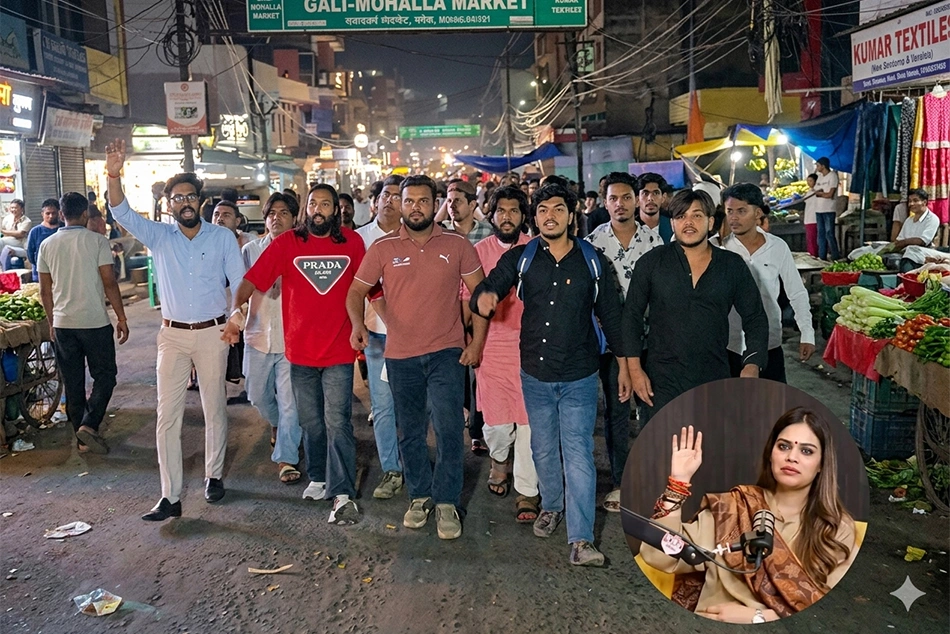
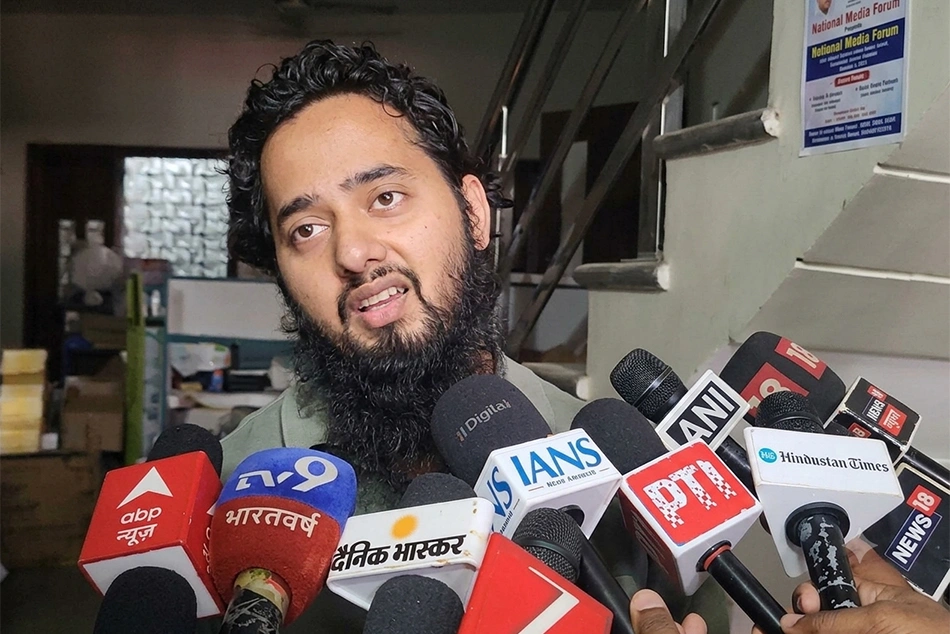
[Protests against Nazia Elahi Khan have erupted in different parts of India (Original image quality and size enhanced using AI tools)]
Nazia Elahi Khan Controversy and Dangerous Mainstreaming of Bigotry
The registration of two FIRs in Mumbai Metropolitan Region (MMR) against BJP Minority Morcha leader Nazia Elahi Khan for allegedly making derogatory remarks about symbols of Islam and top personalities is not merely another isolated controversy. It is a disturbing reminder of how hate speech and communal provocation have become increasingly normalised in today’s India.
The 41-year-old BJP leader, popularly known online as “Nazia Sanatani,” now faces legal action after an Instagram podcast reel allegedly containing offensive remarks about the symbols of Islam and top personalities that deeply hurt the sentiments of Muslims. One FIR was lodged at the Shanti Nagar Police Station in Bhiwandi following a complaint by a local resident Adnan Ansari, while a second “zero FIR” was registered at Mumbai’s JJ Marg Police Station. The Raza Academy has also sought legal action, demanding strict punishment.
Yet, beyond the legal proceedings lies a larger and more troubling question: How did such inflammatory rhetoric become so common place in public discourse?
The New Political Currency: Provocation and Outrage
A decade ago, openly mocking religious figures of any community would have invited widespread condemnation from across the political spectrum. Today, however, controversial and provocative statements often serve as a pathway to social media fame and political relevance.
During the ruling regime, we have noticed a new ecosystem has emerged where communal rhetoric generates followers, television appearances, and political patronage. Hate has become profitable.
Provocative statements are clipped into short videos, amplified by social media algorithms, and consumed by millions as entertainment and political commentary and people like Nazia have used this option to raise their "stature" in the media to get cheap fame. This dangerous trend has blurred the lines between free speech and deliberate incitement.
Selective Outrage Problem
The controversy surrounding Nazia Elahi Khan also highlights another troubling aspect of contemporary India: selective outrage.
There is a swift and often justified response when remarks are made against certain faiths or communities. However, when minorities, particularly Muslims, become the targets of derogatory remarks, hate speech often gets dismissed as “freedom of expression,” “political commentary,” or mere “opinions.”
This selective application of moral and legal standards sends a dangerous message — that some communities deserve protection from hate while others are expected to endure humiliation and insults in silence.
Interestingly, the BJP, known for its selective outrage for Muslims, tacitly encourages figures like Nazia, who describes herself as a “Sanatani Muslim” (though, in reality, she appears to be neither). The party remained conspicuously silent as she repeatedly targeted Muslims with hateful rhetoric. It was only when she made derogatory remarks about the highest Islamic symbols and personalities that the community’s anger boiled over.
Mainstreaming Hate Through Political Legitimacy
What makes the present moment particularly alarming is that hate speech is no longer confined to anonymous social media trolls or fringe elements. Individuals accused of making inflammatory remarks increasingly enjoy political legitimacy, hold party positions, and command substantial online followings.
The fact that a person associated with a major political party can repeatedly attract controversy over communal statements points to a deeper societal problem. It indicates that inflammatory rhetoric is no longer politically costly; in many cases, it has become politically rewarding.
This normalisation emboldens others to test the boundaries of acceptable discourse, gradually shifting public standards and making extreme views appear ordinary.
Social Media: The New Amplifier of Hate
Platforms like Instagram, YouTube, and X have become fertile grounds for the rapid spread of divisive content. Algorithms often reward sensationalism and outrage because such content generates engagement.
The IT Cell has the expertise to use the social media networking sites to build a narrative against Muslims. As a result, videos that insult religious beliefs, ridicule communities, or spread stereotypes travel faster than messages promoting harmony and coexistence.
The Nazia Elahi Khan episode once again demonstrates how a few minutes of online content can inflame sentiments and create widespread anger across communities. And how the ruling parties, like the BJP, tend to become a mute spectator only to fulfil its agenda in ridiculing its agenda in the name of securing majority’s religion.
The Dangerous Consequences
The normalisation of hate speech does not remain confined to the digital world. Words have consequences. Repeated demonisation of communities creates an atmosphere of suspicion and hostility. It deepens social divisions, legitimises prejudice, and gradually erodes the constitutional values of equality and fraternity.
India’s strength has always been its diversity and its ability to accommodate multiple faiths, cultures, and identities. When hate speech becomes routine and insults against religious figures become a means to gain attention and influence, the very fabric of this pluralistic society is threatened.
The Need for Consistent Accountability
The FIRs registered against Nazia Elahi Khan are important because they reaffirm a fundamental principle: no individual, regardless of political affiliation or social media influence, should enjoy impunity for deliberately hurting religious sentiments and promoting communal discord.
However, accountability cannot be selective. The law must act uniformly against all forms of hate speech, irrespective of the religion of the victim or the political identity of the accused.
The real challenge before India today is not merely prosecuting one individual for one controversial statement. It is confronting the larger culture that has allowed hate speech to become normal, profitable, and politically acceptable.
Unless this trend is reversed, India risks becoming a society where outrage is manufactured for attention, communal divisions are deepened for political gains, and the constitutional promise of fraternity remains only on paper.
The Final Word
This is not just about one FIR, one leader, or one offensive reel. It is about the moral direction of a nation. When hate is rewarded with visibility, when insult is mistaken for courage, and when communal provocation is treated as political strategy, democracy itself begins to rot from within.
India cannot afford to become a country where citizens are trained to hate before they are taught to think. It cannot afford a public sphere where religious insult is normalised, where outrage is monetised, and where silence in the face of bigotry is mistaken for maturity. Every time hate speech is excused, the republic grows weaker; every time it is challenged, the idea of India grows stronger.
The choice before the country is stark: either defend the constitutional promise of dignity, equality, and fraternity for all, or surrender to a politics that feeds on division and survives on contempt. History will not remember those who shouted the loudest. It will remember whether India had the courage to stand up when hatred tried to pass itself off as normal.
[The writer, Mohd Ziyauallah Khan, is a Freelance Content Writer and Editor based in Nagpur. He is also an Activist and Social Entrepreneur, Co-founder of group TruthScape, a team of Digital Activists fighting disinformation on Social Media. Views are personal.]
Follow ummid.com WhatsApp Channel for all the latest updates.
Select Language to Translate in Urdu, Hindi, Marathi or Arabic