How Bollywood Churning Out Anti-Muslim Movies: Detailed Analysis
Bollywood has accepted this dangerous trend and is churning out anti-Muslim movies because they are selling as hot potatoes, which generates sentiments among Hindus for social distancing of Muslims.
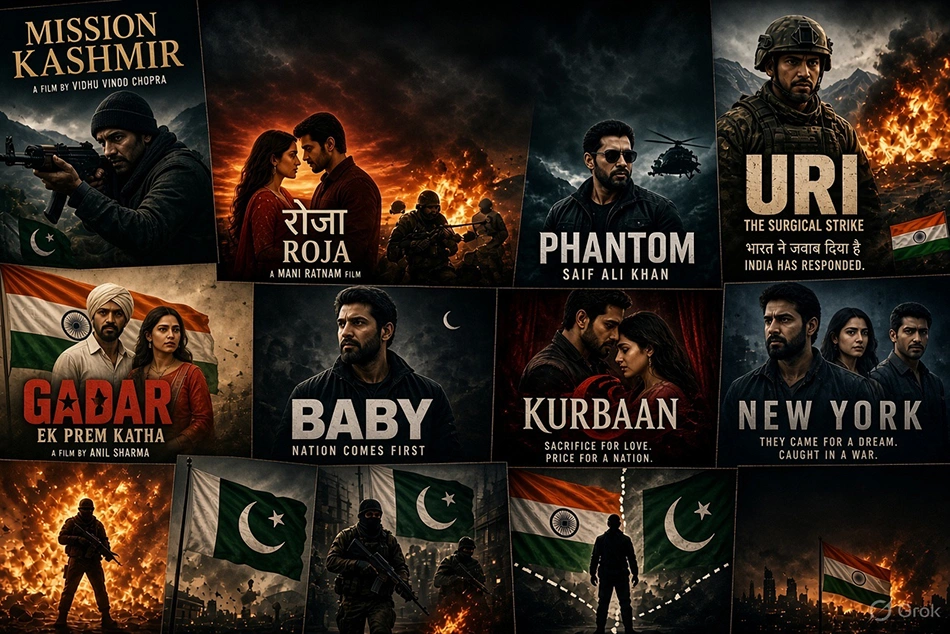
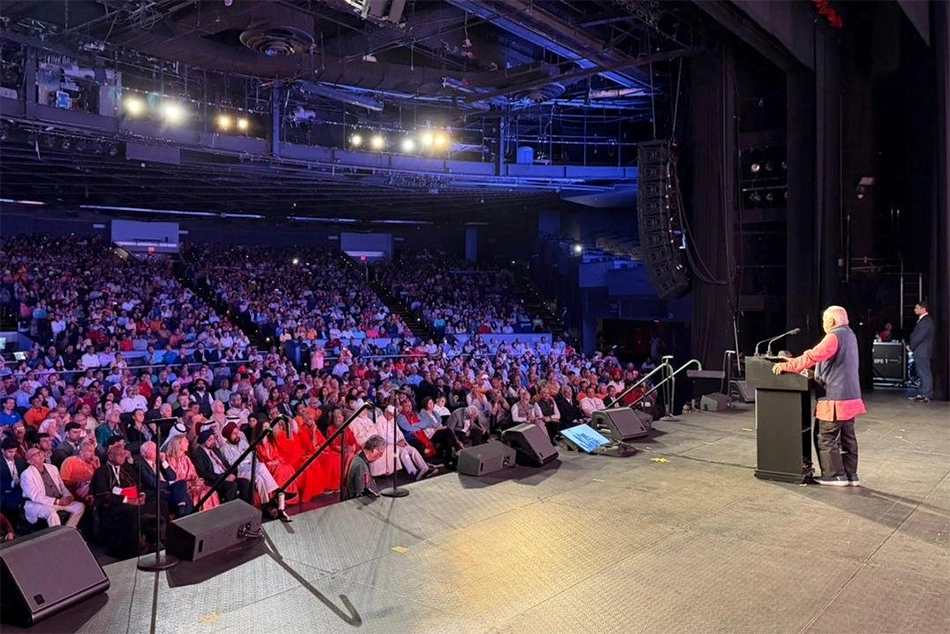
Filmmaker Tigmanshu Dhulia has said that the rising Islamophobia in the Indian society has successfully made its way into Hindi cinema as well. He was speaking at the Editors Guild of India's Rajendra Mathur Memorial Lecture on September 4, 2026, in New Delhi.
Dhulia said that filmmakers are part of the same society where anti-Muslim propaganda has grown like a cancerous growth. He elaborated that the changing social and political climate has reshaped the stories being told on the screen.
Dhulia added that even though Bollywood has a reputation for being diverse, the fact is it’s also infested with anti-Muslim prejudices where Muslim characters are antagonists, terrorists, or outsiders. This is an honest assessment of Bollywood by an Indian filmmaker.
It is said that if anyone wants to know the social environment of a particular country, watch its popular cinema. Bollywood plots center on four genres. First, Muslims-as-terrorists linked to militancy, cross-border terrorism, or radicalization. The second theme is Patriotic films, which are anti-Pakistan caricatures. The third category is historical epics or period dramas in which Muslim rulers are demonized, and local resistance is glorified. Films that don’t fit these categories occupy the fourth slot.
The popular plots featuring Muslim characters are the "Muslim-as-Terrorist" trope, where Kashmir remains the centerpiece.
- Roja (1992): A story of a Tamil family who visit Kashmir and get kidnapped by the militants.
- Bombay (1995): A Hindu man and a Muslim woman's marriage is caught in religious tension against the backdrop of the 1993 Mumbai riots.
- Sarfarosh (1999): An honest police officer tracks down cross-border terrorism, where Muslim characters are antagonists.
- Fiza (2000) Explores radicalization and terrorism against the backdrop of the 1993 Bombay riots.
- Escape from Taliban (2003) An Indian girl married to an Afghan Taliban escapes twice from his clutches to be back in India.
- Fanaa (2006) A terrorist in love with a blind girl ends in a romantic tragedy when his love girl shoots him to death.
- Sheen (2004): Plight of the Kashmiri Pandits who fled Kashmir due to terrorism in the 1990s.
- And the World Remained Silent (2006): Story of Kashmiri Pandits who were forced to leave their homeland due to militancy.
- Kurbaan (2009): A woman finds that her husband is a terrorist, and their neighbors are also among them.
- Hotel Mumbai (2018) is a story of the Taj Hotel terrorist attack in 2008 in Mumbai.
- Commando 3 (2019): An Indian Commando goes to London to stop a terrorist attack on India.
- Uri: The Surgical Strike (2019): An Indian Special Forces unit executes a high-stakes retaliatory strike on terrorists from Pakistan.
- 72 Hoorain (2019): It's the story of the Fidayeen (suicide squad) terrorists who embark on their mission due to their faith that if they die will get 72 Virgins, known as Hoorain.
- Bellbottom (2021): An undercover RAW agent who leads a daring covert mission to rescue 210 hostages from a hijacked airplane.
- Sooryavanshi (2021): Story of the Anti-Terrorism Squad (ATS) that tries to bring down a terrorist organization.
- The Kashmir Files (2022): Struggle of the Kashmiri Pandits in the 1990s militancy era.
- The Kerala Story (2023): A nurse who was converted and turned into an ISIS terrorist module lands in a jail in Afghanistan.
Patriotic or anti-Pakistan films
Indian cinema has a long history of producing patriotic films that feature Pakistan as a geopolitical focal point or the antagonist. These are cross-border military dramas with high-voltage patriotic themes.
- Hindustan Ki Kasam (1973): War movie based on Operation Cactus Lilly in the Indo-Pakistani War of 1971.
- Vijeta (1982): Based on the 1971 Bangladesh Liberation War against Pakistan.
- Aakraman (1975): It’s a social drama of two army officers who are linked to the same girl. The background is the India-Pakistan war.
- Border (1997): In the 1971 war along the border region of Longewala, a small battalion of Indian soldiers is up against a large force of Pakistan.
- Mission Kashmir (2000): The movie is set against the turbulent backdrop of the Kashmir conflict in the 1990s.
- Gadar: Ek Prem Katha (2001) & Gadar 2 (2023): Set during the Partition of India and subsequent conflicts, with intense anti-Pakistan and patriotic themes.
- LOC: Kargil (2003): Based on the Kargil War of 1999 fought between India and Pakistan.
- Let's Bring Our Heroes Home (2004): A group of Indian Prisoners of War(POWs) that rebels against the Pakistani army and escape from their captivity during the India-Pakistan war of 1971.
- Lakshya (2004): War drama based on actual events of the Kargil War against Pakistan.
- Ab Tumhare Hawale Watan Saathiyo (2004): An Indian Army officer fights ruthless terrorists who are sent from Pakistan.
- Yahaan (2005): A young Kashmiri Muslim woman falls in love with a Hindu man.
- Sarhad Paar (2006): An Indian soldier tries to take revenge on Pakistani soldiers who had wronged him.
- Sagar (2007): The film revolves around six soldiers who escape from the clutches of the Pakistan Army in the 1971 war.
- Kurukshetra (2008): A patriotic war drama where an Indian commander faces his Pakistani counterpart in the Kargil War of 1999.
- Lamhaa: The Untold Story of Kashmir (2010) Indian Military Intelligence deputes an agent to Kashmir incognito to find out who is behind extremist attacks.
- Haider (2014): A young man returns to Kashmir after his father's disappearance to confront his uncle, whom he suspects of playing a role in his father's fate.
- Kya Dilli Kya Lahore (2014): In 1948, an Indo-Pak border clash leaves only two soldiers alive. One is an Indian of Pakistani origin; the other is the opposite.
- Raazi (2018): A spy thriller where an undercover Indian intelligence agent is married into a Pakistani military family before the 1971 war.
- Shershaah (2021): Laced with aggressive nationalist dialogue and action-driven patriotism, this film centers on the 1999 Kargil War.
- Bhuj: The Pride of India (2021): This movie focuses on the reconstruction of an airstrip for the Indian Air Force in the 1971 war.
- Dhurandhar 1& 2 (2025 and 2026): The movie is about cross-border terrorism and espionage that portrays anti-Indian Muslim sentiments with political propaganda and a hyper-nationalistic tone.
Historical Epics and Period Dramas
Several contemporary Hindi historical films focus on the conflicts between native Indian kingdoms and expanding Muslim dynasties.
- Bajirao Mastani (2015) is the story of a Maratha general, Peshwa Bajirao I, and Mastani, a Muslim warrior princess.
- Padmaavat (2018): Alauddin Khilji is shown as a ruthless, aggressive, and obsessive conqueror who attacks the Rajput kingdom of Chittor to get Padmaavat.
- Panipat (2019): In the Third Battle of Panipat between the Marathas and Afghan king Ahmad Shah Abdali, the Marathas are declared victors.
- Kesari (2019) is a story of the Battle of Saragarhi (1897), where 21 Sikh soldiers fought to defend a British-Indian outpost against 10,000 attacking Afghans.
- Tanhaji (2020): The Unsung Warrior (2020) portrays medieval Muslim rulers as invaders in an antagonistic conflict with regional Indian kings.
- Samrat Prithviraj (2022) shows the battles between Prithviraj Chauhan and Muhammad Ghori, an unrelenting invader who is defeated.
- Chhaava (2025) is the conflict between Chhatrapati Sambhaji and Mughal Emperor Aurangzeb, who is depicted as an anti-Hindu ruler.
Other Anti-Muslim Films
- Ajmer 92 (2023): It’s a story of gang rape and blackmailing of over one hundred school- and college-age girls in Ajmer.
- Lipstick Under My Burkha (2016): Four Muslim women want to break free from the conservative Muslim society sets on a journey to discover freedom and happiness.
Reasons
Bollywood anti-Muslim plots started shifting their narrative after the 1990s due to many reasons. The breakup of the Soviet Union and geopolitical shifts, the economic liberalization in India, the Ram Janmabhoomi Movement, and the India-Pakistan conflict over Kashmir. These events provided the groundwork for framing Muslim identity primarily through a lens of an antagonist.
After political shifts in India in 2014, when the BJP came to power, a broader societal polarization and majoritarian political discourses entered mainstream Hindi cinema. Bollywood cinema showed that Muslim characters are disproportionately linked to terrorism, antinational activity, and are a threat to the nation.
Under the Modi rule, Bollywood plots show an explicit push for majoritarian consolidation with anti-Muslim political narratives. Since 2014, Bollywood has witnessed an increase in big-budget films that have an overt anti-Muslim and anti-Islam agenda.
The fact is, Bollywood currently demonizes, marginalizes, and stereotypes Muslim characters. Many mainstream films tie Muslim characters to cross-border terrorism, radicalization, or militant outfits. Indian Muslims are frequently framed as anti-national, scheming to destroy India.
Recent historical dramas in Bollywood depict medieval Muslim rulers as villains and symbols of religious oppression, fostering majoritarian consolidation.
Bollywood’s best-selling plots are terrorism, nationalism, and historical revisionism that depict the contemporary socio-political scene of India.
Conclusion
Bollywood’s explicit ideological shifts began in the 1990s; after 2000, it became overt political narratives. Post-2014, Bollywood releases shifted toward an aggressive anti-Muslim tone with overt counter-terrorism operations and direct cross-border missions. All these mirror the contemporary geopolitical sentiments in India.
Anti-Muslim films and negative media stereotypes significantly deepen social polarization, fuel real-world hostility, and normalize prejudice in mainstream political and cultural discourse. Polarizing and biased films have frequently triggered instances of hate speech, open calls for violence, and harassment of Muslims.
The propagandistic narratives in Bollywood films, such as forced conversions or love jihad, have been used by right-wing forces to justify vilification and physical assaults of Indian Muslims.
Bollywood’s politically charged movies, made tax-free by the government, lend official legitimacy to historical falsehoods or conspiracy theories that weaponize cinema for political purposes.
The negative screen representation of Muslims directly generates sentiments among Hindus for social distancing of Muslims.
Bollywood has accepted this dangerous trend and is churning out anti-Muslim movies because they are selling as hot potatoes. The role of the censor board and Godi-media in endorsing such films is another notable trend in the state of affairs of Hindi cinema.
[Syed Ali Mujtaba is a journalist based in Chennai. He can be contacted at syedalimujtaba2007@gmail.com]
Follow ummid.com WhatsApp Channel for all the latest updates.
Select Language to Translate in Urdu, Hindi, Marathi or Arabic