When World Pulls Apart, India and Europe Build Bridges
The new Free Arade Agreement (FTA) between India and European Union goes beyond goods, linking people, skills, technology, supply chains, and security in a divided global economy
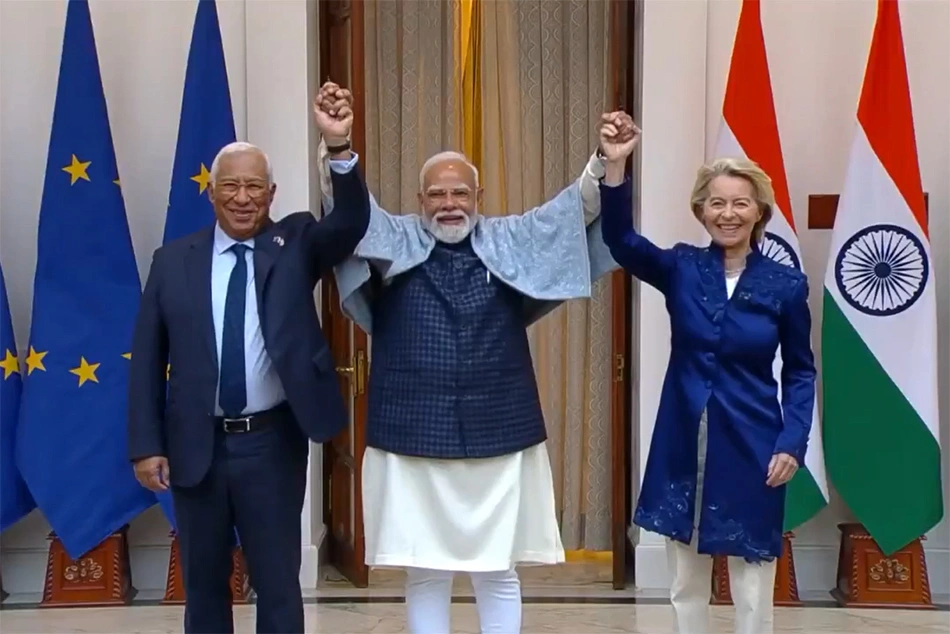
The new Free Arade Agreement (FTA) between India and European Union goes beyond goods, linking people, skills, technology, supply chains, and security in a divided global economy.
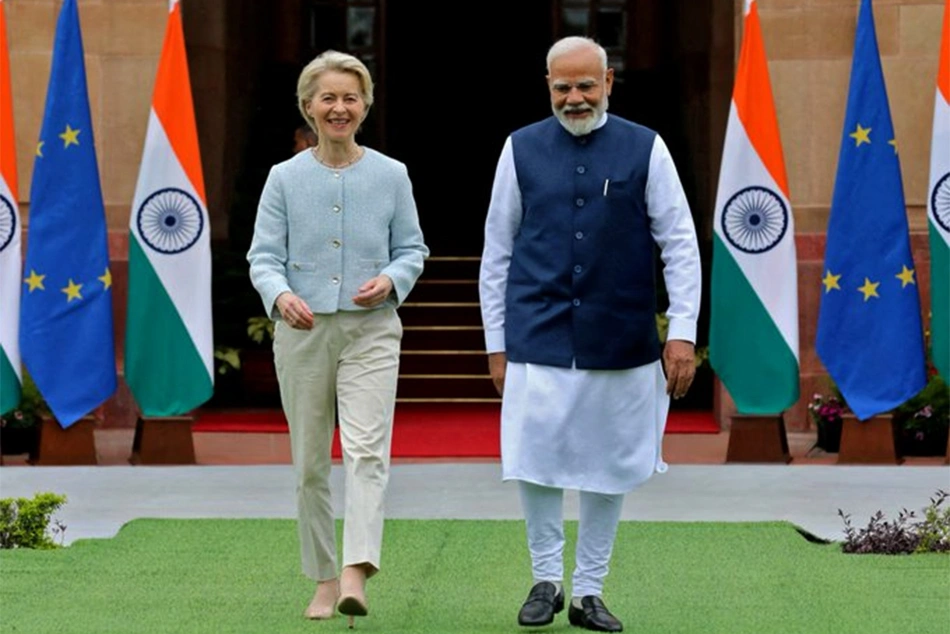
The global economy is under strain. Tariffs are back, trade is treated as a zero-sum game, and migration is often seen as a problem rather than an opportunity. Governments are retreating, supply chains are fragile, and geopolitical tensions are rising. Against this backdrop, the India–EU free trade agreement stands out. It is unusual, and that is precisely why it matters. When the world builds walls, India and Europe are building bridges.
This deal is more than market access or tariff numbers. Its real significance lies in its message: large economies can cooperate without forcing full alignment. Negotiated at a time of elections, trade uncertainty, and global economic volatility, it shows that practical solutions can prevail over fear, and mutual interest can guide decision-making. This is not just trade; it is proof that compromise can still work in global policy.
The agreement comes after nearly two decades of stalled talks, reflecting how political timing and strategic risk have changed. India, seeking partners to diversify its supply chains, and Europe, facing industrial capacity constraints and dependency risks, found a window to act. In this sense, the deal is as much about timing and strategic foresight as it is about economics.
Where the agreement quietly breaks new ground is beyond goods. While headlines focus on exports and market access, it also recognises the movement of people. Skilled professionals, researchers, and students now have clearer pathways to work, study, and collaborate across borders.
Europe faces labour shortages and ageing populations, while India has a young, ambitious workforce looking for international exposure. Treating mobility as cooperation rather than concession is a political choice, especially at a time when migration dominates domestic debates across the West. Trade agreements once moved goods; this one moves people, and ideas.
Concrete examples show the potential impact. Indian software engineers can now take part in European tech and innovation research projects more easily, while European agritech and clean energy specialists can jointly develop sustainable farming and renewable technology initiatives in India. Students will have clearer access to universities and vocational programmes, creating knowledge flows that strengthen long-term competitiveness on both sides.The agreement explicitly encourages joint research, technology transfer, and innovation partnerships as part of its broader economic and strategic framework.
Also Read: Strategic Autonomy Over Alignment: How India is Reframing its Engagement with Europe
Supply chains form another strategic pillar. For Europe, deeper ties with India reduce dependence on a few suppliers in critical sectors such as pharmaceuticals, chemicals, medical technology, and renewable energy components. For India, access to European supply chains is about credibility as much as capacity. Reliability, standards, and trust are becoming as important as cost. Technology partnerships embedded in the deal will accelerate industrial modernisation and innovation.
Security considerations are also embedded in the agreement. While not framed as a defence pact, it recognises that trade and economic policy affect strategic resilience. Both sides are linking critical sectors, such as semiconductors, battery technology, and medical devices, with standards and risk assessments. Economic partnerships are no longer neutral, they are instruments of stability.
The deal has also attracted international attention. US Treasury Secretary Scott Bessent warned that Europe risks “funding the war against themselves” by buying refined products from Russian crude processed in India, even as Washington imposes tariffs aimed at discouraging such trade. His concern is about Europe’s economic strain and transatlantic balance, not India.
Yet the India–EU deal shows that major economies can still make choices based on mutual benefit, even when others may question them. Some see risk; India and Europe see opportunity, and the courage to act.
The deal is not perfect. Implementation will be complex, regulatory compliance will be challenging, and mobility will remain managed rather than open-ended. Student exchanges will require careful accreditation and work-study alignment. But acknowledging these limits strengthens the argument rather than weakening it. Small, tangible steps, like Indian engineering graduates joining European research labs or joint agritech projects, show that impact is real and measurable.
What sets this agreement apart is direction. At a time when global politics rewards retreat, India and Europe have chosen engagement. Not because it is easy, but because fragmentation carries higher costs. The agreement does not promise a new world order or perfect regulatory alignment. Instead, it offers something more modest and practical: proof that cooperation works when fear is not allowed to dominate policy. In a world rushing toward division, cooperation can still lead the way.
India–EU Trade Deal at a Glance
- Population covered: 2 billion people
- Share of global GDP: ~25%
- Share of world trade: ~30%
- Estimated tariff cuts: 99%+ on major traded goods
- Negotiation period: Nearly 20 years
(Source: Press Information Bureau of India)
[The writer, Mohammed Affan, is a political scientist and international affairs writer covering trade, diplomacy, and global security. He has studied in India, Turkey, and across Europe, and writes on human security, technology, and economic policy.]
Follow ummid.com WhatsApp Channel for all the latest updates.
Select Language to Translate in Urdu, Hindi, Marathi or Arabic