Chabahar Retreat is Political Cowardice
Chabahar retreat was a political cowardicea and, a nation that retreats without protest will eventually discover that there is nothing left to retreat from
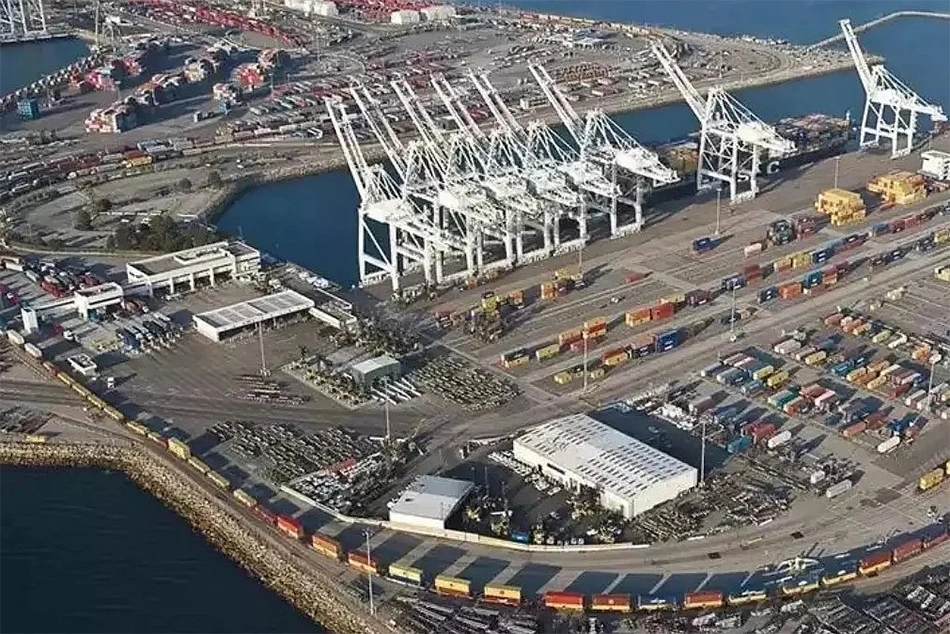
[A bird's eye view of Chabahar Port]
Based on recent reports, the narrative surrounding India’s involvement in Iran’s Chabahar port is complex, involving strategic balancing against U.S. sanctions rather than a simple “surrender.”
The claim that India is yielding to external pressure (described as “political cowardice”) stems from the difficulties in balancing its strategic partnership with the U.S. while maintaining ties with Iran to ensure regional connectivity and counter-weight China.
Is India calculating profits and losses, and getting the sum wrong?
The word surrender implies resistance. It suggests that a battle was fought, pressure applied, lines drawn, and finally a retreat forced by overwhelming odds. What happened to India’s Chabahar Port project under Narendra Modi does not qualify for that word. There was no resistance. No public defiance. No strategic argument made to the Indian people or the world. What unfolded instead was something far more disturbing: pre-emptive submission, executed quietly, bureaucratically, and without courage.
Chabahar was never a marginal infrastructure project. It was one of the rare moments in the recent Indian foreign policy where ambition met geography. Situated on Iran’s southeastern coast, the port gave India direct access to Afghanistan and Central Asia, bypassing Pakistan entirely. It offered an alternative trade and transit route, strengthened India’s hand in the International North–South Transport Corridor, and counterbalanced China’s Gwadar Port just across the border in Pakistan. Chabahar was India acting like a serious regional power with long-term vision.
And yet, when the United States tightened sanctions on Iran once again, the Modi government did not argue, resist, negotiate publicly, or even explain. Indian officials quietly stepped back. Operational involvement slowed, leadership withdrew, and India effectively reduced itself from a strategic stakeholder to a silent observer. No parliamentary debate followed. No public statement acknowledged the retreat. The project simply faded from view.
This is not diplomacy. It is political cowardice.
For years, the Modi government has wrapped itself in the language of strength. India, we are told, is no longer hesitant or apologetic. It is atmanirbhar, decisive, fearless, a rising global power that does not bend. But when faced with a real test of strategic autonomy – US sanctions dictating India’s sovereign economic and geopolitical choices – that rhetoric collapsed. The same leadership that centralises power domestically and brooks no dissent proved incapable of standing up internationally.
Sanctions, it must be stated plainly, are not international law. They are instruments of American power. Countries resist them all the time when vital interests are at stake. China does not ask for waivers; it builds. Russia absorbs sanctions and recalibrates. Even smaller nations negotiate space when their core interests are threatened. India did not even attempt a visible challenge. It chose silence, hoping compliance would go unnoticed.
That choice exposes the hollowness of India’s much-touted “strategic autonomy.” Autonomy that exists only until Washington disapproves is not autonomy at all. It is alignment masquerading as independence.
Defenders of the government argue that India cannot afford to antagonise the United States because of defence ties, technology transfers, and trade. That argument itself is an admission of weakness. A country that claims global leadership but cannot protect a single strategic port project without external approval is not a leading power, it is a dependent one. True partnerships allow disagreement. What India displayed was not partnership but deference.
The consequences of this retreat are not abstract. Iran has learned a clear lesson: India is an unreliable partner when pressure mounts. Central Asian countries and Afghanistan see India’s connectivity promises as conditional and fragile. China, meanwhile, watches carefully. Beijing understands that while India hesitates, space opens up. Gwadar advances. The Belt and Road Initiative expands. Influence is consolidated not through speeches, but through persistence.
Perhaps the most troubling aspect of the Chabahar episode is the complete absence of democratic accountability. There was no discussion in Parliament. No explanation to the public. No acknowledgement that a flagship strategic project had been effectively stalled. Strong governments explain difficult decisions. Weak governments hide them. Silence here was not prudence; it was evasion.
This episode fits into a larger pattern. India reduced oil imports from Iran despite favourable terms, again under US pressure. It has muted its voice on Palestine and Gaza, aligning itself carefully with Western and Israeli interests. It speaks the language of multipolarity while increasingly behaving like a junior partner in a US-centric order. The contradiction is stark: assertive nationalism at home, cautious compliance abroad.
This is not pragmatism. Pragmatism involves making hard choices openly and defending them honestly. What happened with Chabahar was indecision dressed up as caution, fear disguised as realism. India could have negotiated harder for exemptions, created alternative financial mechanisms, coordinated with other affected powers, or at the very least publicly asserted that regional connectivity and humanitarian access to Afghanistan were legitimate sovereign interests. Instead, it chose the path of least resistance: retreat without acknowledgement.
History does not judge nations by how safely they behaved, but by whether they defended their interests when it mattered. Strategic infrastructure projects are not evaluated within election cycles. They are measured over decades. When future historians examine this moment, they will not ask whether sanctions were inconvenient. They will ask whether India had the courage to stand its ground.
Chabahar represented more than a port. It represented intent. Walking away from it quietly, timidly, without resistance signals a deeper malaise in India’s foreign policy under Narendra Modi. The posture is loud, but the spine is weak. The rhetoric is muscular, but the resolve falters when confronted by real power.
This is not surrender. Surrender requires a fight.
What we witnessed instead was political cowardice. And, a nation that retreats without protest will eventually discover that there is nothing left to retreat from.
[Dr. Ranjan Solomon has worked in social justice movements since he was 19 years of age. After an accumulated period of 58 years working with oppressed and marginalized groups locally, nationally, and internationally, he has now turned a researcher-freelance writer focussed on questions of global and local/national justice. Since the First Intifada in 1987, Ranjan Solomon has stayed in close solidarity with the Palestinian struggle for freedom from Israeli occupation, and the cruel apartheid system. He has initiated solidarity groups in India, Afro-Asia-Pacific alliance, and at the global level. Ranjan Solomon can be contact ranjan.solomon@gmail.com.]
Follow ummid.com WhatsApp Channel for all the latest updates.
Select Language to Translate in Urdu, Hindi, Marathi or Arabic