US withdrawal from Global Organisations demands more than criticism
The United States’ decision to withdraw from more than sixty international organisations is not an administrative reshuffle, nor a routine assertion of sovereignty, it is a political declaration of abandonment
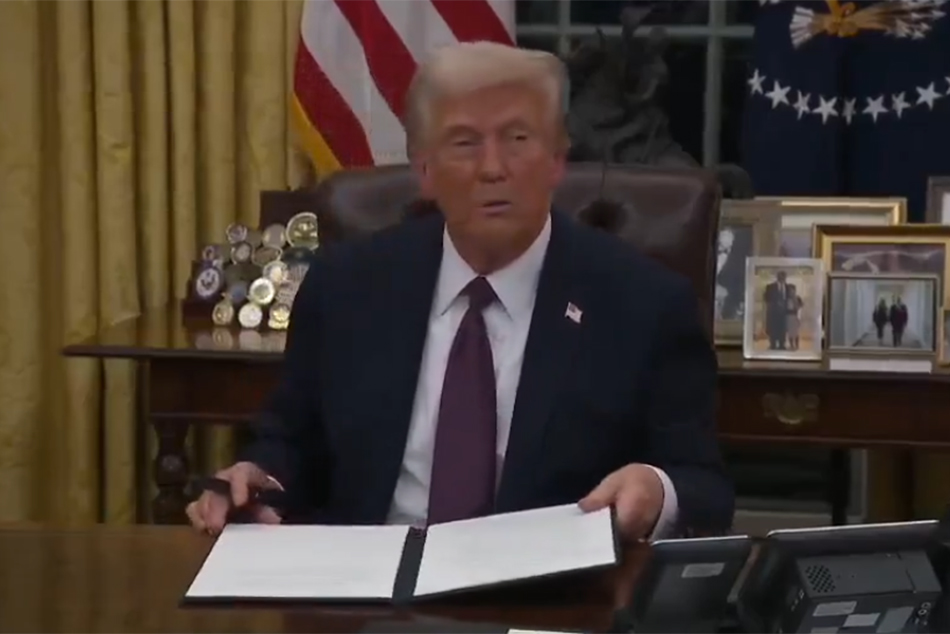
The United States’ decision to withdraw from more than sixty international organisations is not an administrative reshuffle, nor a routine assertion of sovereignty. It is a political declaration of abandonment — an unmistakable signal that the world’s most powerful nation no longer wishes to participate in collective global responsibility unless it dictates the terms.
The White House justified the move by claiming these bodies promote “radical climate policies, global governance, and ideological programs that conflict with U.S. sovereignty and economic strength.” Stripped of euphemism, this is a rejection of multilateralism itself. Climate cooperation, international law, humanitarian norms, and shared global governance are now framed as threats to American power.
This moment demands more than criticism. It demands a counter-strategy.
If the United States chooses to walk away from the world, then the world must seriously consider walking away from the United States.
“Isolate the United States” refers to policies of isolationism, meaning non-involvement in foreign conflicts and alliances, historically strong in the U.S. (especially 1930s) but challenged by global interconnectedness, leading to debates about U.S. power, economic impact, and the desire for either international cooperation or self-focused “America First” approaches. Some analysts suggest recent policies are isolating the U.S., while others argue genuine isolation is impossible and global unity is needed to counter U.S. actions.
Withdrawal Is Not Neutral — It Is an Act of Sabotage
International organisations exist precisely because unilateral power is dangerous. From health and labour to climate, refugees, culture, and human rights, global bodies are imperfect attempts to manage shared problems that no nation — especially no superpower — should dominate or abandon at will.
When the United States withdraws, it does not simply “exit.” It cripples institutions by defunding them, delegitimising them, and pressuring allies to follow suit. We have seen this before: the gutting of UNESCO, threats to the WHO, hostility toward the ICC, disdain for climate frameworks, and open contempt for UN mechanisms that refuse obedience.
This latest mass withdrawal fits a longer pattern: participate only when dominant, exit when challenged. Such behaviour is not leadership. It is vandalism of the global commons.
From Multilateralism to Imperial Exceptionalism
The United States has long insisted on a so-called “rules-based international order.” Yet it exempts itself from those rules whenever they constrain its military, corporations, or allies. It refuses to recognise the jurisdiction of the International Criminal Court while threatening judges who investigate U.S. or Israeli crimes. It demands compliance with international law from adversaries while violating it through illegal invasions, drone assassinations, sanctions, and occupations. By withdrawing from dozens of international organisations, Washington is no longer even pretending. It is declaring openly: rules are for others.
At that point, the global community must ask a hard question:
Why should the world continue to centre institutions, economies, currencies, and norms around a state that rejects mutual obligation?
Genocide, Gaza, and the Collapse of Moral Authority
The timing of this withdrawal is not incidental. It comes amid unprecedented global outrage over Israel’s assault on Gaza — an assault enabled, armed, financed, and diplomatically protected by the United States.
As international agencies document mass civilian deaths, starvation, and the destruction of an entire society, Washington has chosen not introspection but retreat. Instead of engaging with global institutions raising alarms, it withdraws from them. Instead of submitting to scrutiny, it punishes scrutiny.
This is not merely hypocrisy. It is strategic evasion of accountability. A power that enables mass atrocity and then abandons the institutions meant to prevent such crimes has forfeited any claim to moral leadership.
Sanctions, Climate, and the Weaponisation of Exit
The United States already weaponizes participation; now it weaponizes withdrawal. Sanctions regimes – imposed unilaterally or coercively – have devastated civilian populations from Venezuela to Iran to Afghanistan. Climate negotiations are undermined when the world’s largest historical emitter treats environmental cooperation as optional. Labour, health, and cultural bodies suffer when funding is yanked to enforce ideological conformity.
Exit becomes leverage. Absence becomes threat. This is how empires behave in decline: not by reforming systems they helped shape, but by burning bridges when those systems no longer serve them.
The World Must Respond Collectively. The danger is not only what the United States has done, but what others may tolerate. If withdrawal carries no cost, it becomes precedent. If sabotage is rewarded with silence, multilateralism collapses into theatre. If one state can opt out of global responsibility while retaining global privilege, then international law becomes fiction. This is where Boycott USA moves from slogan to strategy. Not emotional, not impulsive – but principled, calibrated, and collective.
What Boycott and Isolation Can Mean
A global response does not require mimicry of U.S. behaviour, but it does require resolve. Measures can include:
- Diplomatic distancing from U.S.-led forums that undermine multilateralism
- Economic divestment from U.S. arms manufacturers and fossil-fuel corporations
- Academic and cultural refusal to legitimise imperial narratives
- Strengthening South–South institutions independent of U.S. dominance
- De-dollarisation efforts to reduce vulnerability to American coercion
Isolation is not revenge. It is boundary-setting
It is not Anti-American, But Anti-Abandonment This is not a call against the American people, many of whom suffer under the same system of militarism, inequality, and corporate capture. It is a call against a state apparatus that treats global cooperation as expendable and global lives as collateral.
When a nation withdraws from the world, it cannot expect the world to continue business as usual.
A Line Has Been Crossed
Withdrawing from sixty international organisations is not just policy. It is a worldview — one that rejects shared fate in favour of domination, cooperation in favour of coercion, and accountability in favour of impunity. At such moments, history demands clarity.
The global community must say: If you abandon the world, the world will no longer centre you.
To isolate the United States politically, economically, and morally – until it recommits to international responsibility – is not extremism. It is collective self-preservation.
[Dr. Ranjan Solomon has worked in social justice movements since he was 19 years of age. After an accumulated period of 58 years working with oppressed and marginalized groups locally, nationally, and internationally, he has now turned a researcher-freelance writer focused on questions of global and local/national justice. Since the First Intifada in 1987, Ranjan Solomon has stayed in close solidarity with the Palestinian struggle for freedom from Israeli occupation, and the cruel apartheid system. He has initiated solidarity groups in India, Afro-Asia-Pacific alliance, and at the global level. Ranjan Solomon can be contact ranjan.solomon@gmail.com.]
Follow ummid.com WhatsApp Channel for all the latest updates.
Select Language to Translate in Urdu, Hindi, Marathi or Arabic