UPI Integrated Credit Cards: The Next Big Thing in India
A UPI-integrated Credit Card is a card linked to a UPI app, enabling you to pay merchants by scanning a QR code instead of swiping a physical card.
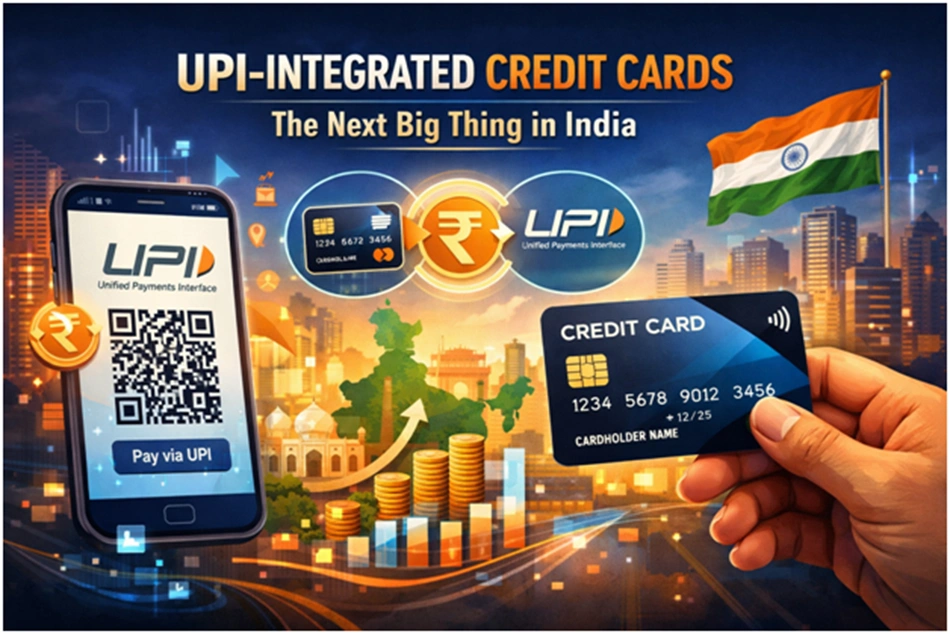
India's digital payment system has grown rapidly. The Unified Payments Interface (UPI) now handles billions of transactions nationwide on a regular basis. Originally a simple bank transfer system, UPI has become essential for daily payments.
The most recent update allows users to link Credit Cards directly with UPI applications. This change makes it important to understand Credit Card UPI charges and their impact on spending. As more people search for the best UPI Credit Card, having clear information is essential.
The Rise of UPI in India's Digital Payments
UPI was created by the National Payments Corporation of India (NPCI) to enable instant, real-time money transfers between bank accounts. Since its launch, it has grown to become the most popular digital payment method in India. Today, UPI is used for a wide range of daily transactions, such as:
● Paying at local shops and street vendors using QR codes
● Settling utility bills, paying fees, and other routine expenses
● Making purchases on e-commerce websites
● Splitting bills between friends and family
The NPCI has continued to develop UPI's capabilities with new features. The option to link Credit Cards to UPI is one such development, creating new ways for people to spend and manage their money digitally.
What UPI-Integrated Credit Cards Are
A UPI-integrated Credit Card is a card linked to a UPI app, enabling you to pay merchants by scanning a QR code instead of swiping a physical card.
Unlike standard UPI payments that draw funds from a bank account, these transactions are charged to your Credit Card account. This allows you to use your Credit Card at many merchants that accept UPI payments, not just those with card machines.
How UPI Credit Card Transactions Work
Using a Credit Card through UPI involves the following steps:
- Link your Credit Card: Open a UPI application that supports Credit Card payments. Go to the payment settings and add your Credit Card details. You will need to complete a verification process.
- Make a payment: When paying a merchant, choose your linked Credit Card as the payment method. Scan the merchant's UPI QR code and confirm the transaction.
The payment amount will be added to your Credit Card statement, not taken from your bank account. This transaction will be included in your regular Credit Card billing cycle. It is subject to the card's interest-free period, minimum payment rules, and any other standard fees.
Understanding Credit Card UPI Charges
Not all UPI transactions made with a Credit Card are free of charge. You may be charged in the following situations:
● If payments are made to certain types of businesses
● If the card network, such as RuPay, or the UPI platform charges a processing fee
● If the bank that issued your Credit Card has its own fees for UPI transactions
Before using your Credit Card for UPI payments, carefully review the terms and conditions of both your UPI app and your Credit Card provider. Credit Card UPI charges can vary depending on the card type, payment network, and the business you are paying.
How to Identify the Best UPI Credit Card
When selecting a Credit Card for UPI payments, consider the following key factors:
● UPI App Compatibility: Ensure your preferred UPI app supports the Credit Card. Not all cards can be linked to every app.
● Rewards and Cashback: Look for cards that provide reward points or cashback on UPI transactions. For example, certain cards, such as the HSBC RuPay Cashback Credit Card, are enabled for UPI payments and may offer additional rewards.
● Transaction Limits: Be aware of daily and per-transaction limits for UPI payments, which can differ from your standard card limits.
● Fee Transparency: Choose a card provider that clearly explains Credit Card UPI charges to avoid unexpected costs.
● Statement Details: A card that provides detailed statements makes it easier to track your spending.
The best UPI Credit Card for you will depend on your spending habits, the merchants you use, and the rewards or benefits you value most.
The Future of Credit-Based UPI Payments in India
Credit-enabled UPI payments are still in the early stages, but their adoption is growing steadily. Banks, card networks, and financial technology companies are collaborating to improve the user experience and make it more widely available.
Future developments that are likely to influence this area include:
● Broader acceptance of UPI credit payments across more types of merchants.
● An increasing number of Credit Cards becoming compatible with UPI applications.
● Greater transparency regarding fee structures as the system develops.
● Better integration with loyalty schemes and digital banking services.
As these changes occur, credit-based UPI transactions may become as commonplace as debit-based payments are today.
Conclusion
Credit Cards linked to UPI blend the ease of digital payments with the flexibility of credit. This gives users more options for managing daily expenses without needing a physical card terminal.
It is important to understand the associated fees and limits before linking a card to a UPI app, as these can vary. By comparing features and terms, users can make informed choices. As India's payment system continues to evolve, credit-based UPI is set to become an important part of its future.
Follow ummid.com WhatsApp Channel for all the latest updates.
Select Language to Translate in Urdu, Hindi, Marathi or Arabic