I just witnessed a municipal corporation election at my native place in Shiekhpura, Bihar where my friend Pwan’s wife have won.
Today I got a call from Pawan and he said he is in Bhutan now huddled into a star hotel along with 13 other winners. He seem to be pleased with himself and called to break the news that I already got before along with it that he was absconding from the place.
I saw the electoral campaign of a municipal election from very close quarters it makes me understand the working of the Indian democratic process at the grass root level and the way the electoral process works at the bottom of the Indian democratic pyramid.
Well Municipal Corporation is a British gift and each town or a city is divided into several wards covering few localities and based on electoral list. The bifurcation of ward is done based on the electoral size and normally each ward comprises of 25,000 or more eligible voters. A number of candidates contest from each ward.
The new trend in India is that most of the seats of municipal ward are reserved for female candidate, perhaps it’s an effort by the government towards women empowerment.
However, in reality women are just for namesake candidates and it is the husbands of the women who actually call the shots and in reality contests the election in the wife’s name.
The second feature of such election is this is controlled by some heavyweight politicians of the city. He belongs to some political party, and he pulls the strings from behind, fielding his own candidate from each ward.
After the election is over and the head count takes place, the one who can get the maximum number of the winning candidate to its side, appoints a candidate to become the chairman of the municipal corporation. By doing so he actually controls the funds that come into the municipal corporation in the form of property tax water tax etc.
No wonder there is a fierce competition to win the election and a huge amount is spent on the candidates and on the electorates to woo them to vote for their candidate. Those who pull the strings cough of all the expenses of the electoral campaign.
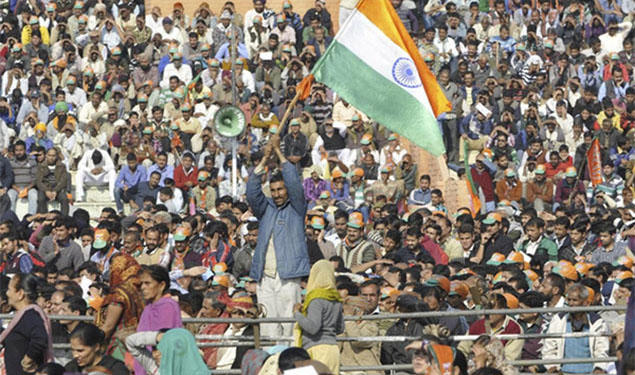
The electoral process begins with the filing of the nomination by the female candidate. The husband takes his wife for doing that formality and normally it takes place in a huge procession to reach the electoral office. It’s a big show of strength and the one who can get the largest number of volunteers assembled are expected to win. People are ferried in farm tractors, small trucks, cars jeeps and auto rickshaws to the electoral office.
After the nomination is over, the real candidate’s goes back to the house and remain indoors and monitor her campaign. It’s the husband who takes the driving seat and controls the election campaign.
Normally it could be about 500 volunteers’ surround the probable winning candidate. They are mix of juvenile boys, old ladies and middle aged men. They get wage ranging from 100 to 500 rupee daily, plus two square meal and unaccounted number of tea and cool drinks.
Their job is to report in the morning and go around in procession shouting slogans for the candidate and asking votes for her. They hold placards and distribute handbills and stick posters. Some places a vehicle accompany the procession and a pre-recorded tape is played asking for vote for the candidate.
In between the electoral message, the vehicle belt out a rocking Bhojpuri number and the young volunteers erupts into rustic dancing on its earthy tune. This electrifying moment is watched by many passers-by as they stand to watch the fun.
In Shiekhpra, its Vijay Samrat and Shambhu Yadav, the two emerging names in political arena are slugging it out to control the municipal cooperation election. Both belong to same locality and both fielded their wives against each other.
The latest news is; it’s Shambhu’s wife who has won the election and she is touted to be the chairman of Sheikhpura’s municipal corporation.
Shambhu Yadav in order to avoid any horse trading by his rival has huddled 14 of its winning candidate’s husbands into Bhutan. More than that, he has given each of candidates 5 lakhs rupees to keep their loyalty intact to him.
My friend Pawan who called me today was narrating his experiences at Bhutan. There was a sense of jubilation sparkle in his voice and he seems to be rejoicing at the place where he was staying.
I remember when I was talking to him during the campaign about where he will go after winning the election and what would be his asking rate, he just smiled and giggled at me then, I knew he will win anyway….
[Syed Ali Mujtaba is a journalist based in Chennai. He comes from Shiekhpura, Bihar and just returned from the election scene. He can be contacted at syedalimujtaba@yahoo.com]
 Post Comments


 | Quick links