Owaisi, Azad's Dalit-Muslim Alliance and UP Electoral Mathematics
Asaduddin Owaisi and Chandrashekhar Azad's Dalit-Muslim alliance, called the Samajik Parivartan Morcha, announced in Lucknow which is a non-NDA, non-INDIA front, is making it a triangular contest in Uttar Pradesh, the most populated state of India
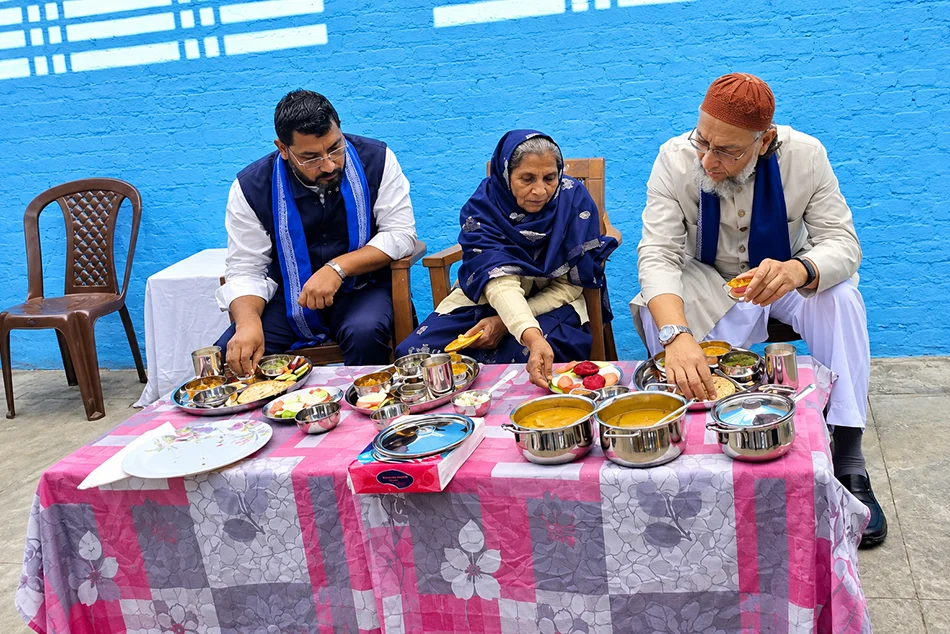
The alliance between Asaduddin Owaisi, Chief of All India Majlis-e-Ittehadul Muslimeen (AIMIM), and Chandrashekhar Azad, President of Azad Samaj Party (Kanshiram), on November 12, 2026, is a significant political development in Uttar Pradesh.
Owaisi and Azad's Dalit-Muslim alliance, called the Samajik Parivartan Morcha, announced in Lucknow which is a non-NDA, non-INDIA front, is making it a triangular contest in Uttar Pradesh, the most populated state of India. The alliance will contest all 403 seats in the Assembly elections going to be held in 2027.
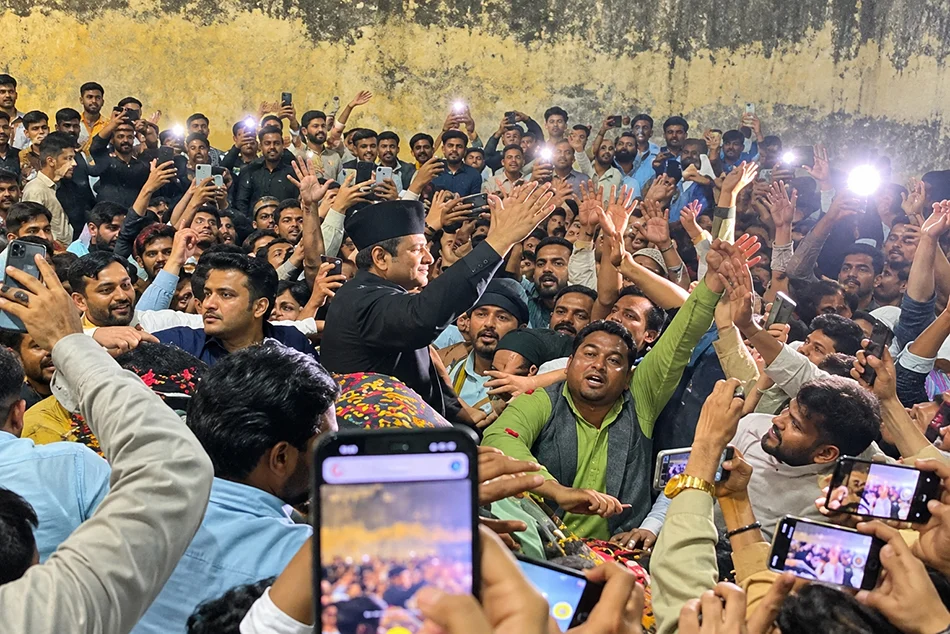
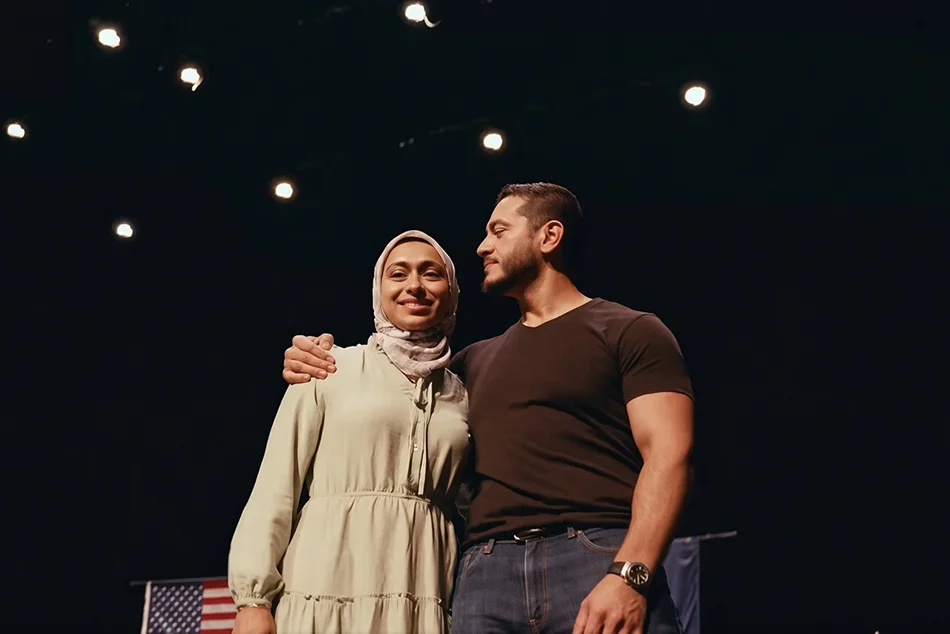
The Azad and Owasi have made joint appearances in a Saharanpur press conference on November 21, 2026, where Owasi announced that Chandrashekhar Azad will be the Chief Ministerial candidate of the alliance. There, Azad announced that ‘Samajik Parivartan Morcha’ will be the 'Third Front' in Uttar Pradesh.
Electoral Mathematics
According to the 2011 Census, Muslims make up 19.26% of UP's total population. Uttar Pradesh has the largest Muslim population of any state in India. As far as Dalits are concerned, the 2011 Census says Dalits (officially classified as Scheduled Castes) make up 20.69% of Uttar Pradesh's total population (38,483,967 people).
So, if we add 19.26% to 20.69% it makes 39.95%. It is known that governments are formed with 35% or above in UP. So, if we go by this logic, the Dalit- Muslim alliance can win the electoral battle in UP, if we go by the rule of numbers in the electoral game.
However, this is not as easy as it sounds on paper. There are two other major political contenders in the game. The Samajwadi Party and Congress plus others alliance and the BJP and its allies vying for the same electorates that the Dalit- Muslim alliance is expecting to gain. So we leave this puzzle to the election results to decide who among the three will take the crown.
The main thing about the Dalit- Muslim alliance is whether Muslim political parties can maintain their separate identity without merging into a larger formation.
Indian Muslims, since independence, have been ardent supporters of the Indian National Congress. This was because Congress promised to protect them from ‘Wolves.’ Muslims mortgaged their support to the Congress, only for their safety and security. However, when communal riots started taking place in different parts of India, Muslims started questioning the Congress's credentials as their messiah. Muslims shifted their allegiances to the regional parties like Samajwadi and Bahujan Samajwadi in UP, the RJD and the JDU in Bihar, and the Trinamool Congress in West Bengal.
The regional parties, instead of looking at the welfare of the Muslims, tried to develop their own caste support base, leaving Muslims to fend for themselves. When the BJP came with its agenda of majoritarian politics, Muslims had no space in majoritarian politics.
Current Political Scene in Uttar Pradesh
The current political scene in Uttar Pradesh is dominated by majoritarian politics, where the socialist oriented politics of other political groups are relegated to a secondary position.
However, the Ram Temple donation scam has changed the perception of the people. This is coupled with the SIR electoral fraud, which has dented the BJP’s strength of majoritarian politics. So much so that an electorate on camera was heard saying, ‘even if Bhagwan Ram comes to contest the election, he will be defeated.’
It is in the context the majoritarian politics and the new move of Muslim politics has to be understood. The lesson so far learnt is that Indian Muslims have gained nothing by aligning either with the Congress or with the regional parties. They have been used as a vote bank and thrown into the dustbin when their utility is over.
What is seen is if Muslims organise politically under their own leadership, their politics is frequently described as communal. If they align with parties led by the Hindu majority, they are expected to merge their identity in the name of secularism. This framing creates a false choice for Muslims. They can exist with communal political identity, or they are ‘Mr. Nobody’ in a broader secular coalition.
Muslim politics in India since independence has been framed in a way that leaves little room for being an independent political group. At its heart is a crucial question: does a Muslim-led political party necessarily become communal, or should its character be judged by its political programme and constitutional commitments?
This dilemma to some extent is resolved in Kerala politics, where the Congress and the Indian Union Muslim League came in coalition for a shared political programme, maintaining their independent political identity. Owasi and Chandrashekhar Azad are pursuing the same experiment by forming a new political front, Samajik Parivartan Morcha, in UP.
The new strategy of an independent Muslim-led party in alliance with a Dalit political party has never been experimented with in North India. However, it remains to be seen whether the Dalit- Muslim alliance can be a game changer in UP.
It goes without saying that Muslim politics cannot attain power solely on the strength of Muslim support, and it has to get connected with sections of the majority community in the form of alliances to achieve its political ambitions.
However, there are issues related to the internal social composition of its political constituencies. Within the Muslim society there are various caste groups; pasmanda Muslims, gender and social inequalities, etc. Their presence is evident as different interests groups within the community. As such they cannot be lumped together in a larger box called Muslim identity. Similarly, the question remains whether Azad’s claim to represent all the different voices with in the Dalit community is questionable.
However, the fact remains that independent political identity and participation in wider coalitions is something unique. This is possible on shared political programmes without losing their independent political identity. So the alliances between Owaisi and Azad have to be understood in terms of the interests of their respective support bases and their political programmes.
The issue, therefore, is not whether Muslims should have a separate political identity; more important is whether a democratic system can accommodate independent political voices while ensuring that they remain committed to constitutional equality, pluralism and the rights of others.
The question of alliances, therefore, does not by itself negate the case for independent Muslim political identity. The distinction between independent representation and communal politics is central to this debate.
[The writer, Syed Ali Mujtaba, is a journalist based in Chennai. He can be contacted at syedalimujtaba2007@gmail.com. Views are personal.]
Follow ummid.com WhatsApp Channel for all the latest updates.
Select Language to Translate in Urdu, Hindi, Marathi or Arabic