IIAD Organizes Mental Health & Wellbeing Sessions Under U-LEAD
India Islamic Academy Deoband (IIAD) organised two dedicated online awareness sessions on mental health and psychological well-being under its flagship U-LEAD (Ulama Leadership, Empowerment & Development) initiative.
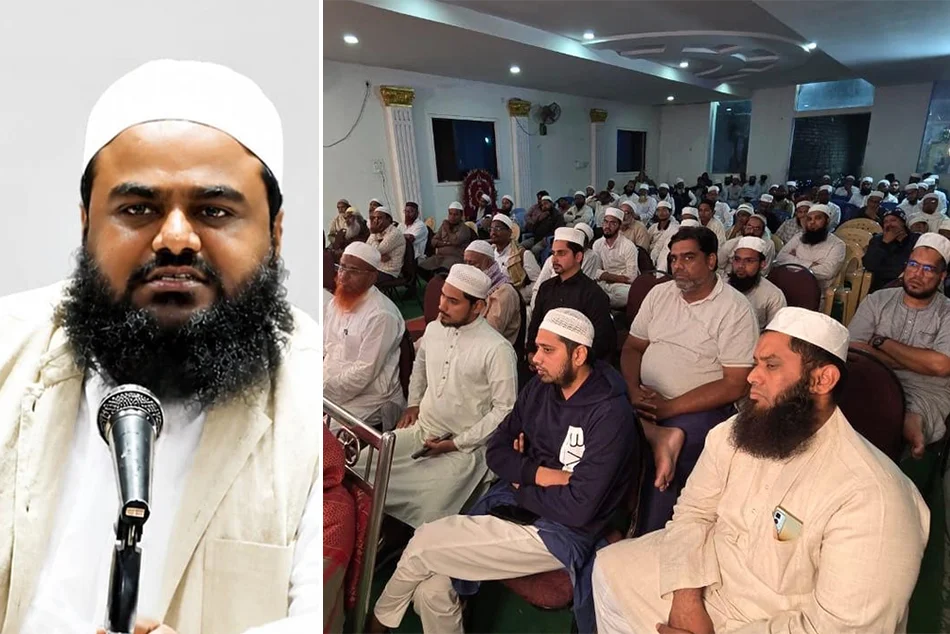
[Maulana Mehdi Hasan Aini Qasmi, Founder & Director of IIAD addressing the gathering. (R) Ulama, Huffaz, Imams and young people attending men’s session.]
Bhopal: India Islamic Academy Deoband (IIAD) organised two dedicated online awareness sessions on mental health and psychological well-being under its flagship U-LEAD (Ulama Leadership, Empowerment & Development) initiative.
The programmes brought together more than 300 Ulama, Huffaz, Imams and young people in a dedicated men's session, alongside 85 working professional women, college-going students and homemakers in a separate women's session.
The sessions focused on the growing importance of mental health awareness, emotional resilience, stress management and holistic well-being, creating platforms for meaningful engagement with contemporary public health concerns among religious scholars, community leaders, young people and working professionals.
The programmes were organised under the leadership of Maulana Mehdi Hasan Aini Qasmi, Founder & Director of India Islamic Academy Deoband and Chairman of Deoband Educational & Research Foundation (DERF), as part of the Academy's broader commitment to connecting Islamic education with contemporary knowledge, public health awareness, professional development and leadership empowerment.
Women's Session
The dedicated women's session, titled "Mental Health Beyond Borders: Stress, Burnout and Psychological Well-being," brought together 85 working professional women, alongside college-going students and homemakers, for an expert-led discussion on mental health, emotional resilience and personal well-being.
The session was organised under U-LEAD FOR GIRLS, a dedicated vertical of IIAD's flagship U-LEAD initiative, under the leadership of Mrs Khadeeja Hasan Mominati, Co-Founder of India Islamic Academy Deoband.
U-LEAD FOR GIRLS reflects IIAD's commitment to creating meaningful opportunities for women and girls through education, leadership development, professional exposure, contemporary awareness and personal empowerment. It particularly focuses on Aalimat, college-going students, working professionals and homemakers, recognising their diverse educational, professional, family and social responsibilities.
Expert Address by Ms Aysha Zaidi
Ms Aysha Zaidi, Master of Public Health (MPH), London, and Public Health Professional, served as the resource person and delivered an expert presentation on the growing importance of mental health awareness, particularly among women balancing professional careers, education, family responsibilities and personal aspirations.
Drawing on her public health background, she explained that mental health is an integral component of overall health and well-being. She discussed how prolonged stress, anxiety, emotional exhaustion and burnout can affect physical health, concentration, productivity, relationships and quality of life.
Focusing on the experiences of working women, she highlighted the challenges of managing multiple responsibilities, including workplace expectations, professional pressures, family commitments, work-life balance and insufficient time for personal well-being. She explained that continuous exposure to stress without adequate rest, emotional support and healthy coping mechanisms can gradually lead to burnout and affect both personal and professional functioning.
She also addressed the concerns of college-going students, drawing attention to academic pressure, examination-related stress, uncertainty about career choices, social expectations and anxiety about the future. She emphasised the importance of recognising emotional difficulties at an early stage and developing healthy approaches to managing academic and personal challenges.
During her presentation, Ms Zaidi highlighted five important dimensions of women's mental and physical well-being:
- Emotional Awareness: Understanding, acknowledging and accepting one's emotions without self-judgement. She encouraged participants to recognise their emotional needs and communicate them constructively.
- Prioritising Self-Care: Maintaining healthy daily routines, adequate sleep, balanced nutrition, physical activity and appropriate personal boundaries. She highlighted that self-care should be recognised as an essential aspect of well-being rather than a luxury.
- Building Emotional Resilience: Developing practical strategies to manage stress, navigate difficult circumstances and respond constructively to challenges. She encouraged participants to value consistent progress rather than place unrealistic expectations of perfection on themselves.
- Faith and Social Connection: Recognising the positive role of spiritual reflection, meaningful relationships, family support and healthy community connections in strengthening emotional well-being. She highlighted the importance of supportive environments where women can express their concerns without fear of judgement.
- Taking Charge of Health: Developing awareness of preventive healthcare, accessing reliable health information and seeking timely guidance from qualified healthcare professionals when required.
She further discussed the importance of reducing the stigma surrounding mental health and creating supportive spaces where women and girls feel comfortable discussing emotional challenges and seeking professional assistance. She clarified that spiritual practices and social support can complement professional mental healthcare but should not replace appropriate clinical assessment and treatment.
Session Moderation
The women's session was moderated by Ms Deeba Firdaus Qasmiya, Deputy Director, India Islamic Academy Deoband, who facilitated the discussion, coordinated participant engagement and ensured an interactive learning environment.
Through U-LEAD FOR GIRLS, IIAD seeks to promote an integrated approach to women's empowerment, bringing together Islamic values, contemporary knowledge, mental health awareness, professional competence and leadership development.
Men's Session
The second dedicated session was organised specifically for men and witnessed the participation of more than 300 individuals, including Ulama, Huffaz, Imams and young people.
The session focused on the importance of mental health awareness, emotional resilience and personal well-being among individuals engaged in religious scholarship, teaching, community leadership, education and other professional and social responsibilities.
It provided an important platform to recognise the pressures and challenges that religious scholars, Imams, Huffaz and young people may encounter while fulfilling their academic, spiritual, professional, family and community responsibilities.
The discussion highlighted the importance of recognising stress, maintaining emotional balance, developing healthy coping mechanisms and creating supportive environments in educational and religious institutions. It also emphasised the need to encourage constructive conversations about psychological well-being and reduce the stigma associated with seeking professional guidance when necessary.
By engaging Ulama, Huffaz, Imams and young people in mental health awareness, IIAD sought to extend contemporary public health knowledge to important religious and community leadership networks.
The participation of more than 300 individuals reflected the relevance of integrating personal well-being and contemporary awareness into broader programmes of religious education, leadership development and community empowerment.
Special Address by Maulana Mehdi Hasan Aini
Maulana Mehdi Hasan Aini Qasmi, Founder & Director of India Islamic Academy Deoband and Chairman of Deoband Educational & Research Foundation (DERF), delivered a special address highlighting the importance of mental health, emotional well-being and personal development in building confident, capable and socially responsible individuals and leaders.
In his address, he emphasised that empowerment must extend beyond academic qualifications and professional opportunities to include emotional resilience, psychological well-being, leadership capabilities, self-confidence and the ability to make informed decisions.
He observed that individuals today navigate multiple responsibilities across education, professional careers, family life, religious commitments and community engagement. Therefore, awareness of mental health and holistic well-being must become an integral part of contemporary educational and leadership development initiatives.
Connecting the discussions with the vision of IIAD's flagship U-LEAD initiative, he explained that leadership development cannot be limited to institutional positions or professional achievements. It must also involve developing individuals who possess intellectual clarity, emotional maturity, ethical values, communication skills, decision-making abilities and the confidence to contribute meaningfully to society.
He further highlighted that U-LEAD seeks to bridge the gap between traditional Islamic education and contemporary knowledge by creating opportunities for Ulama, Aalimat, young people and working professionals to engage with modern disciplines, public health awareness, leadership practices and emerging social challenges.
Speaking about the dedicated U-LEAD FOR GIRLS vertical, he underscored the importance of providing women and girls with accessible platforms for learning, dialogue, professional exposure and personal development. He stressed that Aalimat, college-going students, homemakers and working professionals should have opportunities to strengthen their capabilities, understand contemporary challenges and participate confidently in educational, professional and community leadership.
He also emphasised that faith, spiritual reflection and Islamic values can provide important sources of strength, purpose and emotional stability. At the same time, awareness of mental health, expert guidance and timely professional support must be encouraged without stigma or hesitation.
U-LEAD: Building Leadership and Empowering Communities
The programmes form part of IIAD's flagship U-LEAD (Ulama Leadership, Empowerment & Development) initiative, which aims to strengthen leadership, professional competencies, contemporary awareness and social engagement among Ulama, Aalimaat, youth and working professionals.
U-LEAD has trained more than 3,400 individuals to date, including Ulama, Aalimaat, young people and professionals, through leadership development, educational awareness and capacity-building programmes.
The initiative adopts a comprehensive approach to leadership development, recognising that effective leadership requires not only academic and professional knowledge but also communication skills, critical thinking, emotional intelligence, ethical awareness and the ability to respond constructively to contemporary social challenges.
Through expert-led sessions, interactive workshops, professional guidance and contemporary awareness programmes, U-LEAD seeks to create an enabling environment in which participants can strengthen their knowledge, confidence, leadership potential and capacity for meaningful social contribution.
The organisation of separate sessions for men and women reflects IIAD's commitment to providing accessible and context-sensitive learning opportunities while addressing the distinct responsibilities and challenges experienced by different groups.
Together, the two sessions recorded participation from more than 300 men and 85 working professional women, in addition to college-going students and homemakers whose numbers were not separately specified.
Follow ummid.com WhatsApp Channel for all the latest updates.
Select Language to Translate in Urdu, Hindi, Marathi or Arabic