The Danger BJP, AIMIM Political Discourse Poses
India does not need leaders who constantly remind citizens of religious divisions, it needs leaders who address unemployment, inflation, education, healthcare, poverty, inequality and the everyday concerns of ordinary people.
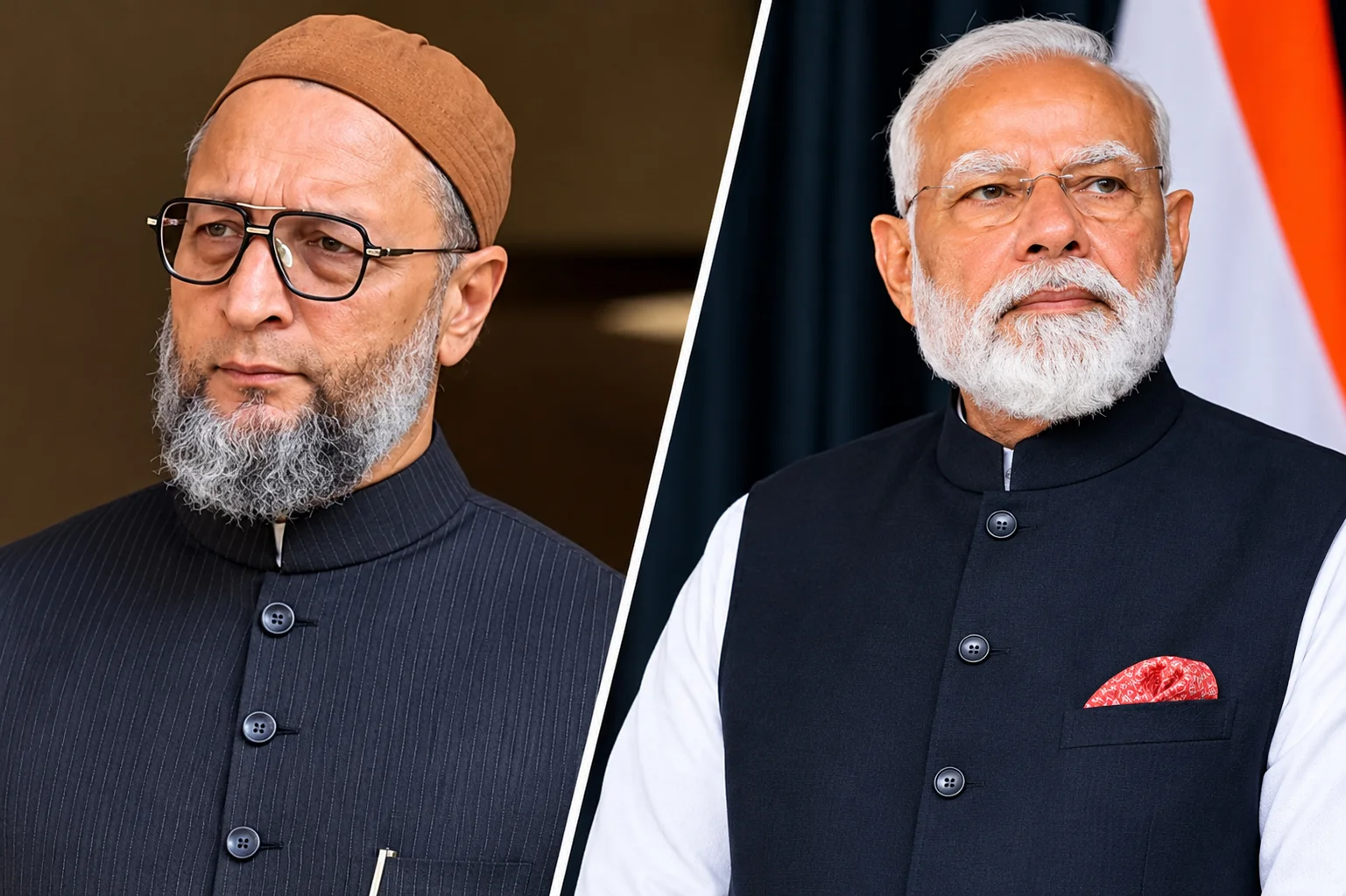
India’s democracy is facing a troubling problem: Political loyalty is increasingly being confused with unquestioning devotion to leaders. Supporters of Narendra Modi’s BJP are often labelled andh bhakts or the blind devotees while sections of Asaduddin Owaisi’s AIMIM followers are mocked as ghulams, or slaves, who blindly defend their leader. The terminology may differ, but the underlying concern is the same: What happens when political supporters stop questioning those they elect?
Blind loyalty is not exclusive to any religion, party or ideology. It can flourish wherever leaders are placed above criticism and political identity becomes more important than constitutional values, public welfare and accountability.
The BJP and AIMIM are very different political formations. The BJP is a national party with a Hindu nationalist ideological orientation, while the AIMIM has built its political appeal around Muslim political representation and identity. Their influence and responsibilities are not comparable in scale. Yet both deserve scrutiny when their political messaging reinforces religious divisions rather than bringing citizens together.
When politics becomes an exercise in division
The most disturbing feature of contemporary Indian politics is the repeated use of religious identity to mobilise voters.
During the 2024 general election campaign, Prime Minister Narendra Modi’s remarks in Rajasthan about Congress allegedly redistributing wealth to Muslims, whom he described as having more children and referred to as infiltrators, triggered widespread criticism. The Congress complained to the Election Commission, and the controversy received international attention. Modi subsequently denied that he was targeting Muslims.
This was not an isolated controversy. The India Hate Lab’s 2024 report documented 1,165 in-person hate-speech events targeting religious minorities, primarily Muslims and Christians. It reported that 1,147 events targeted Muslims, either exclusively or alongside Christians. The organisation also recorded 63 speeches by Modi that it classified as hate speech under its methodology. These are findings from an independent monitoring organisation, not judicial determinations, but their scale demands serious attention.
The consequences of such rhetoric extend beyond election campaigns. When political discourse repeatedly portrays one community as a threat to another, suspicion becomes normalised. Citizens begin to see neighbours through religious identities rather than as fellow Indians.
Owaisi and the Politics of Identity
Asaduddin Owaisi presents himself as a defender of Muslim rights and constitutional protections. There are legitimate issues concerning minority representation, discrimination and equal citizenship that deserve political attention. His parliamentary interventions have also invoked constitutional principles and challenged majoritarian politics.
However, the AIMIM and its leadership must also be questioned about whether identity-based mobilisation offers a lasting solution to the problems faced by ordinary Muslims. Political representation is important, but it cannot become an excuse for unquestioned loyalty. Muslims need quality education, employment, healthcare, security, economic opportunities and equal access to public institutions—not merely speeches that repeatedly remind them of their political or religious vulnerability.
Owaisi was reportedly served a police notice during his November 2024 campaign in Solapur, advising him not to use inflammatory words or hurt the sentiments of any community. The report did not identify a specific speech as a legal violation, and the notice should not be treated as proof of wrongdoing. Nevertheless, it illustrates why the language of political leaders must be scrutinised, irrespective of their party or community. The same standard must apply to every political leader: defending a community’s rights is legitimate; encouraging hostility towards another community is not.
Why Blind Political Loyalty is Dangerous
The labels andh bhakt and ghulam are often used as political insults, but the mindset they describe deserves serious attention. Blind loyalty turns supporters into defenders of everything their leaders do, regardless of the consequences.
When supporters dismiss every criticism of Modi as propaganda or justify every controversial statement by Owaisi, they weaken democratic accountability. The same double standards emerge when communal remarks by one’s preferred leader are defended as a response to provocation, while identical remarks by opponents are condemned. Protests by one’s own party are celebrated as democratic expression, while those by rivals are dismissed as politically motivated.
This attitude also pushes real public concerns into the background. Unemployment, inflation, education, healthcare and poor public services deserve more attention than endless arguments over religious identity. A young person seeking a job needs opportunities, not communal slogans; a struggling family needs economic relief, not political theatrics.
Supporting Modi, Owaisi or any other leader is a democratic right. But support must never become unconditional. Citizens must appreciate achievements, question failures and reject divisive rhetoric, irrespective of who makes it. Democracy needs questioning citizens, not political cheerleaders. Leaders are elected to serve the people, not to be worshipped by them.
Development cannot flourish in an atmosphere of hostility
India’s progress cannot be measured merely through economic statistics, infrastructure projects or election slogans. Genuine development requires social stability, public trust, equal opportunities, security and the rule of law. Without these foundations, economic growth cannot translate into lasting prosperity.
Investors need predictable institutions and a peaceful environment. Businesses cannot flourish amid social unrest and hostility. Students need quality education and equal opportunities, not an atmosphere of suspicion and discrimination. Above all, citizens must feel secure and confident that their constitutional rights will be protected, irrespective of their religion, caste, language or identity.
Communal polarisation undermines these foundations. When political discourse revolves around religious divisions, it weakens social trust, distracts attention from public concerns and creates uncertainty about the future. No nation can achieve its full potential when sections of its population feel threatened, excluded or treated as second-class citizens.
The Constitution offers a clear direction. Article 51A(e) calls upon citizens to promote harmony and common brotherhood across religious, linguistic and regional differences. Article 51A(h) encourages scientific temper, humanism and the spirit of inquiry and reform. These values must guide public life, not be sacrificed for political gains.
Choose Constitutional Values over Personality Cults
The BJP and AIMIM should not be treated as identical in ideology, power or political record. But neither should any party be exempt from scrutiny simply because its supporters believe it is defending their community. Modi and Owaisi must be judged by the same democratic standards: their policies, public statements, performance, respect for constitutional institutions and contribution to social harmony.
India does not need leaders who constantly remind citizens of religious divisions. It needs leaders who address unemployment, inflation, education, healthcare, poverty, inequality and the everyday concerns of ordinary people.
It would be wise enough to fellow Indians is simple: do not surrender your judgement to any political leader. Question the BJP, question AIMIM, question every party and hold every elected representative accountable. Do not allow religious identity to become more important than citizenship, or political loyalty to become more important than truth.
Andh bhakts and ghulams may be different labels, but blind loyalty is the same democratic danger. India needs informed citizens, not unquestioning followers. Our future depends not on how fiercely we defend our leaders, but on how firmly we defend our Constitution, our freedoms and our common humanity.
[The writer, Mohd Ziyauallah Khan, is a freelance content writer & editor based in Nagpur. He is also an activist and social entrepreneur, co-founder of the group TruthScape, a team of digital activists fighting disinformation on social media.]
Follow ummid.com WhatsApp Channel for all the latest updates.
Select Language to Translate in Urdu, Hindi, Marathi or Arabic