The Winning Mindset for Gamers: What Actually Separates Good Players from Great Ones
The esports industry is projected to reach 924.9 million users by 2030 and the competition is getting fiercer, but the players who build their mental game alongside their mechanical skills are the ones who keep climbing when everyone else plateaus
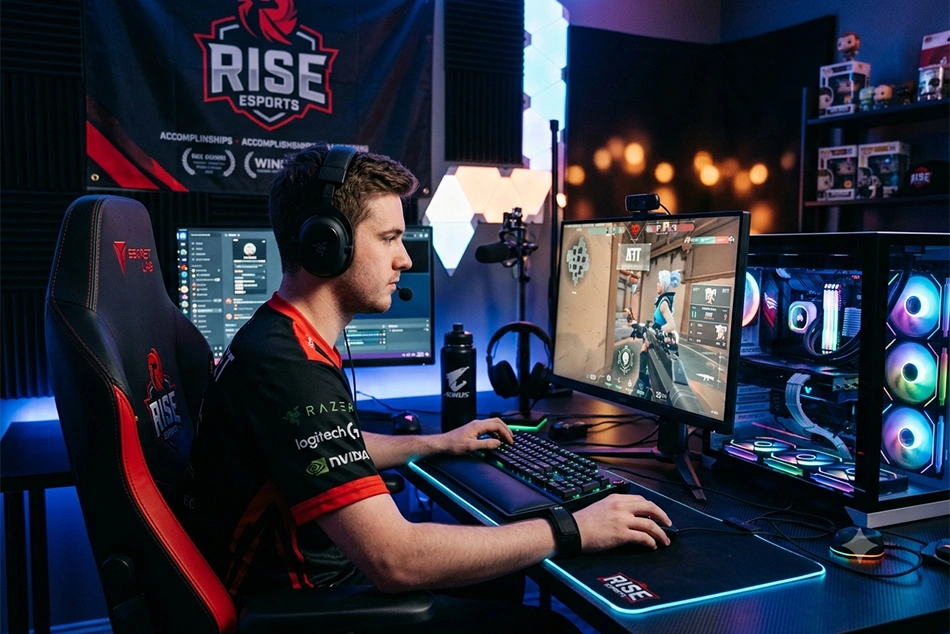
Here's something most gamers don't want to hear: Your mechanics probably aren't the problem.
You can grind aim trainers for hours. You can memorize every map callout. You can watch pro VODs until your eyes glaze over. But if your mental game is broken, none of that matters.
The global esports audience sits around 640.8 million people. Revenue is pushing past $3 billion. And at every level—from ranked lobbies to championship stages—the players pulling ahead aren't just mechanically gifted. They think differently.
Psychologist Carol Dweck calls it a growth mindset: the belief that abilities can be developed, not fixed traits. And research backs this up in gaming specifically. Players with a growth mindset stay attentive after mistakes, outperform fixed-mindset players, and treat errors as data rather than personal failure.
That's the winning mindset. Not some motivational poster nonsense. A practical, trainable approach to competition.
Let's break down what it actually looks like.
Tilt is the Real Boss Fight
Everyone talks about tilt. Few people understand what's actually happening when it hits.
Research on competitive players identifies tilt as emotional dysregulation—triggered mainly by consecutive losses or teammate mistakes. It spirals into frustration, aggressive plays, and terrible decision-making. Sound familiar?
The fix isn't "just stay calm." That's useless advice. What actually works is a structured response.
Reframing is one approach: instead of "my teammates threw," try "what could I have done differently regardless?" It sounds cheesy. It also works. Studies on esports burnout show that players with effective coping strategies experience significantly lower burnout, while those without structured responses flame out fast.
Another method is the tactical break. After two consecutive losses, step away for ten minutes. Not to scroll Twitter—actually reset. Breathe. Walk around. The players who white-knuckle through losing streaks almost always make it worse.
Tilt management isn't about eliminating emotion. It's about noticing the spiral before it takes over.
Flow State isn't Magic — It's Engineering
You've felt it before. Everything clicks. Reactions feel instant. Decisions happen without conscious thought. That's flow, and it's one of the most studied phenomena in performance psychology.
Flow happens when three conditions align: the challenge matches your skill level, feedback is immediate, and you feel a sense of control. Gaming naturally provides two of those. The third—feeling in control—depends entirely on your preparation.
"You need discipline with practice, routines, and a healthy lifestyle for flow to be a common occurrence in your gameplay," as one performance guide puts it. That's the part most people skip.
A pre-game routine helps enormously. Clear real-world distractions. Set a specific goal for the session (not "win," but something controllable like "check minimap every 15 seconds"). Run a five-minute mechanical warm-up. Maybe three deep breaths before queuing.
It sounds rigid. But structure creates the conditions where flow can actually show up consistently, instead of randomly once a month.
Deliberate Practice vs. Just Playing a Lot
Here's where most competitive players plateau without understanding why.
They play six hours a day. They feel like they're putting in work. But their practice has no structure, no objectives, and no review. That's not training. That's just repetition.
Deliberate practice—the framework developed by psychologist Anders Ericsson—requires specific goals, focused attention, immediate feedback, and tasks designed to push just beyond current abilities. Elite esports players apply this instinctively.
They set objectives before each session. "Improve CS efficiency in the first ten minutes." "Hit 8 out of 10 aerials in two minutes." "Focus on crosshair placement at head level through this specific map section."
Then they review. VOD review isn't optional at the top. Pros watch their replays looking for patterns—not individual misplays, but recurring decision-making errors and emotional triggers.
"The most effective training sessions were where you had a goal in mind… and then actually have some sort of way of measuring that part of your game after," as one esports psychologist describes it.
The takeaway is straightforward. Every session needs a goal. Every session needs a review. Without both, you're just grinding hours for diminishing returns.
Your Body is Part of Your Setup
This might be the least sexy section. It's also potentially the most impactful.
A study of elite Counter-Strike players found that greater screen time correlated with higher anxiety and worse sleep quality. Healthier dietary habits predicted lower depressive symptoms. Recovery behaviors were protective against burnout.
Across multiple competitive samples, anxiety has been reported in 38–82% of esports players. Depressive symptoms in 25–37%. Sleep problems in nearly 70% in one study.
Those numbers are staggering. And they directly affect performance. Poor sleep destroys reaction time. Anxiety tanks decision-making under pressure. Burnout kills motivation entirely.
The winning mindset treats sleep, nutrition, exercise, and breaks as competitive advantages—not distractions from grinding. Seven to nine hours of sleep. Regular meals that aren't exclusively energy drinks and takeout. Some form of physical movement, even if it's just a daily walk.
Professional organizations are catching on. More esports teams now employ mental performance coaches. Universities are implementing mental health frameworks for their competitive programs. The APA itself reports that esports athletes face psychological pressures comparable to traditional athletes.
If the pros are investing in mental health infrastructure, ignoring it at any other level is a competitive disadvantage.
Confidence Built on Evidence, Not Ego
There's a critical difference between confidence and overconfidence. Esports psychologists call the healthy version "calibrated confidence"—self-belief built on deliberate practice, reviewed footage, and clear evidence of improvement.
Ego-driven overconfidence causes under-preparation, reckless plays, and total collapse under pressure. Calibrated confidence says, "I've practiced this scenario fifty times. I know my tendencies. I trust my preparation."
One feeds resilience. The other crumbles at the first sign of adversity.
Building calibrated confidence means tracking progress. Keep notes on what's improving. Celebrate controllable wins—better positioning, cleaner rotations, fewer panic sprays—instead of obsessing over rank.
Integrity is a Mindset Skill Too
This one might seem out of place in a mindset article, but hear it out.
Fair play isn't just an ethical stance. It's a psychological one. Players who rely on shortcuts — whether exploits or anti-cheat bypass software — skip the learning process entirely. They avoid confronting weaknesses. They build fragile confidence that depends on external tools and collapses the moment those tools are removed.
Growth-mindset players derive self-efficacy from genuine skill development. Their confidence is portable. It transfers across games, across patches, across metas. It's earned, reproducible, and respected.
Anti-cheat systems exist to protect exactly this kind of honest competitive ecosystem. And while no system is perfect, the principle matters: meaningful competition requires trust that outcomes reflect skill, not exploits.
Integrity is a competitive advantage that compounds over time.
Putting It All Together
The winning mindset isn't one thing. It's a system of habits that reinforce each other:
- Tilt management through reframing and structured breaks
- Flow preparation through pre-game routines and controlled goals
- Deliberate practice with objectives, isolation drills, and VOD review
- Physical and mental health treated as performance variables
- Calibrated confidence built on evidence, not ego
- Competitive integrity as a foundation for sustainable growth
None of this requires talent. All of it requires intention.
The esports industry is projected to reach 924.9 million users by 2030. The competition is only getting fiercer. Raw mechanics will always matter, but the players who build their mental game alongside their mechanical skills are the ones who keep climbing when everyone else plateaus.
Start with one habit. Build from there. The mindset is the multiplier.
[Sana Ahmed is Staff Writer at ummid.com.]
Follow ummid.com WhatsApp Channel for all the latest updates.
Select Language to Translate in Urdu, Hindi, Marathi or Arabic