Indian Muslim body rejects Ex-IAS Niaz Khan's ‘hide identity' advice
Maulana Mahmood Madani, President of Jamiat Ulama-i-Hind, has rejected former IAS officer Niaz Khan's suggestion that Muslims should alter their appearance and give up visible markers of their identity, including traditional attire, in order to protect them from mob violence
New Delhi: Maulana Mahmood Madani, President of Jamiat Ulama-i-Hind, has rejected former IAS officer Niaz Khan's suggestion that Muslims should alter their appearance and give up visible markers of their identity, including traditional attire, in order to protect them from mob violence.
He described the suggestion as a disregard of established facts and a fundamental misdiagnosis of the problem.
Maulana Madani said it was a matter of serious concern that a former IAS officer should advise Muslims to conceal their identity as a means of ensuring their safety.
"The problem does not lie in a victim's beard, the cap on his head, a woman's hijab, or a person's kurta-pyjama. The real problem lies in the hatred harboured in the mind of the attacker and in an environment in which mobs begin to believe that they are above the law. Asking victims to erase their identity, instead of punishing the perpetrators, is neither justice nor something that any civilised democracy can accept," he said.
Data on Mob Lynching
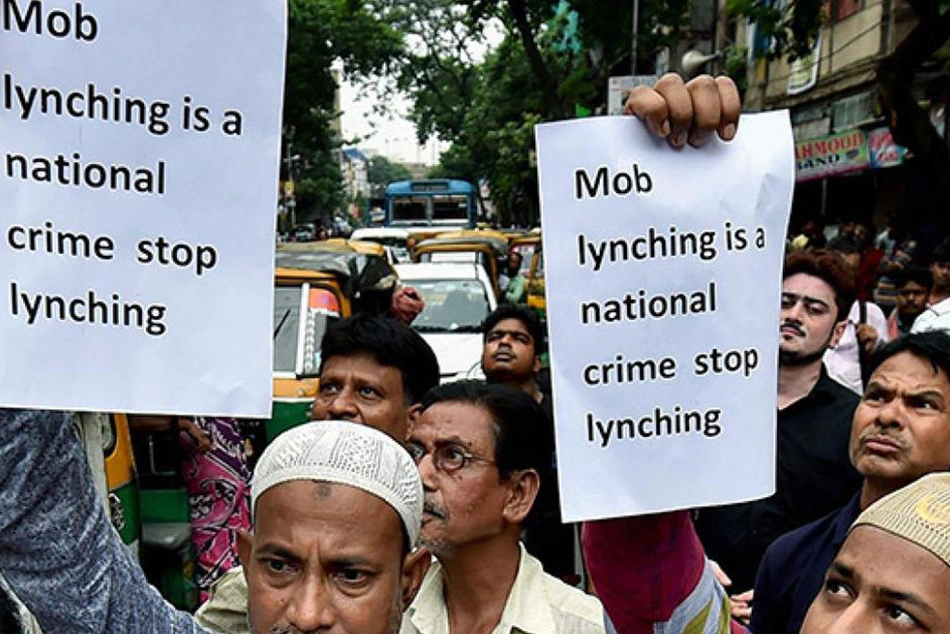
Citing a research-based report available with Jamiat Ulama-i-Hind, Maulana Madani said that Jamiat Ulama-i-Hind has a research-based report examining 38 major incidents over the past ten years. In 83 % of these cases, the victims were wearing ordinary clothes and displayed no conspicuous outward markers of Islamic identity. He said that, in these incidents, people were targeted on the basis of rumours or allegations.
Maulana Madani said that while it was not possible to recount every incident, several major cases could be cited by way of example. These include the killing of Mohammad Akhlaq in Dadri, Uttar Pradesh in 2015; the mob killings of Rakbar Khan in Alwar, Rajasthan, and Qasim Qureshi in Hapur, Uttar Pradesh, in 2018; the lynching of Tabrez Ansari in Jharkhand in 2019; the killing of Nasir and Junaid of Bharatpur, Rajasthan, who were burnt alive along with their vehicle in 2023; and the brutal killing of Sabir Malik, a Bengali Muslim migrant worker living in Charkhi Dadri, Haryana, in 2024. In all these cases, the victims' clothing was neither the underlying cause of the attacks nor did their appearance bear any conspicuous markers of Muslim identity.
Drawing on history, Maulana Madani said that Bosnian Muslims were largely indistinguishable from their Christian neighbours in terms of language, dress, outward appearance and social customs. Yet they were subjected to mass killings, detention camps, inhuman atrocities and genocide.
"The Real Question"
Drawing a historical parallel, Maulana Madani referred to the experience of Bosnian Muslims, who were largely indistinguishable from their Christian neighbours in terms of language, dress, outward appearance and social customs. Yet they were subjected to mass killings, detention camps, systematic atrocities and genocide.
"In the light of these facts, the real question should not be what the victim was wearing. The real question is: what emboldened a mob to stop a citizen, scrutinise his identity, pursue his vehicle, attack him and ultimately kill him? If we shift attention away from this fundamental question and focus instead on the victim's clothing and appearance, we risk transferring responsibility for the violence from the perpetrator to the victim," Maulana Madani observed.
He added that when hatred is systematically fostered against a community, its members are treated with suspicion and its collective identity is portrayed as a threat, merely changing one's appearance can never guarantee safety.
"Peace and public order can be secured only by upholding the rule of law, effectively implementing the guidelines issued by the Supreme Court in Tehseen S. Poonawalla v. Union of India, strictly and impartially enforcing Section 103(2) of the Bharatiya Nyaya Sanhita, and ensuring that those responsible for mob violence are brought to justice in accordance with law," Maulana Madani said.
"We therefore appeal to all conscientious and responsible citizens of the country to come together, focus on these fundamental issues and work to uphold India's reputation as a nation governed by the Constitution and the rule of law," he added.
Follow ummid.com WhatsApp Channel for all the latest updates.
Select Language to Translate in Urdu, Hindi, Marathi or Arabic