Welfare, Electoral Politics and The Cost of Fiscal Priorities
The Comptroller and Auditor General of India’s (CAG) latest audit of Maharashtra’s finances has raised serious questions about the fiscal management and implementation of the BJP-led government’s flagship Mukhyamantri Majhi Ladki Bahin Yojana
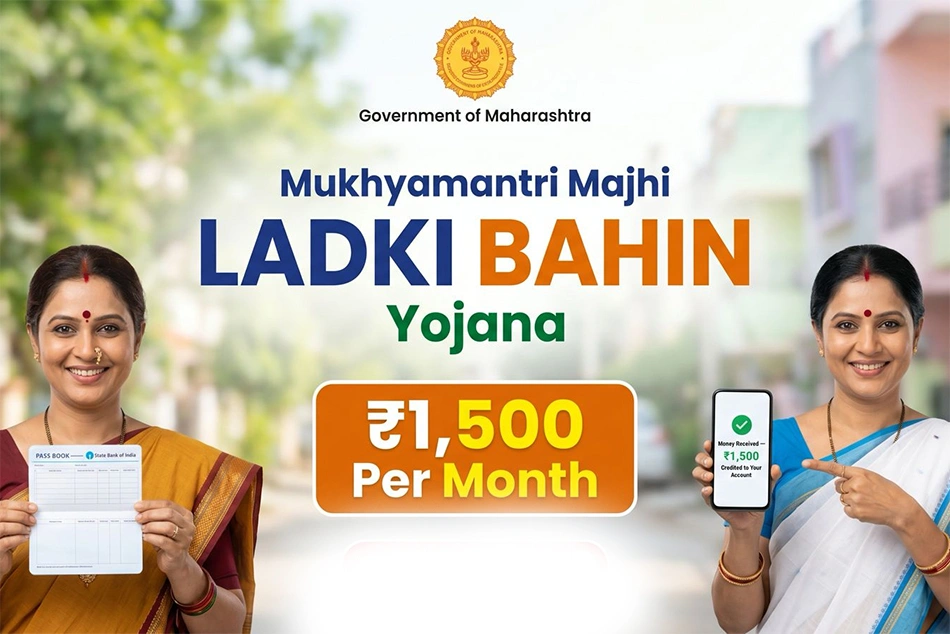
The Comptroller and Auditor General of India’s (CAG) latest audit of Maharashtra’s finances has raised serious questions about the fiscal management and implementation of the BJP-led government’s flagship Mukhyamantri Majhi Ladki Bahin Yojana. While the scheme has been projected as a landmark initiative to empower women through direct financial assistance, the audit paints a more complex picture—one that raises concerns about financial discipline, transparency, and the state’s long-term development priorities.
The findings come at a time when welfare schemes are increasingly becoming central to electoral politics across India. The debate is no longer whether governments should support vulnerable sections of society—they certainly should—but whether such support is being designed and implemented responsibly, sustainably, and transparently.
A Massive Surge in Welfare Spending
The CAG report on Maharashtra’s State Finances for 2024-25 records an extraordinary increase in expenditure on women’s welfare. Government spending in this sector rose from ₹261.78 crore in 2023-24 to ₹33,554.36 crore in 2024-25—an increase of nearly 12,700 percent within a single financial year.
The primary reason for this unprecedented jump was the launch of the Mukhyamantri Majhi Ladki Bahin Yojana, approved on June 28, 2024, merely months before the Maharashtra Assembly elections. The scheme provides ₹1,500 every month through Direct Benefit Transfer (DBT) to eligible women between the ages of 21 and 65 years.
While direct cash transfers have increasingly become a preferred welfare instrument across the world due to their administrative efficiency, economists have consistently argued that they must be backed by fiscal prudence and adequate budgetary planning.
CAG Flags Excess Spending Without Explanation
According to the audit, the Maharashtra government initially arranged:
- ₹26,200 crore through a supplementary budget.
- ₹3,490.75 crore diverted from the existing Lek Ladki Yojana.
This made available a total allocation of approximately ₹29,693 crore.
However, actual expenditure reached ₹33,237.24 crore, exceeding the sanctioned amount by ₹3,541.16 crore.
More significantly, the CAG observed that no specific justification was provided by the Women and Child Development Department for this excess expenditure.
Public finance experts often consider unexplained expenditure overruns a serious concern because they weaken legislative oversight over public money and dilute budgetary discipline.
Welfare versus Capital Formation
Perhaps the most significant observation in the audit is not merely the overspending but what it signifies about Maharashtra’s changing fiscal priorities.
The CAG notes:
“This reflects a major push toward welfare-oriented transfers rather than capital formation.”
This observation deserves careful attention.
Capital expenditure creates long-term productive assets such as:
- Roads
- Schools
- Hospitals
- Irrigation projects
- Water supply
- Industrial infrastructure
- Digital connectivity
Such investments generate employment, improve productivity, and contribute to sustainable economic growth.
Revenue expenditure, including recurring cash transfers, provides immediate relief but generally does not create lasting public assets.
The Reserve Bank of India’s annual State Finances: A Study of Budgets has repeatedly highlighted that higher capital expenditure has a stronger multiplier effect on economic growth compared to revenue expenditure. RBI estimates suggest that every rupee spent on productive capital investment generates significantly higher long-term economic returns than routine consumption expenditure.
Election Timing Raises Questions
The timing of the scheme has inevitably invited political scrutiny.
The scheme was approved in June 2024, barely months before Maharashtra went to the polls.
Political scientists have increasingly described such initiatives as part of a growing trend of “competitive welfare politics” where political parties across ideological lines announce generous cash transfer schemes ahead of elections.
The Election Commission has previously witnessed similar debates regarding:
- Karnataka’s Gruha Lakshmi Scheme
- Madhya Pradesh’s Ladli Behna Yojana
- Telangana’s welfare promises
- Delhi’s subsidy model
While these programmes may provide genuine relief to beneficiaries, critics argue that fiscal sustainability often receives less attention than electoral messaging.
Diverting Funds from Existing Schemes
The audit also reveals that ₹3,490.75 crore was re-appropriated from the Lek Ladki Yojana.
Budget reallocations are not unusual in government finance. However, frequent diversion of funds from one welfare programme to finance another raises important policy questions:
- Were the original objectives of Lek Ladki Yojana adequately fulfilled?
- Did beneficiaries under the earlier scheme suffer delays?
- Was the reallocation supported by proper impact assessment?
Without transparent evaluation, such reallocations risk undermining continuity in social welfare programmes.
India’s Expanding Welfare Economy
India has witnessed an unprecedented expansion in Direct Benefit Transfer (DBT) programmes over the past decade.
According to official Government of India data:
- More than 300 central schemes now operate through the DBT architecture.
- Cumulative transfers through DBT have crossed ₹40 lakh crore since its inception.
- The government argues that DBT has substantially reduced leakages by eliminating intermediaries.
International institutions such as the World Bank have praised India’s digital payment infrastructure for improving delivery efficiency.
However, several economists including those associated with the International Monetary Fund (IMF) and Organisation for Economic Co-operation and Development (OECD) have cautioned that while targeted cash transfers are effective in reducing immediate financial distress, excessive dependence on recurring welfare spending without corresponding investments in education, healthcare, infrastructure, and employment generation can weaken long-term growth prospects.
Fiscal Sustainability Matters
The concern is not the objective of supporting women.
Women’s labour force participation in India remains relatively low compared to many emerging economies.
Periodic Labour Force Survey (PLFS) data show improvements in female workforce participation in recent years, but substantial gender gaps continue in wages, employment quality, and access to formal work.
Cash support may provide short-term financial security, particularly for women in vulnerable households.
However, development economists argue that sustainable women’s empowerment requires complementary investments in:
- Skill development
- Education
- Childcare infrastructure
- Public transport
- Healthcare
- Employment opportunities
- Entrepreneurship support
Without these structural interventions, cash assistance alone may not significantly improve long-term economic independence.
Transparency is the Cornerstone of Public Trust
The CAG’s role is not to determine political intent but to examine whether public funds have been spent according to law, budgetary approvals, and established financial procedures.
Its findings in this case raise three important governance concerns:
- Expenditure exceeded legislative sanction by ₹3,541 crore.
- No specific justification was furnished for the excess spending.
- State spending shifted dramatically toward recurring welfare transfers at the cost of capital formation.
These observations deserve careful examination by the legislature, policymakers, economists, and citizens alike.
Welfare Must Be Responsible
Social welfare is an essential function of any democratic government. Well-designed cash transfer programmes can reduce poverty, improve household resilience, and empower women.
Yet welfare cannot become a substitute for sound public finance.
A government’s responsibility extends beyond distributing immediate benefits it must also build schools, hospitals, roads, industries, irrigation systems, and employment opportunities that improve citizens’ lives for generations.
The Maharashtra audit serves as a reminder that public welfare and fiscal responsibility must go hand in hand. Transparency in spending, legislative accountability, and balanced development remain indispensable if welfare programmes are to strengthen—not strain—the foundations of democratic governance.
The Final Thought
The Ladki Bahin scheme may well have delivered immediate relief to millions of women, and its political popularity and win the state elections is easy to understand. But the CAG’s findings show that popular welfare cannot be judged only by the size of the transfer or the speed of its rollout. It must also be assessed by the quality of its financing, the transparency of its execution, and its place within a broader development strategy.
If Maharashtra is to convert welfare into lasting empowerment, it must ensure that cash transfers are matched by investments in education, health, skills, infrastructure, and jobs. Otherwise, the state risks building a model of governance that is generous in the short term but fragile in the long run. The real test of public policy is not how much it spends before an election, but how wisely it invests in the future after the votes are counted.
[The writer, Mohd Ziyauallah Khan, is a freelance content writer & editor based in Nagpur. He is also an activist and social entrepreneur, cofounder of the group TruthScape, a team of digital activists fighting disinformation on social media.]
Follow ummid.com WhatsApp Channel for all the latest updates.
Select Language to Translate in Urdu, Hindi, Marathi or Arabic