Contrast between Mohan Bhagwat’s speeches and condition of Indian Muslims
There is something profoundly revealing about the contrast between Mohan Bhagwat’s recent international speeches and the condition of Muslims in India.
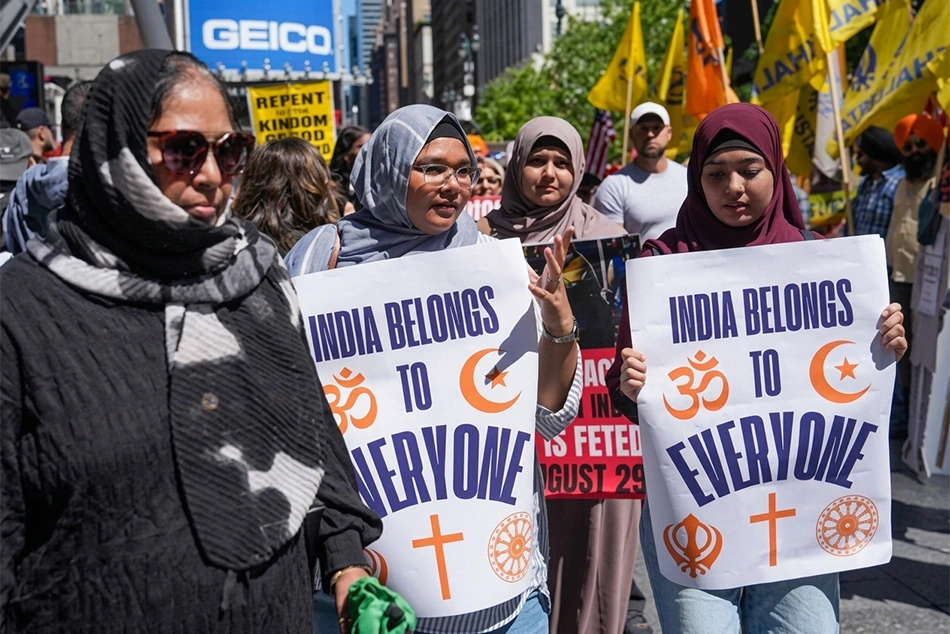
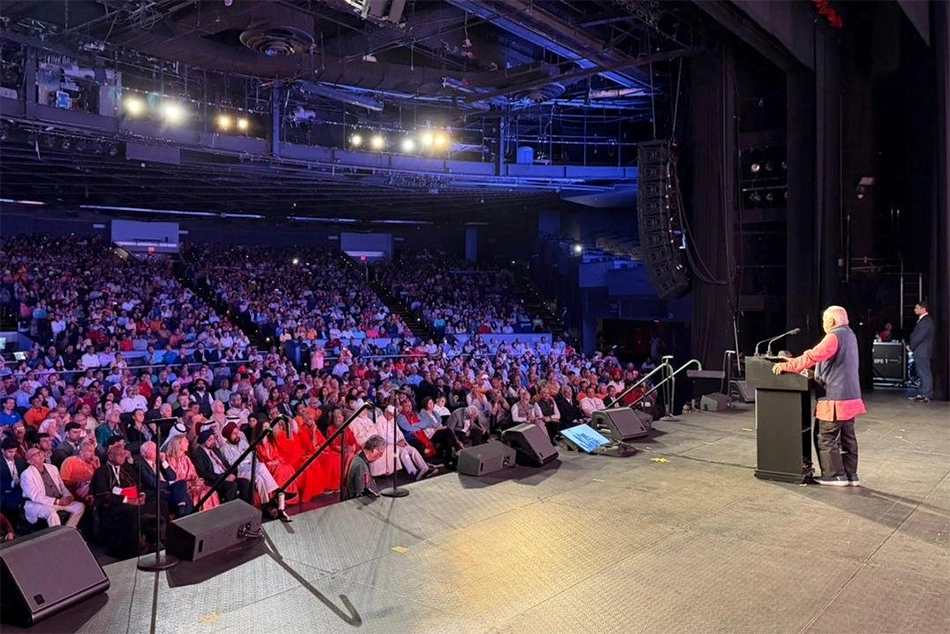
There is something profoundly revealing about the contrast between Mohan Bhagwat’s recent international speeches and the condition of Muslims in India. From the United States to Canada and Britain, the RSS Chief has presented himself as the spokesman of an India in which religious diversity is not merely tolerated but celebrated. In New York, he said that a Hindu who believes Muslims have no place in India cannot remain a Hindu. In Canada, he spoke of India’s civilisational ability to accommodate different communities, while in London he declared that the essence of the RSS is “pure selfless love” rather than hatred. The RSS has wrapped the tour in the language of Vasudhaiva Kutumbakam — the world is one family — and social harmony.
These statements would be welcome if they represented a fundamental transformation in the political and social reality of India. The difficulty is that they have to be measured against what Muslims actually experience within the country, and here the contradiction is difficult to escape. The India Persecution Tracker recorded 44 Muslims killed in anti-Muslim hate crimes during the first seven months of 2026, with 25 deaths attributed to Hindu extremist non-state actors and 19 to state actors. The number is not a government statistic and should not be presented as an exhaustive national death toll; it is a documented count compiled from reported and verified cases. But precisely because it is based on identifiable cases rather than political rhetoric, it provides an important measure of the continuing violence directed against Muslims. The tracker reported that 25 Muslims were killed between May and July alone, indicating a marked escalation during the middle months of the year.
The significance of those 44 deaths becomes clearer when one stops looking at communal violence as a collection of isolated incidents. A Muslim man killed by a mob, a Muslim family driven from its home, a Muslim shop attacked, a young man beaten because of his identity, or citizens arrested or subjected to coercive state action may each be reported as a separate local story. Taken together, however, they reveal something larger about the political environment in which India’s largest religious minority is being asked to live. The issue is not simply whether every individual crime can be traced to the RSS or the BJP. It is whether the political culture that has developed around majoritarian nationalism has created an environment in which hostility towards Muslims can be expressed with increasing confidence, while political accountability for such hostility remains remarkably weak.
That is why Bhagwat’s speeches abroad cannot be assessed simply by asking whether his words sound conciliatory. The question is whether those words have consequences at home. When the head of the RSS tells an audience in New York that a Hindu who believes Muslims have no place in India is not truly a Hindu, he is making a statement that ought to have considerable political significance. The RSS is not an insignificant cultural association operating at the margins of Indian public life. It is the ideological organisation from which the Bharatiya Janata Party emerged, and its influence over the political vocabulary of contemporary India is enormous. Even Reuters, reporting on Bhagwat’s American visit, described the RSS as the ideological parent of the BJP and noted that the organisation had organised foreign visits partly to counter perceptions of its involvement in attacks on minorities.
The obvious question, therefore, is what this declaration means inside India. If Muslims unquestionably belong to India, why is there not an equally unequivocal political response every time Muslims are attacked because they are Muslims? If hatred of Muslims is incompatible with Hinduism, why is the political response to anti-Muslim mobilisation so frequently muted? If the RSS genuinely believes in universal brotherhood, where is the sustained campaign by its enormous organisational network against hate speech, economic boycotts, mob violence and the rhetoric that portrays Muslims as demographic or national threats?
The contradiction becomes even more striking when Bhagwat’s words are placed against the broader statistics of hate mobilisation. India Hate Lab recorded 1,318 in-person hate-speech events targeting religious minorities in 2025, of which 1,289 — 98 per cent — targeted Muslims either exclusively or alongside Christians. The organisation documented 308 speeches containing explicit calls for violence and 136 calls for arms, while also recording calls for economic and social boycotts of minorities and demands for the removal or destruction of mosques and other religious structures. Importantly, India Hate Lab found that 88 per cent of these events occurred in BJP-ruled states, BJP-led coalition states or BJP-administered Union Territories. These figures do not establish that the BJP ordered every speech or that every BJP supporter participates in such mobilisation. They do, however, raise an unavoidable question about the political environment in which this rhetoric has flourished.
This is where the distinction between individual culpability and political responsibility becomes essential. It would be intellectually careless to say that every person associated with the BJP or RSS supports violence against Muslims. Nor would it be reasonable to claim that every killing is directly commanded by the RSS leadership. The real issue is more serious because it concerns institutions rather than individuals. What does a political movement do when people operating within its wider ideological ecosystem repeatedly demonise a minority? Does it confront them publicly, expel them, condemn their language and insist that such politics is unacceptable? Or does it remain silent until the immediate controversy passes?
The record provides ample reason for asking the question. Human Rights Watch’s 2026 assessment of India describes increasing vilification of Muslims under the BJP-led government and documents the expulsion of Bengali-speaking Muslims and Rohingya refugees to Bangladesh, including Indian citizens among those expelled. It also reports large-scale demolitions and displacement affecting predominantly Bengali-speaking Muslim families in Assam. Amnesty International has similarly documented escalating persecution of religious minorities, including discriminatory measures affecting Muslims and mass forced evictions in Assam.
The recent violence in Meghalaya illustrates how quickly questions of ethnicity, political representation and citizenship can acquire a specifically anti-Muslim character. Two Bengali Muslim men, Khairul Islam and Ashraful Islam, were killed amid violence in the Chibinang area of West Garo Hills, while Muslim homes and businesses were attacked. The immediate context involved tensions surrounding the eligibility of non-tribal candidates in regional council elections, but the attacks demonstrate how vulnerable Muslims can become when political competition intersects with ethnic and religious prejudice. The killings should not disappear into the category of a generic “ethnic clash”. The identity of those targeted and the attacks on Muslim homes and businesses are politically relevant.
Nor is this confined to Meghalaya. The death of 27-year-old Mohd Azeem after an alleged assault following a road accident in Uttar Pradesh became another disturbing reminder of the vulnerability of Muslim individuals in charged communal circumstances. The significance of such cases lies not merely in the criminal facts of each individual episode but in the atmosphere surrounding them: the ease with which religious identity can become a marker of suspicion, confrontation and violence.
What makes the silence of political leaders particularly troubling is that the BJP is not an ordinary opposition party commenting from outside government. It is the governing political force at the Union level and controls or participates in governments across much of India. Its leaders therefore possess both political influence and institutional responsibility. When a Muslim is killed in a hate crime, a serious political response should not have to be extracted after public outrage. It should be immediate, unequivocal and accompanied by a demand for investigation and justice.
There have, of course, been individual BJP leaders who have made statements against anti-Muslim prejudice. It would therefore be inaccurate to claim literally that no BJP leader has ever condemned an incident. But that is not the real issue. The more serious criticism is that there has been no sustained, nationally visible political reckoning within the BJP with the wider pattern of anti-Muslim hate mobilisation. Individual expressions of harmony cannot substitute for an institutional response to a recurring phenomenon.
That distinction matters because silence operates politically even when it cannot legally be described as consent. When hate speech repeatedly goes unchallenged, when political figures use inflammatory language and remain politically secure, when mobs understand that communal aggression is unlikely to carry a serious political cost, and when victims are left to depend upon individual courts or courageous police officers for protection, the political message received by perpetrators is very different from the message delivered by Bhagwat in New York.
The RSS chief’s international tour therefore deserves to be examined not simply as a series of speeches but as an exercise in political presentation. The tour marked the centenary year of the RSS and was explicitly designed to communicate its philosophy to the Indian diaspora and the wider world. In London, Bhagwat described the organisation’s essence as “pure selfless love” rather than hatred, while the RSS presented the tour as part of its international outreach around social harmony and Vasudhaiva Kutumbakam. At the same time, Bhagwat’s visit provoked protests in Britain and criticism from organisations concerned about the RSS’s record towards minorities. In the United States, the US Commission on International Religious Freedom called for targeted sanctions against RSS members and Indian officials it accused of complicity in religious-freedom violations, including consideration of revoking Bhagwat’s visa. The RSS rejected the allegations and maintains that it is a cultural organisation committed to social unity.
It is therefore entirely legitimate to ask whether Bhagwat is attempting to reconcile a changing international presentation with an ideological and political ecosystem that has not undergone an equivalent transformation within India. Some commentators have interpreted his recent language as a significant ideological shift. Others argue that the language has changed while the fundamental Hindutva framework remains intact. The latter interpretation deserves serious consideration because Bhagwat’s formulation does not necessarily begin with the acceptance of pluralism as an end in itself. It frequently begins with the idea of an underlying Hindu civilisational unity within which diversity is accommodated. That is different from the constitutional conception of India, in which citizens possess equal rights irrespective of whether the majority regards their religion as part of a common cultural identity.
This distinction is crucial. A Muslim does not need to be told that he belongs to India because Hindu civilisation has generously accommodated him. A Muslim belongs to India because he is a citizen. His constitutional rights do not depend upon the goodwill of the Hindu majority, the generosity of the RSS, or the cultural interpretation of Hindutva. The same applies to Christians, Sikhs, Buddhists, Dalits, atheists and every other citizen. That is the fundamental difference between majoritarian benevolence and constitutional equality.
The language of universal love becomes hollow if the minority remains dependent upon the majority’s benevolence for security. The language of Vasudhaiva Kutumbakam becomes politically meaningless if some members of the family are repeatedly told that their ancestry, language, food, dress, prayer, marriage or political loyalties make them suspect. A family cannot be proclaimed from an international stage while its weakest members are left without adequate political protection at home.
The statistics therefore matter because they puncture the abstraction. Forty-four Muslim deaths in seven months are not an argument against Bhagwat’s words; they are a test of them. The figures do not prove that Bhagwat personally authorised any of these killings, nor should they be used to make such an allegation. They demonstrate something more important: the distance between an increasingly polished language of inclusion and a social reality in which Muslims continue to experience serious forms of violence and discrimination. The India Persecution Tracker itself cautions that its figures are based on reported and verified cases and are not exhaustive. If anything, that makes the numbers more disturbing rather than less, because documented deaths represent only the visible portion of a much larger field of intimidation, hate speech, arrests, demolitions, economic exclusion and everyday discrimination.
The question that Bhagwat now has to answer is consequently not whether he can speak beautifully about Muslims in New York, Toronto or London. He plainly can. The question is whether the same moral vocabulary will be applied when the audience is not an international diaspora gathering but a mob outside a Muslim home, a police station receiving a complaint from a Muslim victim, a family facing demolition, a shop threatened with boycott, or a young Muslim man confronted by a crowd because of his identity.
And the BJP has an even more immediate responsibility. It cannot claim that communal violence is merely a law-and-order matter when its own political ecosystem repeatedly intersects with the rhetoric that fuels communal suspicion. Nor can it invoke India’s civilisational tolerance abroad while remaining politically cautious about condemning those who attack minorities at home. If the party genuinely believes that Muslims are equal citizens, it must demonstrate that belief precisely when doing so carries political cost.
There is a temptation in political discourse to treat silence as a neutral position. It is not always so. Silence can arise from indifference, fear, political calculation or institutional paralysis. But when the same community is repeatedly targeted, when the pattern is documented year after year, and when political leaders possess the authority to condemn the perpetrators yet rarely confront the wider ideological environment that sustains such hostility, silence ceases to be merely the absence of speech. It becomes part of the political atmosphere in which the violence occurs.
That is why Bhagwat’s recent words deserve to be measured against India’s reality rather than simply applauded as evidence of a new moderation. If he truly believes that a Hindu who denies Muslims a place in India ceases to be a Hindu, then the principle should have consequences. It should mean defending Muslim citizens not only in speeches addressed to America, Canada and Britain but in the villages, towns and cities of India. It should mean confronting hate speech within the Hindutva ecosystem, demanding accountability for killings, opposing collective punishment and rejecting every attempt to reduce Muslim citizenship to a question of majority approval.
India does not need a Hindu leader to tell the world that Muslims are welcome. India needs its political leadership to make Muslim citizenship secure in practice. The test of Bhagwat’s new rhetoric is therefore not whether it impresses audiences abroad, nor whether it helps the RSS present a more acceptable face internationally. The test is whether anything changes for Muslims at home.
Until that happens, the contrast will remain impossible to ignore: the RSS chief travelling through the United States, Canada and Britain speaking of oneness, love and the place of Muslims in Bharat, while the documented record from India continues to show Muslims being killed, attacked, displaced and subjected to systematic hostility. The credibility of the message will ultimately be determined not by the applause it receives abroad, but by whether the vulnerable can live without fear at home.
[The writer, Dr. Ranjan Solomon, has worked in social justice movements for close to 58 years. After this period of working with the rural poor, workers, urban poor locally, nationally, and internationally, he has now turned political commentator, author-researcher and freelance writer focussed on questions of global and national justice struggles. Ranjan Solomon is particularly tied in close solidarity with the Palestinian struggle for justice and issues emanating from Iran’s assertion as a power to reckon with in West Asia. Ranjan Solomon can be contacted at ranjan.solomon@gmail.com.]
Follow ummid.com WhatsApp Channel for all the latest updates.
Select Language to Translate in Urdu, Hindi, Marathi or Arabic