Well found in Saharanpur Masjid debris sparks new row
The discovery of the well in the Saharanpur Masjid debris has heated up local politics, with various factions moving to interpret the find in their own ways.
Early Saturday morning, the administration demolished a mosque that had stood for years within the Collectorate complex in Saharanpur, Uttar Pradesh, declaring it illegal. Opposition parties have strongly objected to this action, questioning whether this is a strategy to stoke communal tension in Uttar Pradesh just ahead of the upcoming elections.
According to revenue records, Khasra number 539 is registered in the names of Yaqub Khan and Wahid Khan; this single plot encompasses a temple, a mosque, and the current Collectorate building. Yaqub Khan and Wahid Khan had constructed this mosque in 1911 and later donated a significant portion of their land for the Collectorate building and other government offices. Ironically, the very same Collectorate administration, despite a court stay order has now declared the 116-year-old mosque built by those donors to be illegal and razed it to the ground.
The mosque management committee had submitted documentary evidence to the court dating back to 1911 to establish its existence. A brick embedded in the mosque's wall, bearing the year 1909, still attests to the fact that it was constructed around 1911. Prayers have been offered here continuously for over a century, and this uninterrupted usage satisfies the legal definition of a Waqf. Although the mosque predates 1947 and is registered in the Waqf Board's records, it was demolished following an ex-parte order issued without making the Waqf Board a party to the proceedings, an action that runs counter to the principles of natural justice.
From a legal standpoint, the Limitation Act does not empower the government to simply wake up one day and unilaterally take over immovable property that has been held for decades. When a site has been under open, uninterrupted, and public possession for over a century, the State cannot argue that such possession effectively began only yesterday. Even if the administration's arguments were to be accepted for a moment, the doctrine of adverse possession applies here, given that the mosque was built first and the Collectorate building came later.
The 'Places of Worship Act, 1991' explicitly stipulates that no one has the right to destroy, attack, forcibly enter, alter the nature of, or occupy places of worship belonging to another community. In light of this law, the question becomes even more profound: how was a building that is over a century old suddenly declared illegal?
Even according to religious tenets, once a site becomes a mosque, it remains a mosque in perpetuity and cannot be deemed to have been constructed on desecrated or illegal land. Do Muslims in this country not possess even the constitutional freedom to challenge a lower court's verdict in the High Court? What was the reason for the Saharanpur administration's haste to send bulldozers to the mosque instead of awaiting the final verdict from the High Court or the Supreme Court?
The reaction of the Hindu residents of Saharanpur to this incident has also emerged, and it is essential to heed it; for these individuals are not merely followers of a religion but Indian citizens in the true sense, who will not fall prey to the machinations of those peddling hatred. They question why, given that both the mosque and the temple were constructed on the same land, the mosque is being labeled illegal while the temple is being spared. On one hand, temples are being looted, and on the other, mosques are being demolished, acts that constitute a blatant disregard for the law. They point out that illegal temples exist within many court complexes as well, yet an attempt was made to disrupt the nation's social harmony by targeting only the mosque.
In their view, patience should have been exercised until the High Court and Supreme Court delivered their verdicts, and the entire operation was carried out with the intent of hurting the dignity of the Muslim community. Several similar statements have emerged from the Hindu community of Saharanpur, reflecting their unease regarding this incident.
When the Imam visited the site for the first time after the mosque was demolished, he found copies of the Holy Quran and prayer mats scattered amidst the debris. According to reports, scrap collectors subsequently dumped these copies of the Quran into the river. During the demolition, the District Magistrate of Saharanpur failed to show even the basic sensitivity required to ensure the respectful preservation of the Holy Quran and Hadith texts.
Absorbed in its own course of action, the administration had everything including these religious texts, discarded along with the rubble, showing no regard for their sanctity. It was not merely a bulldozer that was driven over this 120-year-old mosque, the Holy Quran, prayer mats, skullcaps, prayer beads, and even the Imam’s personal clothing were loaded onto trucks and dumped along with the debris, an act that has sparked deep resentment across the entire area.
The question also arises as to how a building that is over a century old can be declared illegal. If this same criterion were applied, the 'havelis' and two-story houses built by the ancestors of prominent BJP leaders during that same era would also be deemed illegal. If the argument is that a religious structure built on government land must be demolished, then why is this rule being applied only to mosques? It is truly shameful.
Muslim leaders also argue that while the mere presence of a mosque might be unpalatable to some, that is their own problem, not anyone else's. Those who wish to look away are free to do so, but a mosque cannot be demolished by a bulldozer simply because someone feels uncomfortable. Religious freedom should not hinge on the tolerance or benevolence of others. Ultimately, the question repeatedly arises: does the constitutional guarantee of religious freedom no longer apply to Muslims, and why are their places of worship repeatedly razed by bulldozers on the basis of baseless pretexts?
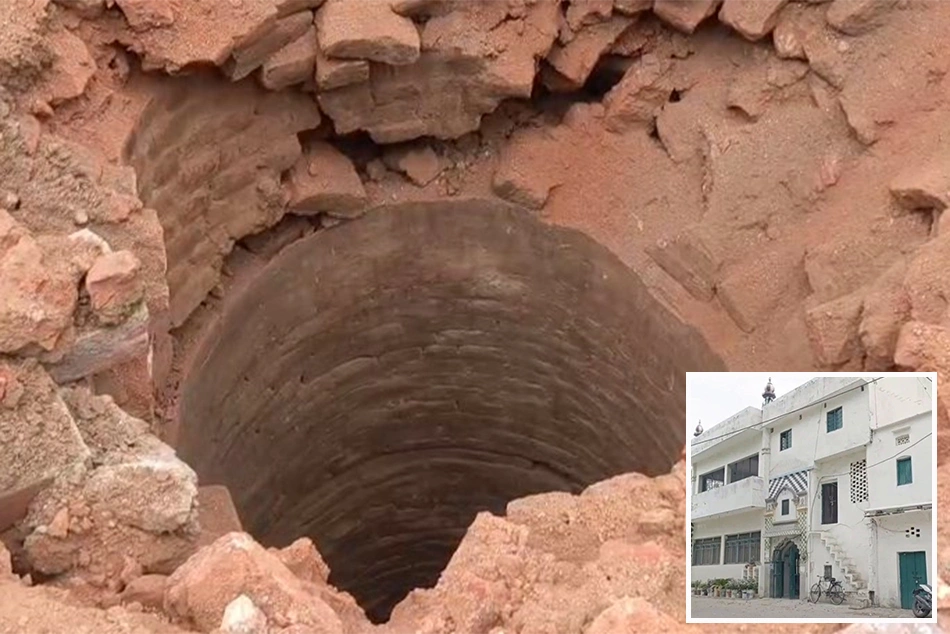
Meanwhile, new information has emerged from the site. Following the demolition of the mosque, excavation work revealed an old well beneath the ground. The discovery of this well has heated up local politics, with various factions moving to interpret the find in their own ways. It is also important to note that when the Mosque was built, the same Muslim family donated land for a temple alongside it.
The presence of a well within the complex is hardly surprising, both communities have been using such wells for centuries. Interestingly, journalists arriving to cover the ground reality are being prevented from reporting from the site. Such suppression of information deepens the suspicion that the administration itself is attempting to conceal something.
In a dispute already fraught with serious questions regarding judicial processes, religious sentiments, and historical evidence, the independent presence of the media becomes all the more crucial to ensure the unadulterated truth reaches the public.
Follow ummid.com WhatsApp Channel for all the latest updates.
Select Language to Translate in Urdu, Hindi, Marathi or Arabic